
“ So Hector made harangue, and the Trojans clamoured applause. And they loosed their sweating steeds from the yoke, and tethered them with thongs, each man beside his chariot; and from the city they brought kine and goodly sheep with speed, and provided them with honey-hearted wine and corn from their houses, and gathered much wood withal; and sacrificed to the immortals unblemished hecatombs. And from the plain the winds bare into heaven the sweet savour. ”
Quotes about “hecatomb”
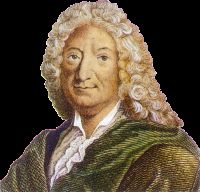 Alain René Le Sage,
Asmodeus; or, The Devil on Two Sticks
Alain René Le Sage,
Asmodeus; or, The Devil on Two Sticks
“ His tireless hand is armed with the fatal scythe which mows successive generations as they spring from earth. But if, as mocking at humanity, on one wing is depicted war, pestilence, famine, shipwreck, conflagration, with other direful modes by which he sweeps upon his prey, the other shows the priests who offer to him daily hecatombs in sport ”
Flower o' the Heather: A Story of the Killing Times
“ As he talked, Hector's voice thrilled until his last triumphant words rang through the cave like a challenge and a prophecy."Ay," he cried, "though the King's minions heap horror upon horror till every hill in the South o' Scotland is a heather-clad Golgotha, the men will stand firm: and generations yet unborn will reap the harvest o' their sacrifice."He ceased, and so deep a silence fell upon us that through the rock wall I could hear the splash of an icicle as it fell into the pool. The minister's bowed head was in his hands. ”
 Ben Hecht,
Broken Necks — Broken Necks
(1926)
Ben Hecht,
Broken Necks — Broken Necks
(1926)
“ Here he was walking up the slim wooden stairs that led to the gallows platform and here he was standing under the looped rope that dangled at his ear and beside another man who continued to moan, "My Lord Jesus Christ, forgive me. Forgive us all." But we did not look at this one. The platform was now crowded with men, but we did not look at them. They came forward with long black straps and proceeded to bind the man who was moaning. Then a priest came forward and stood beside the man who was moaning and rested an ivory crucifix upon his lips and opened a book under his rolling eyes. ”
 Alfred John Church,
The story of the Iliad
(1920)
Alfred John Church,
The story of the Iliad
(1920)
“ So he dragged Hector to the ships. And Priam saw him from the walls, and scarce could his sons keep him back, but that he should go forth and beg the body of his dear son from him who had slain him. And Hecuba, his mother, also bewailed him, but Andromache knew not as yet of what had befallen. For she sat in her dwelling, weaving a great purple mantle broidered with flowers. And she bade her maidens make ready a bath for Hector, when he should come back from the battle, nor knew that he should never need it more. ”
“ She weeps over his destiny, but, since he has chosen the better part, she nobly supports him in every struggle. Hecuba is truly the companion of her husband, King Priam, associated with him in his projects, and sharing his counsels. She has borne him nineteen children, and these she has seen slain, one after another, by the hand of the foe. Hector is her favorite son, in whose courage she recognizes the bulwark of Ilium. When she sees him exposed to certain death, her anxiety overcomes her pride and she beseeches him to come within the walls ”
“ He was now gloomily debating in his mind on whom to commence operations when he came upon the other three standing together, and at sight of the despondency on their faces wrath boiled up in Hector's breast."What the devil are you looking so sick for, all of you?" he said angrily. "What if they have got three goals, we can beat them all right. Damme, I'll give you this pony, if we don't!" ”
Jr. Horatio Alger, Hector's Inheritance, Or, the Boys of Smith Institute
“ I would rather be a good scholar than a good fighter.” But the boys were evidently of a different opinion, and elevated Hector straightway to the rank of a hero. CHAPTER XIV. SOCRATES CALLS HECTOR TO ACCOUNT. Jim Smith, as he walked back to the institute, nursing his wrath, felt very much like a dethroned king. He was very anxious to be revenged upon Hector, but the lesson he had received made him cautious. He must get him into trouble by some means. Should he complain to his uncle? ”
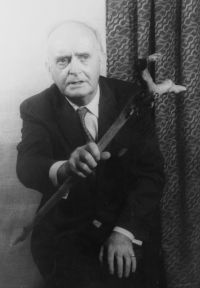 Padraic Colum,
The Adventures of Odysseus and The Tales of Troy
Padraic Colum,
The Adventures of Odysseus and The Tales of Troy
“ Then Hector's wife, Andromache, went to the bed and cried over the body. "Husband," she cried, "thou art gone from life, and thou hast left me a widow in thy house. Our child is yet little, and he shall not grow to manhood in the halls that were thine, for long before that the City will be taken and destroyed. Ah, how can it stand, when thou, who wert its best guardian, hast perished? The folk lament thee, Hector ”
Henry Green, Shakespeare and the Emblem Writers
“ And admired Hector’s stature and splendid form;Nor was there one standing by who did not inflict a wound.” Claude Mignault, in his notes to Alciatus (Emb. 153) , quotes an epigram, from an unknown Greek author, which Hector is supposed to have uttered as he was dragged by the Grecian chariot,—“Now after my death ye pierce my body;The very hares are bold to insult a dead lion.” The Troilus and Cressida (act v. sc. 8, l. 21, vol. vi. p. 259) exhibits the big, brutal Achilles exulting over his slain enemy, and giving the infamous order,—“Come, tie his body to my horse’s tail ”
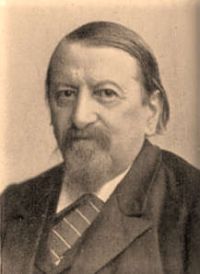 Rudolf von Gottschall,
Withered Leaves: A Novel. Vol. 1…
Rudolf von Gottschall,
Withered Leaves: A Novel. Vol. 1…
“ I should wish above everything that all men of intellect should recognise Hegel as their mental guide; what is more adapted to such guidance than a system which inculcates the progress of man in the consciousness of freedom. What does Herbart teach?--all respect to your father! Nothing of the sort! He confuses the good and the beautiful in a lamentable manner; nowhere does he speak of the progress of mankind. With him the mind is a tabula rasa, where different ideas agree to meet. Some are stronger, others weaker; they create a king of the rats, and hang one upon another. ”
Various, The red book of animal stories (1899)
“ For some time Hogg stuck to it from sheer obstinacy, but at length Hector proved too much for him, and he gave up the singing to some one who owned a less musical dog! Though, as we have seen, Hector was not nearly as intelligent as his father Sirrah, about performing his duties, he would hold tight to what he had been bidden to do, with the stupid obedience of Casabianca. Nothing would turn his attention from his work, or make him lose temper; but he could never learn all sorts of little dodges by which Sirrah managed the sheep, so gave himself twice the trouble that he need have done. ”
Hugh Adam Reyburn, The Ethical Theory of Hegel — Introduction (1921)
“ This was published in 1807 and marks Hegel’s breach with Schelling. It is thus the first treatise which presents the special standpoint of Hegel’s own thought. The Phenomenology occupies a peculiar position: it is both a part of philosophy, and an introduction to it. It is an analysis of the various attitudes of thought to the world and a review of the various phenomenal appearances of mind. It exposes the way in which each typical form of mind organizes itself, the relations which it maintains to its object, and the kind of object which it apprehends. ”
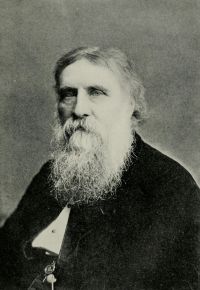 George MacDonald,
Far Above Rubies
George MacDonald,
Far Above Rubies
“ For what else but such success could come to Hector? Had it not been drawing nearer and nearer all the time? And for a moment she seemed again to stand, a much younger child than now, amid the gusty whirling of the dead leaves about her feet, once more on the point of stooping to pick up what might prove a withered leaf, but was in reality a pound-note, the thing which had wrought her so much misery, and was now filling her cup of joy to the very brim. The book the old lady had talked of could be no other than Hector’s book. No other than Hector could have written it. ”
William James, The Will to Believe and Other Essays in Popular Philosophy… (1897)
“ Can you imagine your thought of an object trying to dispossess the real object from its being, and so being negated by it? The great, the sacred law of partaking, the noiseless step of continuity, seems something that Hegel cannot possibly understand. All or nothing is his one idea. For him each point of space, of time, each feeling in the ego, each quality of being, is clamoring, "I am the all,—there is nought else but me." This clamor is its essence, which has to be negated in another act which gives it its true determination. ”
The Children's Hour, Volume 3…
“ Hardly could they keep the aged father from rushing through the gates; for he threw himself in the dust and supplicated each man by name: “O friend, forbear! and if you love me, let me go to the ships of the Achaians, and pray to this arrogant, this fearful man!” Thus wailed old Priam; and the men wailed with him. And Queen Hecuba led the loud lamentations of the women. “Why,” she cried, “should I yet live, when thou, my son, my boast, my glory, art dead? the pride and blessing of all, both men and women of the city, who honored thee as a god; for in thy life thou wert an honor to them all!” ”
W. Lucas Collins, Homer: The Iliad; The Odyssey
“ The spear launched with these words misses its mark: that of Hector strikes full in the centre of his enemy’s shield, but it glances harmlessly off from the fire-god’s workmanship. He looks round for Deiphobus to hand him another; but the false Deiphobus has vanished, and, too late, Hector detects the cruel deceit of the goddess. He will die at least as a hero should. He draws his sword, and rushes on Achilles. The wary Greek eyes him carefully as he comes on, and spies the joint in his harness where the breastplate meets the throat. ”
George MacDonald,
Far Above Rubies
“ Indeed, it was hard to understand how Hector came ever to be born of such a woman, although in truth she was of as pure Celtic origin as her husband—only blood is not spirit, and that is often clearly manifest. ”
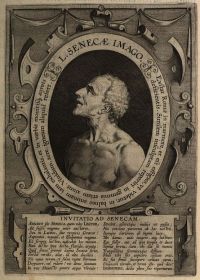 Lucius Annaeus Seneca,
The Tragedies of Seneca
Lucius Annaeus Seneca,
The Tragedies of Seneca
“ Hebe, the daughter of Juno, cupbearer to the gods, and given as bride to the deified Hercules, Oct. 211. Hecate, daughter of Perses, presider over enchantments; often identified with Proserpina as the underworld 513manifestation of the deity seen in Diana on earth and Luna in heaven, H. Oet. 1519; Med. 6, 577, 833, 841; Tro. 389; Hip. 412; Oed. 569. Hector, the son of Priam and Hecuba, husband of Andromache, the bravest warrior and chief support of Troy, Tro. 125; burns the Greek fleet, ibid. ”
Augustus Taber Murray, The Iliad — Book XV (1924)
“ And Hector he saw lying on the plain, while about him sat his comrades, and he was gasping with painful breath, distraught in mind, and vomiting blood; for not the weakest of the Achaeans was it that had smitten him. At sight of him the father of men and gods had pity, and with a dread glance from beneath his brows he spake to Hera, saying: "Hera, that art hard to deal with, it is the craft of thine evil wiles that hath stayed goodly Hector from the fight, and hath driven the host in rout. ”
 Charles Carroll Everett,
Fichte's Science of Knowledge…
(1892)
Charles Carroll Everett,
Fichte's Science of Knowledge…
(1892)
“ The work of Fichte was unquestionably one of the most important factors in the preparation of Hegel for his career. Fichte saw more clearly than it had been seen before, what is the true nature of philosophy, and what should be the ideal toward which it should strive. He adopted the inethod which proved so mighty in the hands of Hegel. The dialectic process which proceeds from simple affirmation, through negation, to that higher affirmation which springs from the negation of the negation, was the pulse beat of the system of Fichte, as it became afterward that of Hegel’s. ”
William James, The Will to Believe and Other Essays in Popular Philosophy… (1897)
“ And now after this long introduction, let me trace some of Hegel's ways of applying his discovery. His system resembles a mouse-trap, in which if you once pass the door you may be lost forever. Safety lies in not entering. Hegelians have anointed, so to speak, the entrance with various considerations which, stated in an abstract form, are so plausible as to slide us unresistingly and almost unwittingly through the fatal arch. It is not necessary to drink the ocean to know that it is salt; nor need a critic dissect a whole system after proving that its premises are rotten. ”
of Naucratis Athenaeus, The Deipnosophists; or, Banquet of the Learned of Athenæus…
“ But Apollodorus, in his books concerning the Gods, says that the mullet is sacrificed to Hecate on account of the resemblance of their names; for that the goddess is τρίμορφος, of a triple form. But Melanthus, in his treatise on the Eleusinian Mysteries, says that both the τρίγλη and the μαινὶς (or sprat) , are sacred to Hecate, because Hecate is also a goddess of the sea. But Hegesander the Delphian says that the mullet is accustomed to be carried about in the Artemisia, because it is accustomed diligently to hunt out and destroy the sea-hares, which are poisonous animals ”
 James Frederick Ferrier,
Philosophical Works of the Late James Frederick Ferrier
(1888)
James Frederick Ferrier,
Philosophical Works of the Late James Frederick Ferrier
(1888)
“ And, finally, giving to his doctrine, which is, that everything consists of antagonistic or heterogeneous elements—giving to this doctrine its highest or most abstract expression, he declares that everything is and is not; a formula which, in modern times, has been adopted by Hegel, and, has proved a stumbling-block and rock of offence to all who have ventured on his pages. Such are some of the chief expressions in which Heraclitus is reported to have embodied the substance of his speculations. They contain the whole of his philosophy, in so far as it has been handed down to us ”
Jr. Horatio Alger, Hector's Inheritance, Or, the Boys of Smith Institute
“ He had known Hector since he was a boy of five, and liked him far better than Guy, who was a newcomer, and a boy disposed to domineer over those whom he considered his inferiors. “I don’t intend to submit to it,” said Hector, trying, ineffectually, to curb his anger. “I don’t blame you, Master Hector, but I’m afraid you will have a hard time. As your uncle is your guardian, of course he has power over you, and he thinks everything of that boy of his, though, to my mind, he is an unmannerly cub.” ”
Jr. Horatio Alger, Hector's Inheritance, Or, the Boys of Smith Institute
“ You are young and hopeful. I am too much inclined to despond. I have always been timid about the future. It is a matter of temperament.” It was early in the afternoon when they reached New York. As they emerged from the depot a bright-faced boy came up eagerly and greeted them. “How are you, Hector?” he said. “You see, I came to meet you. I have been longing to have you come.” “I am just as glad to see you, Walter,” said Hector, heartily. “Mr. Crabb, here is your future pupil, Walter Boss.” ”
 Charlotte Brontë,
The twelve adventurers and other stories
(1925)
Charlotte Brontë,
The twelve adventurers and other stories
(1925)
“ The fact is Hector is a tall, well-proportioned, robust figure, with red hair, a florid complexion, an expression of eye which indicates good humour, powerful talent, and no small degree of ferocity. His countenance is certainly not so femininely elegant as that of Northangerland, nor so fierily magnificent as that of Zamorna, but it is the countenance of a gentleman and a Glass-towner, not of a brownie and a bear. ”
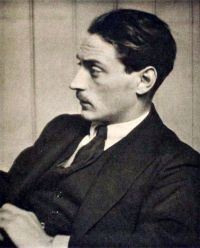 Compton MacKenzie,
Rich Relatives
Compton MacKenzie,
Rich Relatives
“ Although he felt bound to refuse, the compliment to his typically Caledonian appearance pleased him, and now on his holiday, in a suit of homespun with an old cap stuck over with flies, Sir Hector regretted that the necessity for keeping one hand in his patients' pockets prevented his setting more than one foot upon his native heath, and even that one foot only figuratively. ”
P. Austin Nuttall, The Nuttall Encyclopædia
“ Hegelianism, the philosophy of Hegel, which resolves being into thought, and thought into the unity of the logical moments of simple apprehension, judgment, and reason, all purely spiritual acts, whereby being in itself, or seyn, becomes other than itself, or daseyn, and returns into itself, or für sich seyn, the universal being first by separating from itself particularised, and then by return into itself individualised, the whole being what Hegel characterises as Der Process des Geistes, "The Process of the Spirit." ”
Ethel M. Dell, The Safety Curtain, and Other Stories
“ She fought with herself and opened her eyes. Her head was swimming still, but she compelled herself to look.Jeff Ironside was beside her, one foot lodged upon the lowest bar of the gate while he propped her against his bent knee.He looked down at her with a certain sternness of demeanour that was characteristic of him. "Take your time," he said. "It was a nasty knock-out.""I—I'm all right," she told him breathlessly. "Where—where is Hector?""If you mean your animal," he said in the slow, grim way which she began to remember as his, "he is probably well on his way home by now. ”
