Hock (wine)

Definition and stakes

John Ashton,  Drinks of the World

“ Wine containing about 13 per cent. of alcohol may be assumed to be fortified, as it is called, with brandy or other spirit.
The varieties of wine produced are said to be “almost endless.” This great number of wines is in some measure owing to an interesting fact mentioned by Miller in his Organic Chemistry (3rd ed. p. 187) , who tells us that a particular variety of grape, when grown upon the Rhine, furnishes a species of hock; the same grape, when raised in the valley of the Tagus, yields Bucellas, in which the palate of a connoisseur may possibly detect the flavour of hock
”
Source: Gutenberg

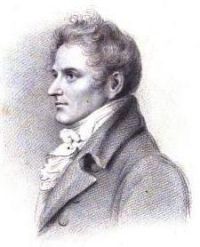
Portrait of Sir John Carr Sir John Carr,  A tour through Holland (1807)

“ As many a saint, high in superstitious veneration, must have had at least ten skulls and one hundred toe nails, as if no illusion has been practised by those who have exhibited them to the credulous in different eras and various regions, so nothing short of the power of transmuting water into wine, could produce from these vineyards the immense quantity of wine which passes under the title of hock. Certain it is, that the greater quantity of wine honoured with that name, is from the grapes of both sides of the lower part of the Rhine. ”
Source: Gutenberg

Harper's New Monthly Magazine, No…

“ Knowing that the Russians, by themselves, drink more Champagne than France exports, and that it must rain grapes at Hockheim before that place can yield all the wine we English label Hock, and haunted as we are by the same difficulty when we look to other kinds of foreign wine, we feel a justified suspicion that the same glass of “genuine old port” can not be indulged in simultaneously by ten people. If only one man of the number drinks it, what is that eidolon which delights the other nine? ”
Source: Gutenberg

Get perspective with Kwize: daily news enlightened by great literature