Howler monkey

Definition and stakes

Arabella Burton Buckley,  The winners in life's race (1883)

“ Their friends the Howler monkeys, which also have grasping tails, seek the deep recesses of the forest and creep quietly from tree to tree until night comes, when hundreds of them at once will make the woods re-echo with their deep howling cry, which they produce by a special voice-organ in their throat; and with them come out the little Owl monkeys, which sleep by day in the hollows247 of the trees. These, with the various kinds of Saki monkeys, which cannot cling by their tails, but have fairly good brains and quick intelligence, make up the monkey population of America. ”
Source: Gutenberg

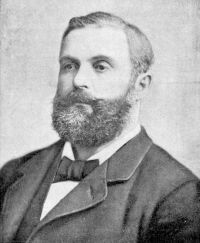
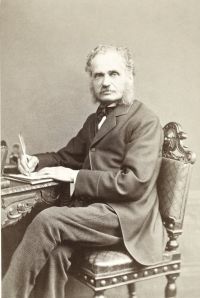
Portrait of Henry Walter Bates Henry Walter Bates,  The Naturalist on the River Amazons… (1863)

“ The only interesting Mammalian animal which I saw at Villa Nova was a monkey of a species new to me; it was not, however, a native of the district, having been brought by a trader from the river Madeira, a few miles above Borba. It was a howler, probably the Mycetes stramineus of Geoffrey St. Hilaire. The howlers are the only kinds of monkey which the natives have not succeeded in taming. They are often caught, but they do not survive captivity many weeks. ”
Source: Wikisource

Charles Carter Blake,  ../../ (1862)

“ Lund in limestone caverns in Brazil, offers the nearest analogy to the howler monkeys (Mycetes) which are still found in the same locality. The Sapajou (Cebus macrognathus) , the Sagouin (Callithrix primævus) , and the little Ouistiti (Jacchus grandis) , are all Brazilian forms. No Transmutationist will assert the probable, or even possible, derivation of American types of men from the Platyrrliine monkeys.
Turning to the Old World, the earliest and one of the most interesting forms of fossil monkey has been discovered in the Eocene sand, at Kyson in Suffolk.
”
Source: Wikisource

Get perspective with Kwize: daily news enlightened by great literature