Human problem
Definition and stakes
Quotes about “human problem”

George Thomas Daly, Catholic Problems in Western Canada
“ Problems characterize every age, sum up the complex life of nations and give them their distinctive features. They form that moral atmosphere which makes one period of history responsible and tributary to another. And indeed, in every human problem there is an ethical element. ”
 Delia Salter Bacon,
The Philosophy of the Plays of Shakspere Unfolded
Delia Salter Bacon,
The Philosophy of the Plays of Shakspere Unfolded
“ The unspeakable difficulties in the way of the solution of this problem,—the difficulties which the radical bias in the individual human nature, even under its noblest forms, creates,—the difficulties which the ignorance, and stupidity, and passion of the multitude created then, and still create, appear here without any mitigation. ”
Robert A. Watson, Expositor's Bible: The Book of Job
“ A universal problem, that is, a question of every human age, has been presented and within limits brought to a solution. But it is not the supreme question of man's life. Beneath the doubts and fears with which this drama has dealt lie darker and more stormy elements. ”
Thomas Holmes, Pictures and Problems from London Police Courts
“ Then a field for the study of human nature is opened up, and nowhere in the wide world is there a field equal to it. Does anyone want to study the drink question?—here’s the chance; the social evil?—here’s the opportunity; causes of crime?—here they may be found. Every vice and every virtue, and every source of strength and every cause of weakness incidental to humanity are found here. Every phase of every social problem has its place here. The joys and pleasures of life, the sorrows and difficulties of life, the comedy and fun of life, the tragedy and despair of life, are illustrated here. ”
 Josiah Royce,
The Conception of God
(1897)
Josiah Royce,
The Conception of God
(1897)
“ DEFINITION OF THE PROBLEM As to the general interest of the problem, even outside of technical philosophy, there can be no doubt. When one reflects upon the social and ethical problems which have gathered about the word “individualism,” one is reminded that, after all, men bleed and die in this world for the sake of logic as well as for the sake of home and bread, and that the problems of the study are also the problems of human destiny. ”
Students for a democratic society, Port Huron Statement
“ We might deliberately ignore, or avoid, or fail to feel all other human problems, but not these two, for these were too immediate and crushing in their impact, too challenging in the demand that we as individuals take the responsibility for encounter and resolution. ”
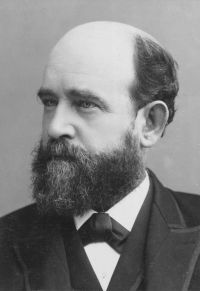 Henry George,
Progress and Poverty, Volumes I and II
Henry George,
Progress and Poverty, Volumes I and II
“ I have covered every point and met every objection. But the problems that we have been considering, great as they are, pass into problems greater yet—into the grandest problems with which the human mind can grapple. ”
Durant Drake, Problems of Conduct: An Introductory Survey of Ethics
“ Caught as we are by the irresistible flux of existence, we find ourselves able so to steer our lives as to change the proportion of light and shade, to give greater value to a life that might have had less. This possibility makes our moral problem. What shall we choose and from what refrain? To what aims shall we give our allegiance? What shall we fight for and what against? ”
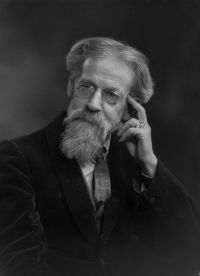 Patrick Geddes,
Civics: as Applied Sociology
(1905)
Patrick Geddes,
Civics: as Applied Sociology
(1905)
“ It is because of each and all of these imperfect realisations of our civic life, that the evils of life sink down, or flame out, into these complex eruptions of social evils with which our human aggregations are as yet cursed.Hence, to those who are struggling with disease and pain, with ignorance and defect, with vice, and with crime, but for the most part too separately, it is time to say that all these four evils are capable of being viewed together, and largely even treated together. ”
Josiah Royce,
The World and the Individual, Second Series
(1901)
“ And in the same way, when we deal with Man, — with the concrete issues of his daily life, — with the problems of private passion or of public policy, we have to do, primarily, with human nature as it is, and with all the unconquerable naïveté of our desires, of our imperfections, and even of our virtues. ”
 Victor Hugo,
William Shakespeare
Victor Hugo,
William Shakespeare
“ Man, at this hour, tends to fall into the stomach. Man must be replaced in the heart; man must be replaced in the brain. The brain,—behold the sovereign that must be restored! The social question requires to-day, more than ever, to be examined on the side of human dignity. ”
 C. Gasquoine Hartley,
Women's Wild Oats: Essays on the Re-fixing of Moral Standards
C. Gasquoine Hartley,
Women's Wild Oats: Essays on the Re-fixing of Moral Standards
“ We find, then, that the difficult problem we are considering, like other social problems, has a material aspect, that is a medical aspect, an intellectual aspect, and a spiritual aspect concerning the aims of life: and of these the last is the most fundamental; it is obviously also the most difficult. To attack the situation fully it would be necessary to change most of our contemporary life. ”
“ For this reason, above all, the dangers of social life demand that the necessary skill and care shall be devoted to guarding the human heart against the depravity which springs from fresh needs. Man’s proper study is that of his relation to his environment. ”
 Sir Horace Curzon Plunkett,
Ireland In The New Century
Sir Horace Curzon Plunkett,
Ireland In The New Century
“ I admit that this condition which adds to the interest of the problem, and perhaps makes it more amenable to rapid solution, is an indication of a weakness of moral fibre to which must be largely attributed our failure to be master of our circumstances. ”
William Hazlitt, The Collected Works of William Hazlitt…
“ First, how much of the vice and misery in society is actually owing to human institutions, or the passions, follies, imperfections, or perversities of human nature, independently of the principle of population. ”

“ We take the problem of life—which is extraordinarily simple to begin with—and we pile upon it and around it thousands of outside rules and conventions and traditions, and we confuse it with other thousands of prejudices, and insincerities, and old mistakes that no one has had the industry to examine—and then we look with embarrassment at what we have done, and shake our heads, and say that the problem is too hard, that it passes the wisdom of man to solve it. ”
Various, Popular Science Monthly (1897)
“ Here were all the elements that go to make up a first-class "social problem." A vivid imagination, inflamed by a deep sympathy with immediate inconvenience and suffering, drew a harrowing picture of the distress to individuals and to society. ”
Francis Henry Cliffe, A Manual of Italian Literature
“ I hold (and not accidentally) that human society has inborn and necessary principles of imperfection, and that its condition can be more or less bad, but never perfect. From every point of view, to deprive men of that which is most delightful to the mind, [Pg 257] appears to me the infliction of a real injury upon the human race. ”
Helen A. Clarke, Browning and His Century
“ But the evil which results from this lack of development in individuals to other individuals, and to society at large, brings a problem which as we have already seen in the first chapter is not so easy of solution. ”
 Friedrich Nietzsche,
HUMAN, ALL TOO HUMAN, 'A Book For Free Spirits' Part I
(1909)
Friedrich Nietzsche,
HUMAN, ALL TOO HUMAN, 'A Book For Free Spirits' Part I
(1909)
“ MY UTOPIA.—In a better arranged society the heavy work and trouble of life will be assigned to those who suffer least through it, to the most obtuse, therefore; and so step by step up to those who are most sensitive to the highest and sublimest kinds of suffering, and who therefore still suffer notwithstanding the greatest alleviations of life. ”
Sébastien-Roch-Nicolas Chamfort, The cynic's breviary: Maxims and anecdotes from Nicolas de Chamfort (1902)
“ Physical scourges and the calamities of human nature rendered society necessary. Society has added to natural misfortunes. The drawbacks of society have made government necessary, and government adds to society’s [Pg 40] misfortunes. There is the history of human nature in a nutshell. ”
 Joseph Gaston,
Portland, Oregon: Its History and Builders
(1911)
Joseph Gaston,
Portland, Oregon: Its History and Builders
(1911)
“ Society and all its privileges, functions, advantages or drawbacks may have done its best, or its worst, yet anchored to the immutable principles of truth, justice and morality it rises above the base, the brute, the weakness of human na-ture, and mounts to the summit by slow and painful steps. ”
 Jean-Jacques Rousseau,
A discourse upon the origin and foundation of the inequality among mankind
(1761)
Jean-Jacques Rousseau,
A discourse upon the origin and foundation of the inequality among mankind
(1761)
“ These Researches, so difficult to make and which hitherto have been so little thought of, are however the only Means left us to remove a thousand Difficulties, which prevent our seeing the true Foundations of Human Society. ”
 H. G. Wells,
An Englishman Looks at the World
H. G. Wells,
An Englishman Looks at the World
“ From its dibris we shall either revert to the Normal Social Life and begin again the long struggle towards that ampler, happier, juster arrangement of human affairs which we of this book, at any rate, believe to be possible, or we shall pass into the twilight of mankind. ”
William Dawson Le Sueur, Popular Science Monthly (1883)
“ Experience shows what lines of conduct, what principles of action, are favorable to happiness in general, and to the satisfaction of the instinct of sympathy in particular; and human civilization can not be carried very far before the principle is established that harm must come from the shedding of human blood. Such a principle gains authority over men's minds ”
Benson Baker, The Sanitary Condition of the Poor in Relation to Disease…
“ The principle embodied in this proverb received the approval and sanction of past ages, but which it is most difficult to enforce at the present time; it may be explained by the fact, that men not being forewarned cannot be forearmed, p. 5and further, because another principle which is expressed in the words, “men think all men mortal but themselves,” lies deep in the human mind. ”
“ Especially our duty at present is to better our present foothold; to investigate; to comprehend the forces of nature; to set our state rationally in order; to stamp down disease in body, mind, and government; to lighten the monstrous misery of our fellows, not by windy dogmas, but by calm science. The sufferings of the world are due to this, that we despise those plain earthly teachers, reason, work, and discipline. Lost in many speculations, we leave our house disordered, unkept, and dirty. ”
 John Addington Symonds,
A Problem in Modern Ethics
(1896)
John Addington Symonds,
A Problem in Modern Ethics
(1896)
“ We need not quarrel over our solutions of the problem. The fact that he is there, among us, and that he constitutes an ever-present factor in our social system, has to be faced. How are we to deal with him? ”
 Friedrich Schiller,
Aesthetical Essays of Friedrich Schiller
Friedrich Schiller,
Aesthetical Essays of Friedrich Schiller
“ The moral possibility is wanting, and the generous occasion finds an unsusceptible rule. Man paints himself in his actions, and what is the form depicted in the drama of the present time? On the one hand, he is seen running wild, on the other, in a state of lethargy; the two extremest stages of human degeneracy, and both seen in one and the same period. ”
 Havelock Ellis,
Little Essays of Love and Virtue
(1922)
Havelock Ellis,
Little Essays of Love and Virtue
(1922)
“ Throughout the history of civilisation, wherever we can trace the feelings and ideas which have prevailed on this matter and the resultant conduct, the problem has existed, often to produce discord, conflict, and misery. ”
“ Such difficulties of thought regarding moral distinctions, motives good and bad, conflicts of conscience, the justice and expediency of laws and governments, as usually arise as people begin to reflect seriously upon the ways of the better social life, have been considered, besides many practical questions regarding self-control, elevation of feeling and thought, and the part of wisdom in every-day affairs. ”
 Three Initiates,
The Kybalion
(1908)
Three Initiates,
The Kybalion
(1908)
“ But, still, we prefer to think of THE ALL as acting entirely FREE from any influence, internal as well as external. That is the problem which lies at the root of difficulty—and the difficulty that lies at the root of the problem. ”
H. D. Traill, English Men of Letters: Coleridge
“ By an analysis of the moral phenomena associated with the action of the human will, and, in particular, of the conflict which arises between "the tendency of all Will to make itself absolute," and the consciousness that, under the conditions of man's fallen state, nothing but misery could result both to the individual and the race from the fulfilment of this tendency, – Mr. ”
 Charles Wagner,
The Simple Life
Charles Wagner,
The Simple Life
“ WHEN one passes in review the individual causes that disturb and complicate our social life, by whatever names they are designated, and their list would be long, they all lead back to one general cause, which is this: the confusion of the secondary with the essential. Material comfort, education, liberty, the whole of civilization—these things constitute the frame of the picture ”
 Enrico Ferri,
Socialism and Modern Science (Darwin…
Enrico Ferri,
Socialism and Modern Science (Darwin…
“ The solution of the problem does [Pg 79] not become easier because it is recognized that the present abnormal condition, which is becoming more and more acute—misery for the masses and pleasure for a few—is not the consequence of the bad intentions of such or such an individual. ”
“ So much are we now involved in problems of human groups, so persistent are the portrayals of our social afflictions, and so well do we magnify our woes by insisting on them, so much in sheer weariness do we provide antidotes to soothe our feelings and to cause us to forget by means of many empty diversions, that we may neglect to express ourselves in simple free personal joy and to separate the obligation of the individual from the irresponsibilities of the mass. ”
“ But society has now fairly got the better of individuality; and the danger which threatens human nature is not the excess, but the deficiency, of personal impulses and preferences. ”
 John Stuart Mill,
The Subjection of Women
(1869)
John Stuart Mill,
The Subjection of Women
(1869)
“ Of all difficulties which impede the progress of thought, and the formation of well-grounded opinions on life and social arrangements, the greatest is now the unspeakable ignorance and inattention of mankind in respect to the influences which form human character. ”
 William Graham Sumner,
Earth-Hunger and Other Essays
(1913)
William Graham Sumner,
Earth-Hunger and Other Essays
(1913)
“ What results is what must result from the actions, acting as causes, under the conditions; if the actions are of a certain kind, institutions are undermined, men are miseducated, the public conscience is corrupted, false standards are set up; frivolity, idleness, love of pleasure, sycophancy, will become traits of the society. ”
 Henry Blake Fuller,
The Cliff-Dwellers: A Novel
Henry Blake Fuller,
The Cliff-Dwellers: A Novel
“ How has humanity contrived to endure so well the countless ills of countless ages? Because society has been, in general, loose-knit, so that each unit in it has had room for some individual play. What so increases and intensifies the agonies of to-day? The fact that society has a closer and denser texture than ever before ”
Joel Tiffany, The Astral World—Higher Occult Powers
“ You will see men who, so far as theory is concerned, will discourse eloquently concerning human justice and morality, yet they utterly disregard and ignore all moral restraints in their private character and practices. ”
William Graham Sumner,
What Social Classes Owe to Each Other
“ Part of the task which devolves on those who are subject to the duty is to define the problem. They are told only that something is the matter: that it behooves them to find out what it is, and how to correct it, and then to work out the cure. ”
 Alfred Korzybski,
Manhood of Humanity
Alfred Korzybski,
Manhood of Humanity
“ But the fact that the old philosophy, law, ethics, psychology, politics and sociology could not solve the practical problems of humanity, is not any reason whatsoever why we should despair. The problems can be solved. ”
 Edward Payson Roe,
A Knight of the Nineteenth Century
Edward Payson Roe,
A Knight of the Nineteenth Century
“ By the consequences I do not mean what the world will think of you, but, rather, the personal results of your action—what you must suffer while you are in the world, and what you must suffer when far beyond the world. ”
 Sir Oliver Lodge,
The Substance of Faith Allied with Science…
Sir Oliver Lodge,
The Substance of Faith Allied with Science…
“ In this blind and mistaken struggle—a struggle which in the present condition of society seems so unavoidable, even so meritorious, but which in a reformed society will be looked back upon as at something akin to lunacy—we do not even make to ourselves friends of the mammon of unrighteousness. ”
 Abby Morton Diaz,
A Domestic Problem : Work and Culture in the Household
Abby Morton Diaz,
A Domestic Problem : Work and Culture in the Household
“ Humanity does want to know, right away, how to keep itself alive and well and doing well. It wants brought up for consideration the wrongs which oppress it, the evils which defile it, the crimes which degrade it ”
 Leslie Stephen,
Social Rights And Duties: Addresses to Ethical Societies…
Leslie Stephen,
Social Rights And Duties: Addresses to Ethical Societies…
“ The principle is—so far as I can understand—that the right frame of mind for dealing with the gravest problems is to generate a state of violent excitement, to adopt any remedy, real or supposed, which suggests itself at the moment, and to denounce everybody who suggests difficulties as a cynic or a cold-blooded egoist; and therefore to treat grave chronic and organic diseases of society by spasmodic impulses, to make stringent laws without condescending to ask whether they will work, and try the boldest experiments without considering whether they are likely to increase or diminish the evil. ”
Mary Hays, Memoirs of Emma Courtney
“ Whether the incidents, or the characters, are copied from life, is of little importance—The only question is, if the circumstances, and situations, are altogether improbable? If not—whether the consequences might not have followed from the circumstances?—This is a grand question, applicable to all the purposes of education, morals, and legislation—and on this I rest my moral—'Do men gather figs of thorns, or grapes of thistles?' asked a moralist and a reformer. ”