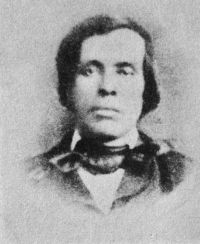
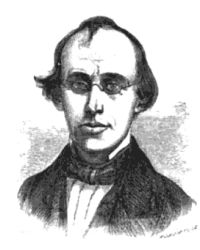
The hunter-gatherer lifestyle, marked by subsistence through foraging and hunting, defines societies historically dependent on natural resources rather than farming. From the egalitarian structures of ancient forager communities to the specialized roles in acquiring resources, this theme has inspired a wide range of literary depictions. Authors like Hanford Lennox Gordon portray hunting as a communal and spiritual obligation, while John Greenleaf Whittier presents it as a metaphor for human struggle.
Vishnu Sharma’s fables and Mayne Reid’s vivid storytelling emphasize the relationship between humans and nature, focusing on survival and coexistence. These diverse perspectives highlight how hunter-gatherer societies, though frequently replaced by agricultural systems, remain essential in understanding humanity’s adaptive and cultural development.
 Albert S. Evans,
A La California
(1873)