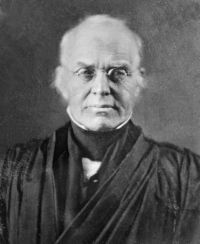
Legislative intent

Definition and stakes

Alan B. Handler,  Van Horn v. William Blanchard Co… (1981)

“ The judicial decisions of another state are not conclusive evidence of legislative intent. Thus, where the legislature of one state chooses to adopt as part of its laws the statute of another state, the judiciary of the adopting state may, if appropriate, choose to interpret its statute differently from the judicial interpretations of the source state. ”

Source: Wikisource

Alan B. Handler,  Van Horn v. William Blanchard Co… (1981)

“ The class of persons potentially excluded from liability is sufficiently large that we need not resort to "less negligent" defendants to swell its numbers. [1]
In sum, the aggregate approach does not empty the legislation of reasonable meaning. The majority has, I submit, failed in its [NJ103] attempt to rely upon the plain language rule as demonstrating the clear meaning and basic intent of the Comparative Negligence Act. The Court cannot, therefore, avoid a deeper probe for the underlying legislative intent.
”
Source: Wikisource

Alan B. Handler,  Van Horn v. William Blanchard Co… (1981)

“ Since the Legislature necessarily intended the recovery allocation provisions of N.J.S.A. 2A:15-5.3 to apply to a much larger class than tort-immune defendants, this larger class, the majority contends, must include negligent but "less faulty" defendants.
It is difficult to follow this forensic flight. Wherever else it leads, it clearly demonstrates that the legislative intent to use the individual or the aggregate approach cannot be fairly resolved solely from the language of the enactment.
”
Source: Wikisource

Get perspective with Kwize: daily news enlightened by great literature