Lift (aerodynamics)

Definition and stakes

Building and Flying an Aeroplane

“ A forward movement of the center of pressure tends to lower the tail of the machine, when the intensity of the pressure is unchanged, and to counterbalance this the rear elevator must have its angle of incidence increased in order to increase the lift at the rear of the machine, or it will slide down backward. The alternative to be adopted in case of temporary lack of engine power is to decrease the angle of the elevator and allow the aeroplane to sweep downward, thus gaining momentum. ”
Source: Gutenberg

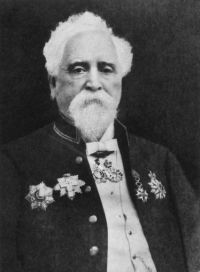
Portrait of Hiram S. Maxim Hiram S. Maxim,  Artificial and Natural Flight

“ This enables us to reduce the width of our machine without reducing its lifting effect; we still have 100 feet of entering edge, we still have 200 feet of lifting surface, and we know that each foot will lift 2·5 lbs. at the speed we propose to travel. 200 × 2·5 = 500; therefore our total lifting effect is 500 lbs., and the screw thrust required to push our aeroplane through the air is one-tenth of this, because the angle above the horizontal is 1 in 10. ”
Source: Gutenberg

W. LeMaitre,  Natural Stability and the Parachute Principle in Aeroplanes

“ In reducing the span, however, we reduce the lifting surface of the machine. But on the other hand it must be remembered that the lifting efficiency is increased by increasing the speed. Lift is the product of supporting surface and speed. A small plane driven at a high speed will give as great a lift as a large plane driven at a low speed. Speed, again, is the difference between the propelling power and the head resistance, and we can increase the speed by decreasing the resistance. ”
Source: Gutenberg

Get perspective with Kwize: daily news enlightened by great literature