Macaque

Definition and stakes

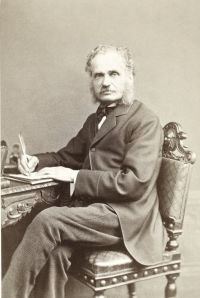
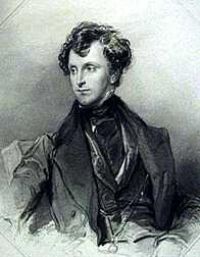
Portrait of Sir James Emerson Tennent Sir James Emerson Tennent,  Ceylon; an Account of the Island Physical…

“ It is an active and intelligent creature, not much larger than the common bonneted Macaque, and far from being so mischievous as others of the monkeys in the island. In captivity it is remarkable for the gravity of its demeanour and for an air of melancholy in its expression and movements, which is completely in character with its snowy beard and venerable aspect. ”
Source: Gutenberg

Portrait of Henry Ogg Forbes Henry Ogg Forbes,  A Hand-book to the Primates — Cercopithecinae Part II (1894)

“ Habits.—Of this Macaque little is known in a wild state. It is, however, very docile and gentle in captivity. In life the tail is rarely carried erect, and is as a rule applied over the anus; its latter fourth being doubled on itself to the left, and serving to fill up the interspace between the divergent portion of the callosities, so that the animal sits on this portion of its tail, which contains only a few rudiments of vertebræ at its base, and the upper surface of which is rough and somewhat callous.... ”
Source: Wikisource

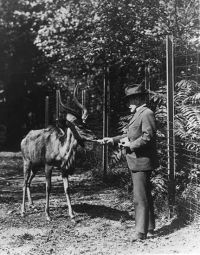
Portrait of Henry Ogg Forbes Henry Ogg Forbes,  A Hand-book to the Primates — Cercopithecinae Part II (1894)

“ Habits.—This Monkey has been known to science for many centuries. It is now certain, as M. Frederick Cuvier remarks in his "History of Mammals," thanks to the researches of M. de Blainville upon the Monkey dissected by Galen, that the Pithecus of Aristotle was our Magot, as we know of no other species of Macaque without a tail. The Barbary Macaques, when on the ground, invariably walk on their four legs, but in an uneasy and clumsy manner compared with their motions when climbing; they are far more at home in trees or rocks, where they climb with amazing rapidity. ”
Source: Wikisource

Get perspective with Kwize: daily news enlightened by great literature