“ While speaking our native tongue our muscles move, our sinews tend, our vessels lean, our blood throbs, and our nerves tingle with the essence of our language in its direction, and not in the direction of any other language. We not only speak and sing our language, but we gesticulate it, we walk it, dance it, write it, think it, smile it, and sorrow in it. Everything we do is done differently from the same thing done by a person speaking another language. ”
Quotes about “langur”
Bartolomé de las Casas, The Letters of Amerigo Vespucci…
“ They use the same accents as ourselves, forming their words either on the palate, the teeth, or the lips, only they have other words for things. Great is the diversity of languages, for in a hundred leagues we found such change in the language that the inhabitants could not understand each other. ”
 William Dwight Whitney,
Language and the Study of Language
(1867)
William Dwight Whitney,
Language and the Study of Language
(1867)
“ Our own tongue, for instance, aside from its wholesale composition out of the tongues of two different races, draws more or less of its material from nearly every one of the languages of Europe, and from not a few of those of Asia, Africa, and America. Yet it is evident that such borrowing has its limits, both of degree and of kind, and that it may be within the power of the linguistic student readily to distinguish its results from the effects of a genuine community of linguistic tradition. ”
Edwin W. Bowen, Questions at Issue in Our English Speech (1909)
“ The philologists explain the several stages of the development of a language, distinctly marking off each, from the crude local patois to the highly developed and polished speech of a cultured nation. The primitive tongue of a local tribe is termed a patois, a rudimentary speech ill adapted to the communication of the simplest ideas. If a patois grows and develops so as to become available in vocabulary and syntax for the expression of thought, it is called a dialect. ”
 A. H. Sayce,
Introduction to the science of language…
(1880)
A. H. Sayce,
Introduction to the science of language…
(1880)
“ It is only when we have thoroughly explored the morphology of each group of kindred tongues, have seen how their inner form has gradually expanded like the flower out of the seed, that we can venture to bring our results together, to compare the morphology of one group of languages with that of another, and learn wherein they differ and wherein they agree. ”
 William Archer,
America To-day, Observations and Reflections
(1900)
William Archer,
America To-day, Observations and Reflections
(1900)
“ A new language, says the proverb, is a new sense; but a multiplicity of dialects means, for the possessors of the main language, an enlargement of the pleasures of the linguistic sense without the fatigue of learning a totally new grammar and vocabulary. ”
 F. Max Müller,
Lectures on the Science of Language
F. Max Müller,
Lectures on the Science of Language
“ But I doubt whether it deserves the name of language. We do not speak of a bow-wow, but of a dog. We speak of a cow, not of a moo. Of a lamb, not of a baa. It is the same in more ancient languages, such as Greek, Latin, and Sanskrit. If this principle of Onomatopoieia is applicable anywhere, it would be in the formation of the names of animals. Yet we listen in vain for any similarity between goose and cackling, hen and clucking, duck and quacking, sparrow and chirping, dove and cooing, hog and grunting, cat and mewing, between dog and barking, yelping, snarling, or growling. ”
 Henry David Thoreau,
Walden — Chapter IV: Sounds
(1893)
Henry David Thoreau,
Walden — Chapter IV: Sounds
(1893)
“ Sounds But while we are confined to books, though the most select and classic, and read only particular written languages, which are themselves but dialects and provincial, we are in danger of forgetting the language which all things and events speak without metaphor, which alone is copious and standard. ”
Elizabeth Mary Wright, Rustic Speech and Folk-Lore
“ As Max Müller puts it: ‘the real and natural life of language is in its dialects,’ The Science of Language, vol. i, p. 55.A dialect may be defined as one of the subordinate forms or varieties of a language arising from local peculiarities of pronunciation, vocabulary, and idiom, or as that form or idiom of a language peculiar to a limited region or people, as distinguished from the literary language of the whole people. ”
 Arlo Bates,
Talks on Writing English. First Series
Arlo Bates,
Talks on Writing English. First Series
“ There are, it is true, dialect stories which we must all admire and enjoy,—many of them in spite of their strange language rather than because of it,—but none the less is the multiplicity of tales in dialect a visitation not unlike the Egyptian plague of swarming flies or of sprawling frogs. ”
Julia Charlotte Maitland, Cat and Dog; Or, Memoirs of Puss and the Captain
“ Though every animal makes use of a dialect of its own, so different as to appear to men a distinct language for each race,—for instance, the barking of a dog, the mewing of a cat, the bellowing of a bull, &c.,—still, a general mode of expression is common to all, and all can understand and be understood by one another. ”
Ralcy Husted Bell, The Mystery of Words (1924)
“ The science of significations enables us to retain the spiritual unity of a tongue despite the confusion wrought by phonetic and morphologic changes. Age-old traditions of language which have acquired a subconscious status are not confused with the elements of speech that grow out of conscious imitation. ”
 Rudyard Kipling,
The Second Jungle Book
(1895)
Rudyard Kipling,
The Second Jungle Book
(1895)
“ Nearly all hermits and holy men who live apart from the big cities have the reputation of being able to work miracles with the wild things, but all the miracle lies in keeping still, in never making a hasty movement, and, for a long time, at least, in never looking directly at a visitor. The villagers saw the outline of the barasingh stalking like a shadow through the dark forest behind the shrine; saw the minaul, the Himalayan pheasant, blazing in her best colours before Kali’s statue; and the langurs on their haunches, inside, playing with the walnut shells. ”
William Dwight Whitney,
Language and the Study of Language
(1867)
“ Causes producing dialects; causes maintaining, producing, or extending homogeneity of speech. Illustrations: history of the German language; of the Latin; of the English. The English language in America. We have, in the last two lectures, occupied ourselves with tracing out and illustrating by typical examples the chief processes of that incessant change, that linguistic growth, which marks a language as living, as undergoing, in the minds and mouths of a community, constant adaptation to their needs, constant adjustment to their preferences and caprices. ”
Ralcy Husted Bell, The Mystery of Words (1924)
“ Not only are corollary subjects forced to yield important illuminations, but subjects which at first glance seem foreign to linguistics, also bring forth light. Physiology, physics, psychology, history, ethics, anthropology, phonetics, politics, war, geography, archeology, ethnology, etc., are called on, each in turn, to contribute some useful information bearing on linguistics. Studies are going forward in audition, phonation, and in the formation of acoustic, muscular, and conceptual images. Even the human anatomy is playing its rôle. ”
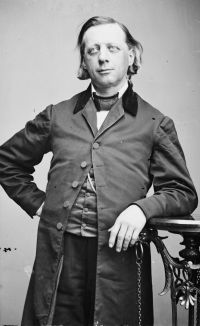 Henry Ward Beecher,
Pleasant Talk About Fruits, Flowers and Farming
Henry Ward Beecher,
Pleasant Talk About Fruits, Flowers and Farming
“ Every continental living language, and the dead classic languages, have thrown in their contributions, and our tongue comprises the scraps, odds and ends, of all lands, with all the diverse peculiarities of each language more or less retained. ”
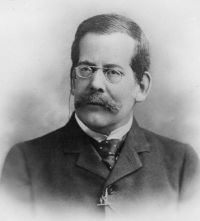 Henry Sweet,
1911 Encyclopædia Britannica
(1911)
Henry Sweet,
1911 Encyclopædia Britannica
(1911)
“ If stress is put on the gradual ending it becomes a distinct aspirate, as in the Sanskrit “visarga” in such a word as manah. Organic Basis.—Every language has certain general tendencies which control the formation of its sounds, constituting its “organic basis” or basis of articulation. The tendency of the present English is to flatten and lower the tongue and draw it back from the teeth, while the lips are kept as much as possible in a neutral position. ”
 William Shakespeare,
Richard II
(1595)
William Shakespeare,
Richard II
(1595)
“ The language I have learnt these forty years, My native English, now I must forgo; And now my tongue's use is to me no more Than an unstringed viol or a harp; Or like a cunning instrument cas'd up Or, being open, put into his hands That knows no touch to tune the harmony. ”
Elizabeth Mary Wright, Rustic Speech and Folk-Lore
“ For lore-house we say school; for dim-house, prison; for again-coming, return, O.E. lār-hūs, dim-hūs, eft-cyme. In the spoken dialects we have the natural development of a living tongue, practically untouched by what are [Pg 19] called the learned influences; hence, where in the literary language we should use a word of Latin origin, we frequently find a homespun compound used by dialect-speakers. We shall see in a later chapter to what a large extent these compounds are figurative and metaphorical; the few here quoted belong only to the simplest type: beet-need (n.Cy. Yks. Lan.) ”
Elizabeth Mary Wright, Rustic Speech and Folk-Lore
“ What may now sound to us like a perverted sense is often historically correct, for whereas learned influences, the introduction of foreign words—which makes for further specialization and differentiation of meaning—and the general march of civilization affecting manners, customs, and habits of thought, all tend to divert the normal course of language, the dialects have meanwhile kept the noiseless tenor of their way unmolested. ”
J. M. D. Meiklejohn, A Brief History of the English Language and Literature…
“ Tongue, Speech, Language.—We speak of the “English tongue” or of the “French language”; and we say of two nations that they “do not understand each other’s speech.” The existence of these three words—speech, tongue, language—proves to us that a language is something spoken,—that it is a number of sounds; and that the writing or printing of it upon paper is a quite secondary matter. Language, rightly considered, then, is an organised set of sounds. These sounds convey a meaning from the mind of the speaker to the mind of the hearer, and thus serve to connect man with man. ”
Oregon Historical Quarterly (1900)
“ This principle would modify the pronunciation of words, lengthening or shortening the vowels, or opening or closing them, or perhaps drawing semi-vowels out into pure vowels, and softening or sharpening the consonants. While any expression of opinion must be very modest, still this much may be ventured: That our language has lost many valuable elements in its evolution from the spoken to the written form, especially in the matter of picturesqueness. ”
 Mona Caird,
Romantic Cities of Provence
Mona Caird,
Romantic Cities of Provence
“ From the "modulated cries" of the men who lived in holes in the earth—not yet in the comparatively elegant cave-dwellings—to the exquisite language of the troubadours, what has been the course of its growth? No one knows. The only real guide that remains is the language itself, a confusing phonographic record of the whole troublous existence of the country of its birth. The nearer a language is to its origin the more it is complicated. Ingenious and subtle grammatical forms prove an ancient tongue. ”

“ The action of the force of attraction of the great tongues is cumulative. It goes on, as bodies fall, with a steady acceleration. The more the great tongues prevail over the little languages the less will be the inducement to write and translate into these latter, the less the inducement to master them with any care or precision. ”
 Eliza Ruhamah Scidmore,
Jinrikisha Days in Japan
(1891)
Eliza Ruhamah Scidmore,
Jinrikisha Days in Japan
(1891)
“ The chief compensations of the language are its simple and unvarying rules of pronunciation, every syllable being evenly accented, every vowel making a syllable, and, pronounced as continental vowels are, giving music to every word. ”
A. H. Sayce,
Introduction to the science of language…
(1880)
“ Helped by the two other causes of linguistic change, the dialect of a household becomes in time the dialect of a clan or tribe, and as soon as its characteristics are sufficiently numerous and distinct, the dialect is transformed into a language. ”
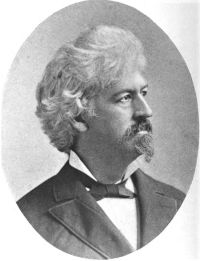 Ingersoll Lockwood,
Travels and Adventures of Little Baron Trump and His Wonderful Dog Bulger
Ingersoll Lockwood,
Travels and Adventures of Little Baron Trump and His Wonderful Dog Bulger
“ In my readings of ancient peoples I had often seen it darkly hinted at, that far, far back in remote ages there existed a race of beings, with short arms and tiny hands, who had invented a written language to suit their wants, in which absolutely no letters at all were used, the words being represented by dots and strokes placed at different heights to denote different sounds. ”
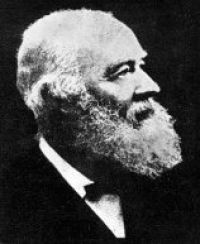 John Ball,
Journal of a tour in Marocco and the Great Atlas
(1878)
John Ball,
Journal of a tour in Marocco and the Great Atlas
(1878)
“ It must be remembered, that unlettered races are subject to far greater and more rapid changes of dialect [85] than those who preserve in sacred books or popular poetry fixed standards of correct speech; add to this, the chances of error when a traveller, communicating with a native through an interpreter, and contending with sounds unusual to his ear, attempts to form a vocabulary. These causes, acting together, tend to increase the difficulty of recognizing linguistic affinities that really exist. ”
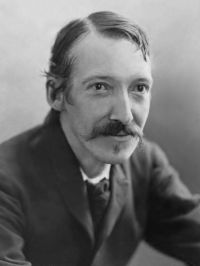 Robert Louis Stevenson,
Lay Morals, and Other Papers
Robert Louis Stevenson,
Lay Morals, and Other Papers
“ If, from some conformity between us and the pupil, or perhaps among all men, we do in truth speak in such a dialect and express such views, beyond question we shall touch in him a spring; beyond question he will recognise the dialect as one that he himself has spoken in his better hours ”
Elizabeth Mary Wright, Rustic Speech and Folk-Lore
“ Hitherto we have been concerned chiefly with the second of these three characteristics of a dialect, namely vocabulary, but we will now consider in some detail the first on the list, namely pronunciation, and here we cannot fail to be struck by the wonderful uniformity and regularity of the sound-system of modern dialects.To classify the modern dialects of a country is a difficult and unsatisfactory task. ”
William Dwight Whitney,
Language and the Study of Language
(1867)
“ So important a part of the history of a language are its special methods of phonetic change, that, in investigating the relations of any dialect with its kindred dialects, the first step is to determine to what sounds in the latter its own sounds regularly correspond. ”
Willem Sijbrand Logeman, Introduction to the study of the history of language
“ Whether by precept or by observation, consciously or unconsciously, whether in the process of acquiring our own language in childhood, or in our study of a foreign tongue, we associate not only words but also parts of words with one another and with parts of material or modal contents of our thoughts. ”
William Dwight Whitney,
Language and the Study of Language
(1867)
“ One source of the special interest which we feel in the study of Indo-European language lies in the fact that our own tongue is one of its branches. In the moral and intellectual world, not less than in the physical, everything cannot but appear larger in our eyes according as it is nearer to us. ”
Various, Blackwood's Edinburgh Magazine…
“ Is it possible that, in the mesmeric trance, the mind in some cases rejects as artificial fabric all the educated conventionality of tongues, and resumes unconsciously the original and genuine dialect of the world? ”
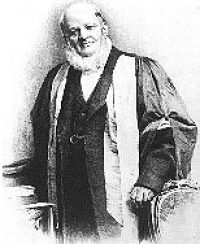 Alexander John Ellis,
A Plea for Phonotypy and Phonography
(1845)
Alexander John Ellis,
A Plea for Phonotypy and Phonography
(1845)
“ In order to learn to write and read our own modern living language, which we have spoken from childhood—in order to appreciate the system employed in representing it upon paper, we are to acquire a considerable knowledge of two foreign ancient dead languages, the pronunciation of which no one knows, and all dispute about!! ”
Ralcy Husted Bell, The Mystery of Words (1924)
“ The gist of the purity of a tongue lies not so much in the restriction of foreign words, or in the reservation with which new meanings are given to old words, but rather more in the retention of clearness and propriety in the use of words already in the service of the tongue. The process is less simple than it seems, since it includes not only a judicious reserve toward the new, but an active elimination of the weak and unfit among the old. ”
Willem Sijbrand Logeman, Introduction to the study of the history of language
“ ON THE DIFFERENTIATION OF LANGUAGE.The most elementary study of Comparative Philology teaches us that from a language which, in all essentials, may be considered one uniform tongue, there have frequently sprung several others; and that these, in their turn, have parted into new dialects or distinct languages. This process has been usually compared to that which we see operative in the growth and development of organic nature; and the relationship between various languages has often been expressed by the terms applicable to the human family. ”
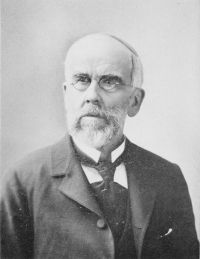 Moses Clark White,
The Chinese Language Spoken at Fuh Chau
(1862)
Moses Clark White,
The Chinese Language Spoken at Fuh Chau
(1862)
“ The spoken languages being more diffuse, and differing in style from the written language, they have adopted, in several dialects, a system of writing the spoken dialects, by borrowing from the general written language a few common characters, which they use chiefly as phonetics, to represent the sounds of the spoken language. ”
Ralcy Husted Bell, The Mystery of Words (1924)
“ Thus, while language in general may be classed as a natural phenomenon, a particular tongue must be regarded as an acquired means to an end—an artifice of conventionality—one, therefore which is subordinate to the purposes of society—one that is superior but helpful to the individual ”
