Magnetic circuit

Definition and stakes

Various,  Scientific American Supplement…

“ Let the current be returned to the wire after disappearance of magnetism, and the lines again seem to emanate from the wire and at the same time cut it and produce a counter potential in it, which is the index of the abstraction of energy from the circuit, and its storing up in the form of elastically strained lines of magnetism around the conductor. The effect is that of self-induction on making or upon increase of current, the measure of the amount being the energy stored in the magnetic circuits which have been extended or opened up by the current. ”

Source: Gutenberg

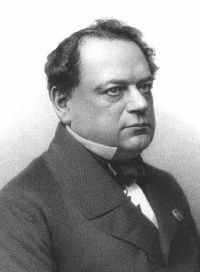
Portrait of John Ambrose Fleming John Ambrose Fleming,  1911 Encyclopædia Britannica, Volume 27… (1911)

“ A low power factor always implies a magnetic circuit of large reluctance.
The operation of the alternating current is then as follows: the periodic magnetizing force of the primary circuit creates a periodic magnetic flux in the core, and this being linked with the primary circuit creates by its variation what is called the back electromotive force in the primary circuit. The variation of the particular portion of this periodic flux, linked with the secondary circuit, originates in this last a periodic electromotive force.
”
Source: Wikisource

American School of Correspondence,  Cyclopedia of Telephony and Telegraphy…

“ We may say, therefore, that the amount of flux set up by a given current in a given coil or helix is dependent on the material in the magnetic path or magnetic circuit, and on the shape and length of that circuit. If the magnetic circuit be of air or brass or wood or any other non-magnetic material, the amount of flux set up by a given magnetizing force will be relatively small, while it will be very much greater if the magnetic circuit be composed in part or wholly of iron or steel, which are highly magnetic substances. ”
Source: Gutenberg

Get perspective with Kwize: daily news enlightened by great literature