Mining law

Definition and stakes

Proceedings of the second National Conservation Congress at Saint Paul…

“ None but permanent and bona fide settlers should be permitted to secure land under the Homestead Law.
In 1872 Congress enacted a law for the location, purchase, and entry of land containing gold, silver, copper, and other precious metals, commonly called the mining law of the United States, which became a part of the Revised Statutes. Mining claims are of two classes: (1) lode or quartz claims, and (2) placer claims. Both are initiated by discovery, staking out on the ground, and filing notice of location.
”
Source: Gutenberg

Horace Stevens,  Looters of the Public Domain (1908)

“ According to the mining laws as they had been construed by every Court in the land up to that time, no placer mining location could be made validly unless the entry was based upon an actual discovery of mineral, while the Scrippers, so called, were required to set forth in their affidavits that the land was "vacant and unoccupied" at the date of selection. Naturally, a question not only of law. ”
Source: Wikisource

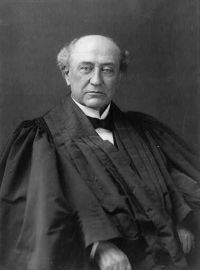
Portrait of David Josiah Brewer David Josiah Brewer,  Montana Mining Company v. St. Louis Mining Milling Company…

“ But the mining laws of both state and territory were in force, and in construing conveyances of mining claims the provisions of those laws must be taken into account, and may add to or subtract from the rights passing by a common-law conveyance of agricultural or timber lands. It is probably not necessary to specify extralateral rights in order that a conveyance of a mining claim be operative to transfer them, and yet it is not strange that the custom grew up of naming them for the sake of avoiding the possibility of disputes. ”
Source: Wikisource

Get perspective with Kwize: daily news enlightened by great literature