 Barack Obama,
President Barack Obama's Remarks in Prague…
(2009)
Barack Obama,
President Barack Obama's Remarks in Prague…
(2009)
“ And it proved that moral leadership is more powerful than any weapon. ”
Barack Obama,
President Barack Obama's Remarks in Prague…
(2009)
“ And it proved that moral leadership is more powerful than any weapon. ”
George L. Herr, The Nation Behind Prison Bars
“ If there ever was a time when we stood in need of moral leadership it is now. We want men who come like the prophets of old, who shall come before us as genuine leaders to take us out of this wilderness in which we find ourselves. ”
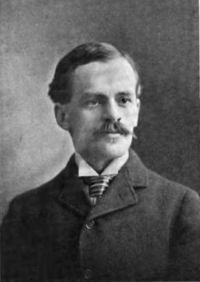 Alfred H. Lloyd,
The will to doubt
Alfred H. Lloyd,
The will to doubt
“ There can be no visible leader, whose leadership is wholly practical, whether of things or realities—for the metaphysician—or of ideas or categories—for the logician—or of persons or classes—for the statesman or the moralist or the theologian. Metaphysical reality, the truly practical and realistic knowledge, the political supremacy which is complete and inclusive, or the wholly moral life or the divine life must forever be secured, not through a single manifestation presiding over the others, but through the divided labour of them all. ”
Naval War College, Sound Military Decision
“ The moral elements include all the essential attributes of personal character, and more especially those qualities of courage, loyalty, decisiveness, modesty, patience, tolerance of the opinions of others, and fearlessness of responsibility which are characteristics of true military leadership. The maintenance of a high ethical standard is essential to the establishment and continuance of mutual confidence. ”
 Carl Schurz,
The Reminiscences of Carl Schurz
(1908)
Carl Schurz,
The Reminiscences of Carl Schurz
(1908)
“ He had not only the intellectual and moral qualifications but also the temperament of a leader, and a leader, too, who would attract the best part of the community in point of morals and intelligence, as a trusty personal following. ”
 Leslie Stephen,
Social Rights And Duties: Addresses to Ethical Societies…
Leslie Stephen,
Social Rights And Duties: Addresses to Ethical Societies…
“ What I have to note is that, in any case, the change supposes the necessity of a corresponding morality in the growth of the instincts, the public spirit, the hatred of indolence, the temperance and self-command which would be requisite to work it efficiently. The organisation into which we are born presupposes certain moral instincts, and, moreover, necessarily implies a vast system of moral discipline. Our hopes and aspirations, our judgments of our neighbours and of ourselves, are at every moment guided and moulded by the great structure of which we form a part. ”
John Abercrombie, The Philosophy of the Moral Feelings
“ They may be the acquisition of wealth,—the grasp after power,—the love of distinction,—or a devotedness to merely trivial occupations;—while there is a total neglect of those great concerns which really demand our chief and highest regard. Amid the legitimate and even the laudable pursuits of ordinary life, we are too apt to lose sight of those duties and responsibilities which attend a state of moral discipline,—and that culture of the soul required as a preparation for the future state of existence to which we are hastening. ”
“ It is, in fact, the pleasure of exercising power. I do not mean arbitrary, personal authority, but the power to produce, by successful but quiet contrivance, extensive and happy results;—the pleasure of calmly considering every difficulty, and without irritation or anger, devising the proper moral means to remedy the moral evil: and then the interest and pleasure of witnessing its effects. ”
Various, The American Missionary — Volume 42…
“ I have rather in mind leaders who shall have that moral and intellectual fitness which produces reverence, earnestness and humility, leaders who can draw their people away from their foolishness, weakness and self-consciousness into the larger life that is possible for them. ”
“ We may see in it, especially, the spirit of personal responsibility, the loss of which—if we ever do lose it, should authority be able to reassert her old power—will be fatal to intellectual or moral advance. Personal responsibility brings with it personal dignity, enterprise, courage, patience, all the virtues. ”
 Bertrand Russell,
War and Non-Resistance
(1915)
Bertrand Russell,
War and Non-Resistance
(1915)
“ But if we judge conduct, as I think we ought, by its power of promoting what we consider a good life or a good society, we cannot expect such simplicity in our moral precepts, and we must expect all of them to be subject to exceptions. ”
 Thomas Hill Green,
Lectures on the Principles of Political Obligation
Thomas Hill Green,
Lectures on the Principles of Political Obligation
“ The issue of this may either be an apparent suspension of the moral growth of the individual, or a clearer apprehension of the spirit underlying the letter of the obligations laid on him by society, which makes his rational recognition of duty, when arrived at, a much more valuable influence in promoting the moral growth of society. ”
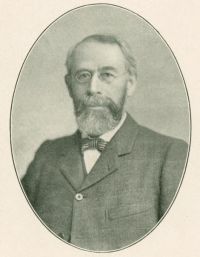 Josephus Nelson Larned,
Popular Science Monthly
(1877)
Josephus Nelson Larned,
Popular Science Monthly
(1877)
“ Whatever else there may be of distinguishable moral qualities appearing to be incident to the direct relations of human fellowship, I am sure that they will be found reducible to the two radicals of benevolence and justice, or to their combination with those other radicals—courage and truthfulness—which we found to have an intrinsic source in the constitution of man, as qualitative factors in human conduct. ”
Samuel Butler, Canterbury Pieces
“ There was a moral government of this world before man came near it—a moral government suited to the capacities of the governed, and which unperceived by them has laid fast the foundations of courage, endurance, and cunning. ”
Durant Drake, Problems of Conduct: An Introductory Survey of Ethics
“ Many forces are at work, however, for moral uplift. The spread of education, teaching men to think, to discern evils, and to comprehend the reasons for right conduct, the increasing influence of public opinion through newspapers and magazines, the growing number of organizations working to eradicate evils, the gradual increase of wise legislation, the reviving moral pressure of the Christian Church such signs of the times should give us courage as well as show us where we can take hold to help. ”
“ Nor can I discover any tolerable explanation of all this, except that the guiding and directive power in the world, reveals itself in the moral consciousness of men, and with growing clearness in proportion as that consciousness has been trained and educated, as the moral ideal. ”
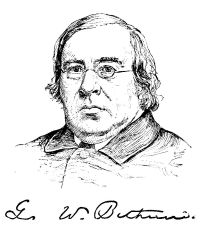 George Washington Bethune,
The Relation of the Sunday-school System to our Christian Patriotism
(1847)
George Washington Bethune,
The Relation of the Sunday-school System to our Christian Patriotism
(1847)
“ To constitute a sufficient moral system, there must be a recognition of one supreme, the original source of being, authority and wisdom, duty to whom includes, harmonizes and makes binding all other duties ”
 William Henry Giles Kingston,
Digby Heathcote: The Early Days of a Country Gentleman's Son and Heir
William Henry Giles Kingston,
Digby Heathcote: The Early Days of a Country Gentleman's Son and Heir
“ Already many fellows look to you as a leader; you must do your best to keep that position, not only by your daring and activity, but by your moral conduct, by your steadiness and general good behaviour. ”
M. Valentine, Theoretical Ethics
“ They concerned the powers and possibilities of man in the crowning endowments of his nature, and in the highest ascent of their evident intention and adaptation. They touched the great problems of personal and social welfare in the most vital relations and decisive interests. So the old sages became moralists and their great themes were the themes of virtue and duty. Not very deeply, however, did they, for centuries, succeed in penetrating the rational principles of the moral life and the authority of the moral judgments. ”
 Thomas Henry Huxley,
Life and Letters of Thomas Henry Huxley…
Thomas Henry Huxley,
Life and Letters of Thomas Henry Huxley…
“ Hodeslea, Eastbourne, November 5, 1892.Dear Sir,I well remember the interview to which you refer, and I should have replied to your letter sooner, but during the last few weeks I have been very busy.Moral duty consists in the observance of those rules of conduct which contribute to the welfare of society, and by implication, of the individuals who compose it.The end of society is peace and mutual protection, so that the individual may reach the fullest and highest life attainable by man. ”
Thomas Hill Green,
Lectures on the Principles of Political Obligation
“ I propose therefore to begin our inquiry into the detail of goodness—into the particular kinds of conduct which the man wishing to do good for the sake of its goodness is entitled to count good—by considering what is of permanent moral value in the institutions of civil life, as established in Europe; in what way they have contributed and contribute to the possibility of morality in the higher sense of the term, and are justified, or have a moral claim upon our loyal conformity, in consequence. ”
George Thomas Daly, Catholic Problems in Western Canada
“ This imponderable factor, which often baffles our calculations, always remains the true, permanent driving force. For in the last analysis of human things, morality is what reachest furthest and matters most.Problems may vary with the times and the countries, and yet, the moral issues involved never change; for, right is eternal. To detect this ethical element amid the ever restless waves of human activities has ever been the noble and constant effort of true leaders. Like the pilot they are ever watching for the lighted buoy on the tossing waves. ”
 Zhuang Zi,
Chuang Tzŭ
(1889)
Zhuang Zi,
Chuang Tzŭ
(1889)
“ Preaching of charity and duty to one's neighbour, of loyalty and truth, of respect, of economy, and of humility,—this is but moral culture, affected by would-be pacificators and teachers of mankind, and by scholars at home or abroad. ”
James Endell Tyler, Henry of Monmouth, Volume 2
“ The same observations are applicable when we would estimate the moral excellence of an individual, his worth in a private or a public capacity, his character as a subject or a governor,—as the framer, or the guardian, or the administrator of the laws. ”
Infanta of Spain Eulalia, The thread of life
“ How few men we see use their authority to repair an error, punish a lie or any villainy whatsoever! Weakness, hesitation, doubt, lack of initiative, indifference, have taken the place of moral courage, and that through the lack of character-training. ”
baron d' Paul Henri Thiry Holbach, The System of Nature, or, the Laws of the Moral and Physical World…
“ Their discoveries may perhaps teach moralists the true motive-power that ought to influence the actions of man—legislators, the true motives that should actuate him, that should excite him to labour to the welfare of society—sovereigns, the means of rendering their subjects truly happy ”
 E. E. Brown,
The Life and Public Services of James A. Garfield
E. E. Brown,
The Life and Public Services of James A. Garfield
“ We are justified, then, in saying of this man that he has been tried and tested in every mode by which the quality of a human heart and the capacity of a human intellect can be disclosed; by adversity, by prosperity, by poverty, by wealth, by leadership in deliberative assemblies, and in the perilous edge of battle, by the height of power and of fame. ”
G. W. Foote, Salvation Syrup; Or, Light On Darkest England
“ These “spiritual,” and nearly always hysterical, agencies for human improvement, are based upon a denial of the physical basis of life, and of the doctrine of moral causation. They attract great attention, and their leaders gain tremendous applause. ”
 William Whewell,
Astronomy and General Physics Considered with Reference to Natural Theology
William Whewell,
Astronomy and General Physics Considered with Reference to Natural Theology
“ But the Governing Mind must comprehend also the laws of the responsible creatures which the world contains, and must entertain the purposes for which their responsible agency was given them. It must include these laws and purposes, connected by means of the notions, which responsibility implies, of desert and reward, of moral excellence in various degrees, and of well-being as associated with right doing. All the laws which govern the moral world are expressions of the thought and intentions of our Supreme Ruler. ”
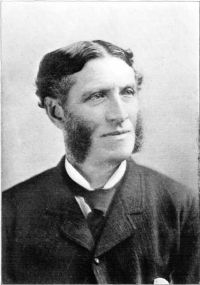 Matthew Arnold,
St. Paul and Protestantism, with an Essay on Puritanism and the Church of England
Matthew Arnold,
St. Paul and Protestantism, with an Essay on Puritanism and the Church of England
“ As moral agents, for whom alone exist all the predicaments of merit and demerit, praise and blame, effort and failure, vice and virtue, we are impotent and lost;—we are saved through that in us which is passive and involuntary; we are saved through our affections, it is as beings acted upon and influenced that we are saved! ”
M. Valentine, Theoretical Ethics
“ For real moral character in God we must go even further and regard Him as loving righteousness, not simply as good in Himself, but as good in itself, good by the immutable quality of its own nature. For a moral government we must have a moral governor. ”
 C. Gasquoine Hartley,
Women's Wild Oats: Essays on the Re-fixing of Moral Standards
C. Gasquoine Hartley,
Women's Wild Oats: Essays on the Re-fixing of Moral Standards
“ Every moral rule, every sentiment, as also every institution, must be tested, from period to period, to see if it works still in a practical and healthful direction to help the individual [172] to do right and for the betterment of the race. ”
M. Valentine, Theoretical Ethics
“ And equally universal is the admission that the moral insight is helped and responsibility increased by every increase of light giving larger and truer knowledge of the complex and intricate connections of human life. With every broadened and clarified vision of these connections fresh obligations appear. "A defective apprehension of the relations in which we stand to God and to our fellow-men, will prevent our seeing our specific duties."60 This fact furnishes direct evidence that right conduct must be held as a certain intelligent adjustment to the relations sustained. ”
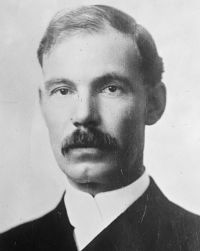 Edward Alsworth Ross,
The American Journal of Sociology
(1896)
Edward Alsworth Ross,
The American Journal of Sociology
(1896)
“ Rash indeed, would be the man, who, if required to dispense, not only with law and usage, but with all religious faith, all distinctions as to the moral worth of types of conduct, all sense of duty, all pride and self-reverence, should undertake to build an orderly and stable society on the spontaneous sympathies and social instincts of men. ”
 Josiah Royce,
The Religious Aspect of Philosophy
(1885)
Josiah Royce,
The Religious Aspect of Philosophy
(1885)
“ But this chief present work of ours, this extension of the moral insight, is best furthered by devotion to our individual vocations, coupled with strict loyalty to the relations upon which society is founded. The work thus set before us demands the sacrifice of many ideal emotional experiences to the service of the Highest. Our comfort however in it all must be that the Highest is there above us, forget it as we may. ”
Josephus Nelson Larned,
Popular Science Monthly
(1877)
“ This fact leads us quickly to the recognition of a second one, which becomes just as plain on examination—namely, that the particulars of conduct in which the moral advancement of mankind appears most questionable are exactly and entirely those which we have seen to be incident to the indirect relations of human fellowship ”
 David Hume,
An Enquiry Concerning the Principles of Morals
(1751)
David Hume,
An Enquiry Concerning the Principles of Morals
(1751)
“ The Necessity of Justice to the Support of Society is the SOLE Foundation of that Virtue; and since no moral Excellence is more highly esteem'd, we may conclude, that this Circumstance of Usefulness has, in general, the strongest Energy, and most entire Command over our Sentiments. ”
Carl Schurz,
Speeches, correspondence and political papers of Carl Schurz
(1913)
“ It must be our dearest wish, as it is our highest interest, that this task be well performed. And we should assiduously bring to bear upon them all the moral influences within our reach to make them do it well. ”
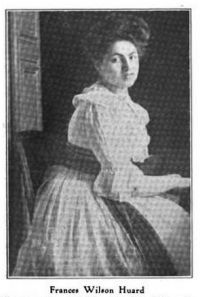 Frances Wilson Huard,
With Those Who Wait
Frances Wilson Huard,
With Those Who Wait
“ And not only have they been called upon to furnish the helping hand, but in times of moral stress they have often had to give proof of a mature judgment, a courage, a will power, and a forebearance far beyond their years. ”
M. Valentine, Theoretical Ethics
“ Secondly, that while there is diversity as to many points, there is none in its judgments as to the great body of virtues and vices of human life. As to all the49 leading qualities of character and conduct there is full and universal agreement. With respect to all the cardinal virtues, such as justice, kindness, veracity, love, courage, fidelity, generosity, the moral judgments approve them as the magnet owns its pole, in all the multi-form relations and offices of life. ”
 Benito Jerónimo Feijoo,
Essays, or discourses, vol. 1…
(1780)
Benito Jerónimo Feijoo,
Essays, or discourses, vol. 1…
(1780)
“ Ethics, or moral instruction, directs all our actions, and causes them to conspire unanimously to promote this end, serving at the same time, as a vehicle to convey, and as an ultimate disposer to the practice of the most sound policy; or, to speak more properly, the morality of a King, with relation to his kingly office, is no other thing but policy itself, taken in general and comprehensive sense ”
George Henry Lane Fox Pitt-Rivers, Conscience & Fanaticism: An Essay on Moral Values
“ We are here, of course, purposely considering, not actual and arbitrary morality, but the essentials upon which all moralities are based. We shall deal more fully as we proceed with those psychic and emotional factors which do, in fact, colour and distort all moral values. To return to our analogy—we may say then, that a conventional moral rule stands for the credit of national morality, much as a five-pound note stands for the credit of national wealth. ”
M. Valentine, Theoretical Ethics
“ But a theory that thus ignored individual conscience and essential right, reducing morality to civic obedience, with no other foundation than the positive enactment of a monarch, at once and strongly re-acted in strengthening the conviction of the necessity and152 truth of the intuitional view of the moral faculty, and of the importance of finding a better basis for the ethical principle, both in the constitution of mankind and in the author of nature. ”
Josephus Nelson LarnedGeorge Washington BethuneDurant DrakeGeorge Thomas DalyGeorge L. HerrJosef DonatM. ValentineThomas Hill GreenCarl Schurz John Stuart Mill
 Thomas Jefferson
 Jacob AbbottSamuel ButlerWilliam Whewell
 Robert Green IngersollBertrand RussellNaval War CollegeLeslie StephenAlfred H. Lloyd
