Moral sense
Definition and stakes
The "moral sense" refers to an innate human ability to distinguish right from wrong, often associated with conscience and ethical conduct. Authors such as Mark Twain humorously highlighted its function in dealing with social pressures, while James Frederick Ferrier viewed it as a result of human conflict. Durant Drake criticized its abstract treatment, stressing the importance of empirical study, and M.
Valentine linked it to a shared sense of duty. Frances Power Cobbe recognized its psychological validity, and Thomas Hill Green connected it to social ethics. These viewpoints together illustrate the moral sense as both an individual compass and a communal structure, influencing personal decisions and societal standards through ongoing philosophical and ethical discussion.
Quotes about “moral sense”
 James Frederick Ferrier,
Blackwood's Magazine
(1839)
James Frederick Ferrier,
Blackwood's Magazine
(1839)
“ Out of this strife morality is breathed up like a rainbow between the sun and storm. Moreover, by adopting these views, we get rid of the necessity of postulating a moral sense, and of all the other hypothetical subsidies to which an erroneous philosophy has recourse in explaining the phenomena of man. ”
Durant Drake, Problems of Conduct: An Introductory Survey of Ethics
“ Instead of analyzing the moral sense into its components and describing the mental stuff of which it is composed, instead of tracing its genesis and studying the forces that have produced it, they wax eloquent over its importance and universality. As preachers they are admirable. But the foundation they provide for morality is slippery. ”
M. Valentine, Theoretical Ethics
“ The conscience discerns and affirms this reality of good and evil-desert.Here is reached the psychological source of the great fact of responsibility in the world. It emerges into consciousness and into actual force in human life from this point in the disclosures and affirmations of the moral sense. Hence arises the unspeakably varied but ever persistent human necessity under which men are compelled to regard themselves and others as justly amenable to the law of moral consequences. Its application is seen in every sphere of life, personal, domestic, social, and national. ”
 Frances Power Cobbe,
Life of Frances Power Cobbe, as told by herself
Frances Power Cobbe,
Life of Frances Power Cobbe, as told by herself
“ But though neither the true source of our Knowledge of Moral Distinctions nor yet the right Motive why we are to choose the Good, this Moral Sense of Pleasure in Virtue, and Pain in Vice, is a psychological fact demanding the investigation of the Moralist. ”
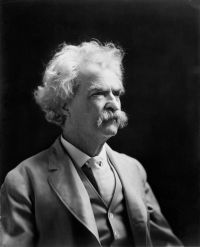 Mark Twain,
Following the Equator
(1897)
Mark Twain,
Following the Equator
(1897)
“ There is a Moral sense, and there is an Immoral Sense. History shows us that the Moral Sense enables us to perceive morality and how to avoid it, and that the Immoral Sense enables us to perceive immorality and how to enjoy it. ”
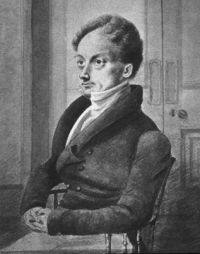 James Mill,
Analysis of the Phenomena of the Human Mind
James Mill,
Analysis of the Phenomena of the Human Mind
“ The same is the only name we have for the MOTIVE. It is also the only name we have for the DISPOSITION. The terms Moral Sense; Sense of Right and Wrong; Love of Virtue, and Hatred of Vice, are sometimes used as synonymous terms; but they are not equally appropriate. Virtue, as we have seen, is a name which is given to each of the three, the Affection, the Motive, the Disposition; Morality is a name which is applied with similar latitude.57 5857 The foregoing analysis of the Moral Sentiment proceeds upon a number of unquestionable psychological data. ”
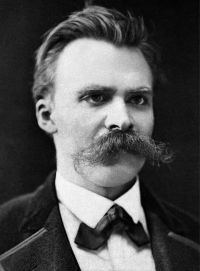 Friedrich Wilhelm Nietzsche,
The Joyful Wisdom ("La Gaya Scienza"…
Friedrich Wilhelm Nietzsche,
The Joyful Wisdom ("La Gaya Scienza"…
“ The Extent of the Moral.—We construct a new picture, which we see immediately with the aid of all the old experiences which we have had, always according to the degree of our honesty and justice. The only events are moral events, even in the domain of sense-perception. ”
 Thomas Hill Green,
Lectures on the Principles of Political Obligation
Thomas Hill Green,
Lectures on the Principles of Political Obligation
“ The moral progress of the individual, born and bred under such a system of conventional morality, consists (1) in the adjustment of the self-seeking principle in him to the requirements of conventional morality, so that the modes in which he seeks self-satisfaction are regulated by the sense of what is expected of him. ”
Cora May Williams, A Review of the Systems of Ethics Founded on the Theory of Evolution
“ Only in so far as the moral law has become internal, is the delight in heroic or benevolent energy spontaneous; in so far, we may speak of the existence of a moral, as of an æsthetic, sense. A man of fine moral sensibility may, indeed, like the artist, perceive finer moral discords than can be measured by formulæ ”
 Jane Addams,
Twenty Years at Hull House; with Autobiographical Notes
Jane Addams,
Twenty Years at Hull House; with Autobiographical Notes
“ We are slowly learning that social advance depends quite as much upon an increase in moral sensibility as it does upon a sense of duty, and of this one could cite many illustrations. ”
 Benjamin Rush,
Medical Inquiries and Observations…
Benjamin Rush,
Medical Inquiries and Observations…
“ As I consider virtue and vice to consist in action, and not in opinion, and as this action has its seat in the will, and not in the conscience, I shall confine my inquiries chiefly to the influence of physical causes upon that moral power of the mind, which is connected with volition, although many of these causes act likewise upon the conscience, as I shall show hereafter. The state of the moral faculty is visible in actions, which affect the well-being of society. ”
M. Valentine, Theoretical Ethics
“ But if seen under strong light and with their supreme import, the intuition impresses with greater force. So, too, the state of the whole moral75 nature is a reason of higher or lower moral sensibility. The more unblighted is the condition of personal life, the more is it responsive to the ethical discernment. Habitual refusal of duty, easy and indifferent familiarity with wrong-doing, or any continued enslavement of the higher nature to the lower, necessarily blunts the delicateness of the sensibilities and lowers the strength of the moral feelings. ”
Thomas More, Utopia (1901) — Chapter 6: Of the Travelling of the Utopians (1901)
“ As to moral philosophy, they have the same disputes among them as we have here. They examine what are properly good, both for the body and the mind; and whether any outward thing can be called truly good, or if that term belong only to the endowments of the soul. ”
Cora May Williams, A Review of the Systems of Ethics Founded on the Theory of Evolution
“ For now let us observe that the ethical sentiment and idea, properly so-called, are independent of the ideas and sentiments above described as derived from external authorities, and coercions, and approbations—religious, political, or social. The true moral consciousness which we name conscience does not refer to those extrinsic results of conduct which take the shape of praise or blame, reward or punishment, externally awarded ”
Durant Drake, Problems of Conduct: An Introductory Survey of Ethics
“ But the important truth to observe is not the particular details of their haphazard origin but the causes of their survival. Overlaying the countless originating causes of moral ideals are two main preservation—causes, two constant factors which retain certain of the innumerable impulses for one reason or other momentarily dominant. These are of extreme significance for a comprehension of the function of morality in life. ”
M. Valentine, Theoretical Ethics
“ It is through these feelings that the conscience becomes a motive power for moral life. The perception of duty alone, as purely intellectual, would be, as said, "like a mirror accurately reflecting the ethical reality passing before it, but as indifferent as the mirror." But upon the perception the emotional nature springs into action. Knowledge, if at all, always goes into effect mediately through the sensibilities in which the soul is stirred by affections and desires. ”
Cora May Williams, A Review of the Systems of Ethics Founded on the Theory of Evolution
“ But the question, 'Why should I be moral?' means, most naturally and usually, What inducements are there to me to do right?" The answer is that motives differ for different individuals. With some, outer social inducements, with others, the approbation and disapprobation of conscience are stronger. ”
P. V. N. Myers, History as past ethics; an introduction to the history of morals (1913)
“ Clothed in actual flesh and blood, the sweet persuasiveness of the ideal—the nobility and divineness of suffering voluntarily borne in the stead of another—made unwonted appeal to the heart of humanity, and for eighteen hundred years and more, accepted as a true symbol and interpretation of the moral order, it has been a chief molding force in the moral life of the Western world. ”
M. Valentine, Theoretical Ethics
“ And this accords with the best cosmic philosophy.172 For this holds all these relations as parts of a rationally designed system of world-order for universal well-being, and the moral reason as capacitated to discern, with more or less clearness and fulness, the moral requirement which they involve and present for observance. We know of no morality that exists, or can exist, in human life, apart from them. Strike them all away, and all duties disappear. Take, as illustration, the most generic virtue of all the virtues recognized by the ethical judgments, that of good-will or love. ”
George Henry Lane Fox Pitt-Rivers, Conscience & Fanaticism: An Essay on Moral Values
“ It is, moreover, equally absurd to look upon moral values as ultimate and irreducible categories of good and evil, irrevocably codified by an omniscient Deity for the conduct of humanity for all time, and supposedly accessible to the intelligence of all who consult their conscience. ”
Durant Drake, Problems of Conduct: An Introductory Survey of Ethics
“ And the habit of laying aside upon occasion one's instinctive or habitual moral preferences and discussing with open mind their justification and rationality is of great value to the individual and to society. Hence the first two Parts of this volume take up, as simply as is consonant with the really intricate questions involved, the history of the development of human morality and the psychological foundation of moral obligations and ideals. ”
Various, The Continental Monthly, Vol. 6…
“ Yet this very tone of society, and all these standards of honor and uprightness, when traced to their origin, are found to arise from the precepts of revelation. We are all, physically and intellectually, the creatures of circumstance. Experience moulds and develops the intellect. Our moral natures are not innate, but solely and entirely the result of the influences by which we are surrounded. ”
M. Valentine, Theoretical Ethics
“ They concerned the powers and possibilities of man in the crowning endowments of his nature, and in the highest ascent of their evident intention and adaptation. They touched the great problems of personal and social welfare in the most vital relations and decisive interests. So the old sages became moralists and their great themes were the themes of virtue and duty. Not very deeply, however, did they, for centuries, succeed in penetrating the rational principles of the moral life and the authority of the moral judgments. ”
Benjamin Rush,
Medical Inquiries and Observations…
“ The moral faculty is to the conscience, what taste is to the judgment, and sensation to perception. It is quick in its operations, and, like the sensitive plant, acts without reflection, while conscience follows with deliberate steps, and measures all her actions, by the unerring square of right and wrong. The moral faculty exercises itself upon the actions of others. ”
 Samuel Johnson,
Dr. Johnson's Works: Life, Poems…
Samuel Johnson,
Dr. Johnson's Works: Life, Poems…
“ But, may it not be said, that every system of ethics must, or ought, to terminate, in plain and general maxims for the use of life? and, though in such anxioms no discovery is made, does not the beauty of the moral theory consist in the premises, and the chain of reasoning that leads to the conclusion? ”
Thomas Brown, Lectures on the Philosophy of the Human Mind… (1822)
“ The thoughts and faculties of your own intellectual frame, and all which you admire as wonderful in the genius of others,—the moral obligation, which, as obeyed or violated, is ever felt by you with delight or with remorse,—the virtues, of which you think as often as you think of those whom you love ”
James Frederick Ferrier,
Blackwood's Magazine
(1839)
“ We are aware of the attempts which have been made to invest our emotions with the stamp and attribute of morality: but, in addition to the testimony of our own experience, we have the highest authority for holding that none of the natural feelings or modifications of the human heart partake in any degree of a moral character. ”
W. R. Sorley, Recent Tendencies in Ethics
“ All the facts of our moral consciousness, therefore,—the knowledge of right and wrong, the judgments of conscience, the recognition of duty and responsibility, the feelings of reverence, remorse, and moral indignation,—all these could be traced, they thought, to an origin in experience, to an origin which in the last resort was sensuous, that is, due to the perceptions of the senses and the feelings of pleasure and pain which accompany or follow them. ”
M. Valentine, Theoretical Ethics
“ The essential element in the problem is that we are contemplating, not physical movement only, like spasms or waves, but personal deeds, as acts of moral agents.185 Of course, moral quality does not attach to the action of non-moral beings, as the striking of clocks or the barking of dogs, but to deeds of self-directing personality. ”
 G. E. Moore,
Ethics — Chapter V
(1912)
G. E. Moore,
Ethics — Chapter V
(1912)
“ And it may be admitted that, in some cases at least, it is right and proper that a man’s motives should thus influence our judgment. But the question is: What sort of moral judgment is it right and proper that they should influence? ”
P. V. N. Myers, History as past ethics; an introduction to the history of morals (1913)
“ This new intellectual life, speaking broadly, has reacted favorably upon the moral life. It has dispelled superstition, destroyed prejudices, widened the outlook of men, and broadened their moral sympathies. ”
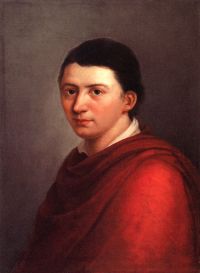 Friedrich von Schlegel,
The philosophy of life, and philosophy of language…
Friedrich von Schlegel,
The philosophy of life, and philosophy of language…
“ In the same way no one will wish to deny that the moral feeling, as the natural expression of the inner voice of conscience, constitutes in social life the fundamental condition and the surest foundation for all lofty and noble sentiments. ”
 Ralph Barton Perry,
The Moral Economy
Ralph Barton Perry,
The Moral Economy
“ VI Let me add a word concerning the part played by the imagination in enforcing the logic of morality. An enlightened conscience, or a rational conviction of duty, will consist essentially in the viewing of life with a certain remove from its local incidents. In conduct, as in all matters where validity or truth is concerned, the critical consciousness must disengage itself and view the course of things in its due proportions, allowing one's dearest interests to lie where they lie among the rest. ”
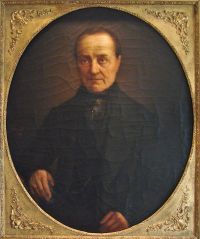 Auguste Comte,
A General View of Positivism
Auguste Comte,
A General View of Positivism
“ Besides, independently of their intrinsic merits, whether intellectual or moral, the necessities of their daily life serve to impress them with respect for the great rules of morality, which in most cases were framed for their own protection. ”
John Abercrombie, The Philosophy of the Moral Feelings
“ In all such cases, which are familiar to every one, we recognise, therefore, a uniform relation between certain moral causes or motives, and the determinations of the human mind in willing certain acts. ”
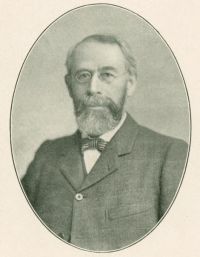 Josephus Nelson Larned,
Popular Science Monthly
(1877)
Josephus Nelson Larned,
Popular Science Monthly
(1877)
“ In what I have to say, therefore, of that kind of quality in human conduct which we call "moral," I shall distinguish it only by its absoluteness. Every act in the conduct of a human being is incident to some one or more of the varied relationships by which his state of being is conditioned. Fundamentally, there are four groups of such relationships, subject to which every act of man is performed: 1. His relationships to inanimate Nature, or to the matter, the forces, and the routine processes, of his physical environment ”
 Josiah Royce,
The Religious Aspect of Philosophy
(1885)
Josiah Royce,
The Religious Aspect of Philosophy
(1885)
“ If the moral insight be concerned with conflicting general aims, such as could express themselves in systems of conduct, then the moral insight involves the will to act, so far as may be, as if one included in one’s own being the life of all those whose conflicting aims one realizes. ”
Josephus Nelson Larned,
Popular Science Monthly
(1877)
“ The dispute of the moralists has reference, not to any characteristic of the qualities in conduct which we cognize as moral, but to the mode in which they are cognized. Our conception of such qualities involves the conception of absoluteness in them, and it is only by that notion of absoluteness that they are distinguished from the other qualities which appear in human conduct, such as wisdom, prudence, ingenuity, and the like. ”
M. Valentine, Theoretical Ethics
“ Its modern forms have been greatly varied, but they all153 agree in founding the morally good in utility. That which experience shows to be useful, as promotive of personal or social interests and happiness, becomes thereby right, or the norm of moral choices and conduct. The theory, in all its modifications, is a "goods" theory,51 interpreting obligation as simply the behest to conform life to the attainment of the various forms of good, even the chief, as happiness or enjoyment, provided for in man's nature and condition. ”
Matthew Henry, An Exposition of the Old and New Testament (1828)
“ And let the price be determined by that golden rule of justice, to do as we would be done by. ↑ * Yet, since our dreams are materially affected by all our moral habits, and particularly by the previous tone of our passions, and since they often bear away the mind into scenes, which, though they may never occur in actual life, supply a decisive test of character; we may occasionally derive from them important suggestions as it respects health, purity, integrity, discretion, and the government of the heart in general. ”
Related terms
Authors who wrote about “moral sense”
Josephus Nelson LarnedDurant Drake Friedrich Nietzsche
 William Kingdon CliffordM. ValentineBaron Edward Bulwer Lytton LyttonCora May Williams
 Ralph Waldo EmersonGeorge Henry Lane Fox Pitt-RiversJames Mill
 Charles Darwin
 AristotleP. V. N. MyersVariousJames Frederick FerrierMark TwainJosiah Royce
 John Locke
 John Stuart Mill
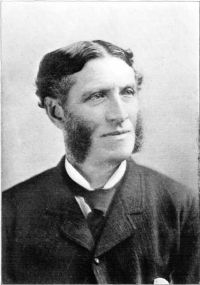 Matthew Arnold