Muscle contraction

Definition and stakes

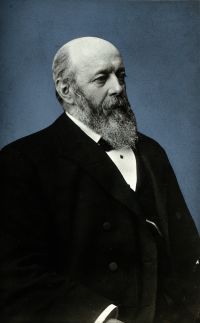
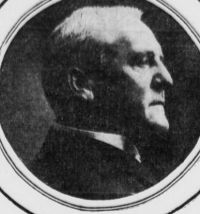
Portrait of George Frederick Barker George Frederick Barker,  Popular Science Monthly (1880)

“ Granting electric discharge to be the cause of muscle-contraction, what is its origin? That it is not carried to the muscle by the nerves follows from the fact that a muscle will still contract when deprived of all its nerve-fibers. It must therefore be generated within the muscle itself. To reach a solution of the problem we must obviously follow the analogies of its production elsewhere. ”
Source: Wikisource

Sir M. Foster,  Physiology

“ Under certain circumstances each soft muscular fibre of which the muscle is made will suddenly become shorter, and thus the whole muscle becomes shorter, and so pulls its two tendinous ends closer together, and if one end be fastened to something fixed, and the other to something moveable, the moveable thing will be moved.
This way that a muscle or a muscular fibre has of suddenly shortening itself is called a muscular contraction. All muscles, all muscular fibres, have the power of contracting. Now a mass of substance like the biceps might grow shorter in two ways.
”
Source: Gutenberg

Portrait of Xavier Bichat Xavier Bichat,  General Anatomy, Applied to Physiology and Medicine…

“ Each body is by its nature capable of irritating the muscles differently, as according to individuals, ages, temperaments, seasons, climates, &c. the muscles are capable of answering differently to excitements made upon them.
It is not necessary to irritate the whole of a muscle to produce its contraction; two or three fibres only being pricked bring into action all the others. Often even when we make these experiments on a living animal, the contraction is communicated from one muscle to another.
”
Source: Gutenberg

Get perspective with Kwize: daily news enlightened by great literature