Nitrogen gas

Definition and stakes

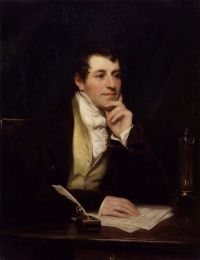
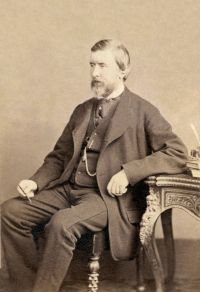
Portrait of John Henry Pepper John Henry Pepper,  The Boy's Playbook of Science

“ First Experiment.
To prepare nitrogen gas, it is only necessary to place a little dry phosphorus in a Berlin porcelain cup on a wine glass, and to stand them in a soup plate containing water. The phosphorus is set on fire with a hot wire, and a gas jar or cylindrical jar is then carefully placed over it, so that the welt of the jar stands in the water in the soup plate. At first, expansion takes place in consequence of the heat, but this effect is soon reversed, as the oxygen is converted into a solid by union with the phosphorus, forming a white smoke, which gradually disappears. (Fig. 106.)
”
Source: Gutenberg

Jacob Hartmann,  The Creation of God

“ Nitrogen is a colorless, tasteless, inodorous gas, slightly lighter than air. It does not combine readily with bodies, and it is a very inert substance, neither supporting combustion or animal life, nor burning itself. It has, however, no poisonous qualities, and animals plunged into a jar of this gas die simply of suffocation from want of oxygen. Nitrogen exists in a free state in the air, of which it constitutes four-fifths by bulk. It occurs combined in the bodies of plants and animals, and in various chemical compounds, such as nitre, whence the gas derives its name. ”
Source: Gutenberg

Mrs. Marcet,  Conversations on Chemistry, V. 1-2

“ The oxygen gas constitutes a little more than one-fifth, and the nitrogen gas a little less than four-fifths. When separated, they are found to possess qualities totally different from each other. For oxygen gas is essential both to respiration and combustion, while neither of these processes can be performed in nitrogen gas. ”
Source: Gutenberg

Get perspective with Kwize: daily news enlightened by great literature