“ The animal is destined for action, but in the interest, and under the direction of man. Obedience is his duty, it is the merit which will be accounted to him, the blessing of which he may avail himself. The horse whose submissive ardour obeys with joy the signal of his master, feels neither the whip nor the spur. ”
Obedience (animal)
Definition and stakes
The theme of “obedience (animal)” has been addressed by authors such as Marvin R. Clark, William Lauder Lindsay, Kenneth Grahame, Charlotte Elizabeth and George Waring. It is often associated with terms like dog, horse, cat, instinct and human.
Quotes about “obedience (animal)”
 Charlotte Perkins Gilman,
Concerning Children
“ Our intense reverence for the virtue of obedience is easily traceable. In the first place there is the deep-seated animal instinct, far outdating human history. For uncounted ages our brute mother ancestors had reared their brute young in automatic obedience,—an obedience bred in the bone by those who obeyed and lived, any deficiency in which was steadily expurgated by the cutting off of the hapless youngster who disobeyed. ”
 Charles Darwin,
The Descent of Man and Selection in Relation to Sex…
“ Dogs have long been accepted as the very type of fidelity and obedience. All animals living in a body which defend each other or attack their enemies 79in concert, must be in some degree faithful to each other; and those that follow a leader must be in some degree obedient. When the baboons in Abyssinia116 plunder a garden, they silently follow their leader; and if an imprudent young animal makes a noise, he receives a slap from the others to teach him silence and obedience; but as soon as they are sure that there is no danger, all show their joy by much clamour. ”
M. Horace Hayes, Illustrated Horse Breaking
“ In such a case, I would advocate the advisability of exacting obedience, in the first instance, by some readily feasible method, as advocated on page 11; so as to impress the animal with the idea of our supreme power over him, and to banish from his mind any thought of resisting our will, even on a point concerning which he would always prove victorious, had he sufficient intelligence to see through our artifice. Our power over the horse, when we are on his back, being necessarily limited in extent, it follows that, with all our teaching, we may, at times, be unable to control our mounts. ”
 C. Lloyd Morgan,
Animal Behaviour
“ And the instant response of a well-trained dog is admirable. But in the whole proceeding he is merely the executant of his master’s orders. He originates no important step. And if you listen to the criticisms by other shepherds during a competition you will find that they are mainly passed on the judgment shown by the master, and only in palpable failures in obedience on the behaviour of the dog. The intelligent animal is what he is trained to be—one whose natural powers are under the complete control of his master with whom the whole plan of action lies. ”
Various, Popular Science Monthly (1893)
“ It may even be doubted whether our measurement of animal courage has yet been sufficiently extended, for there appear instances in which the acts of daring are prompted by a sense of obedience, of discipline, and even of duty—something similar in kind to that which marks and distinguishes the highest forms of courage in man. ”
James Frazer, The Golden Bough — Chapter 54:… (1922)
“ On the other hand, animals are worshipped because they are habitually killed and eaten. In both types of worship the animal is revered on account of some benefit, positive or negative, which the savage hopes to receive from it. In the former worship the benefit comes either in the positive shape of protection, advice, and help which the animal affords the man, or in the negative shape of abstinence from injuries which it is in the power of the animal to inflict. In the latter worship the benefit takes the material form of the animal's flesh and skin. ”
George Waring, The Squirrels and other animals
“ What a great crime, then, shall we be guilty of, if we inflict unnecessary suffering on any of those creatures he has placed in our power! Creatures beloved and cared for by God, but so frequently despised and ill-used by us! Let us think of this, when we are treating any animal unkindly, and beware lest we "be found even to fight against God," by thwarting his benevolent designs for the happiness of every creature he has sent forth upon the earth. ”
W. N. Hutchinson, Dog Breaking
“ Common sense shows that you ought not to correct your dog for disobedience, unless you are certain that he knows his fault. Now you will see that the initiatory lessons I recommend, must give him that knowledge, for they explain to him the meaning of almost all the signs and words of command you will have to employ when shooting. That knowledge, too, is imparted by a system of rewards, not punishments. Your object is not to break his spirit, but his self-will. With his obedience you gain his affection. ”
 Sir John Lubbock,
The Beauties of Nature, and the Wonders of the World We Live In
“ When we consider how much we owe to the Dog, Man's faithful friend, to the noble Horse, the patient Ox, the Cow, the Sheep, and our other domestic animals, we cannot be too grateful to them; and if we cannot, like some ancient nations, actually worship them, we have perhaps fallen into the other extreme, underrate the sacredness of animal life, and treat them too much like mere machines. ”
Marvin R. Clark, Pussy and Her Language
“ Call it instinct, if you will, but is that not to be considered as more than instinct which prompts the Cat to distinguish between the friend and the enemy of its master and mistress, and even to protect them from the attacks of an enemy at the risk of the life of the animal? The number of such instances is legion. Surely the faithfulness of our domestic animals cannot be doubted, but we may doubt the humanity of man to the animal kingdom when the evidence of the same senses in what are termed the lower animals is said to be instinct, while in the human it is called soul and mind. ”
James Frazer, The Golden Bough — Chapter 54:… (1922)
“ Corresponding to the two distinct types of animal worship, there are two distinct types of the custom of killing the animal god. On the one hand, when the revered animal is habitually spared, it is nevertheless killed--and sometimes eaten--on rare and solemn occasions. ”
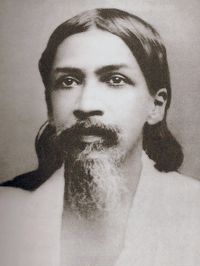 Aurobindo Ghose,
Essays On The Gita
(1922)
“ The mother bird facing the animal of prey in defence of its young, the patriot dying for his country’s freedom, the religious martyr or the martyr of an idea, these in the lower and the superior scale of animal life are highest examples of self-sacrifice, and it is evident to what they bear witness. ”
J. E. Esslemont, Bahá'u'lláh and the New Era
“ Another of the signs is this, that in His reign justice will be so advanced that righteousness and well-doing will extend from the human even to the animal world—the snake and the mouse will share one hold, and the eagle and the partridge one nest, the lion and the gazelle shall dwell in one pasture, and the wolf and the kid shall drink from one fountain. ”
Adam Clarke, Commentary and critical notes on the Bible… (1800s)
“ But had he used any of those formidable animals, the effect would have appeared so commensurate to the cause, that the hand of God might have been forgotten in the punishment; and the people would have been exasperated without being humbled. In the present instance he shows the greatness of his power by making an animal, devoid of every evil quality, the means of a terrible affliction to his enemies. ”
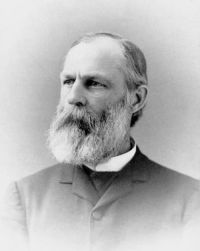 Crawford Howell Toy,
Introduction to the History of Religions
“ The devotion of the dog, the courage and physical power of the bear, the cleverness of the fox—all such natural powers might be assimilated by the worshiper; and since the animal was itself sacred, its body, taken into the human body, communicated a certain special capacity. ”
W. N. Hutchinson, Dog Breaking
“ Many are fully sensible that comprehension of orders must necessarily precede all but accidental obedience. I am only thinking of some whom it has been my misfortune to see, and who have many a time made my blood boil at their brutal usage of a fine high-couraged young dog. Men who had a strong arm and hard heart to punish,—but no temper and no head to instruct. ”
William Jackson, The Philosophy of Natural Theology
“ How high, then, can man by his endeavours raise the animal race?—He can generally train them to a greater quickness in the exercise and nicety of their own instinctive powers, and a more enduring performance of their instinctively presented functions. By reward and punishment, he can inure them to some degree of self-restraint; and he takes advantage of a thousand pretty impulses and fondnesses of animal nature, to call into being attachment,—nay, often passionate devotion,—towards himself. In this sense, Man has been styled the God of his domestic brute—his horse, his dog, his elephant. ”
Thomas Alfred Coward, Bird Haunts and Nature Memories… (1922)
“ And so long as there is life and health there is every indication that those possessing it find enjoyment and pleasure in the possession. Each animal to exist at all must be alert and fit, ever watchful to avoid danger, ever quick and strong to overcome an adversary or obtain a victim. ”
Edward Jesse, Anecdotes of Dogs
“ Hungry, foot-sore, fatigued, and exhausted, the noble and faithful animal presses onward, guided by an instinct which man does not possess, and proving the strength of his love by his indefatigable and ardent exertions. Poor, faithful animal! and is it possible that you are subjected to ill treatment, cruelty, and neglect by those who owe you a large debt of gratitude? Your exertions procure amusement, your watchfulness and fidelity give protection, and neither sickness nor misfortune will induce you to forsake the object of your attachment. ”
 Charlotte Elizabeth,
Kindness to Animals; Or, The Sin of Cruelty Exposed and Rebuked
“ God made the animals to be loving and confiding towards man; and if this lonely creature wants me to be a friend to her, why should I not? The Bible says, ‘A righteous man regardeth the life of his beast;’ and what is life to a poor animal that has no hereafter to look to, if its life be without comforts? ”
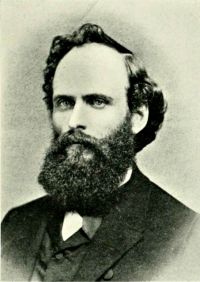 E. P. Evans,
The Criminal Prosecution and Capital Punishment of Animals
“ It imposes upon each man the duty and necessity of working out his own salvation, not with fear and trembling at the prospect of meeting an angry deity, but with hope and cheerfulness, knowing that the beneficent forces of nature [Pg 234] are working in him, as in all forms of organic life, in obedience to the laws of development, towards the goal of his highest possible perfection by gradually eliminating the heirloom of the beast and the savage, and letting the instincts of the tiger and the ape slowly die within him. ”
 William Henry Giles Kingston,
Stories of Animal Sagacity
“ The dog used to run in and out of the cage, looking upon it as his home; and when the tiger died, he long evidently mourned the loss of his friend and former antagonist.Observe how that poor outcast dog, by his courage and perseverance, preserved his life, and indeed gained a victory, in spite of the fierce assaults of his savage foe. Will you act less courageously when attacked by the ridicule, the abuse, or the persuasions of those who may try to drag you from the path of duty? ”
 William Lauder Lindsay,
Popular Science Monthly
(1880)
“ The dog, at least, frequently exhibits a knowledge of right and wrong, making a deliberate choice of the one or the other, perfectly aware of and prepared for the consequences of such a selection. The animal has occasionally the moral courage to choose the right and to suffer for it, to bear wrong rather than do it (Elam) , Not only does this frequently noble animal know the right, but it dares to do it, enduring the expected, the inevitable, consequent suffering. ”
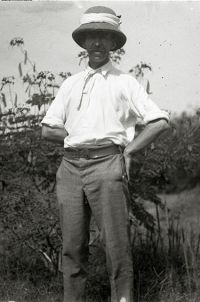 Northcote Whitridge Thomas,
1911 Encyclopedia Britannica
(1911)
“ We may assume that man attributed a soul to the beasts of the field almost as soon as he claimed one for himself. It is therefore not surprising to find that many peoples on the lower planes of culture respect and even worship animals (see Totem; Animal Worship) ; though we need not attribute an animistic origin to all the developments, it is clear that the widespread respect paid to animals as the abode of dead ancestors, and much of the cult of dangerous animals, is traceable to this principle. ”
Charles W. Sanders, Sanders' Union Fourth Reader
“ Yea, more, the animal had never violated the laws of his nature or the laws of God, as man often did; but strictly followed the simple, harmless instincts he had received from the hand of the Creator of all things. ”
Charlotte Elizabeth,
Kindness to Animals; Or, The Sin of Cruelty Exposed and Rebuked
“ This is one of the things that we are apt to forget when have a beast, or a bird, or a fish, or an insect, in our power. We are too ready to say to ourselves, “This is mine, and I may do what I like to it.” Not so; it is a creature of God’s, not of ours; and if we do to it any thing that he does not approve of, he will surely reckon with us for it. When I call this to mind, I am alarmed—though I do not think I have often been cruel to animals, or any such thing—and I am ready to pray, “Lord, if I have hurt any of thy creatures, pardon my past sin, for Jesus Christ’s sake, I beseech thee ”
W. H. Maxwell, The Field Book: or, Sports and pastimes of the United Kingdom
“ We must do this animal the justice to observe, that, though nature has furnished it with formidable weapons of offence, and has besides given it strength sufficient to use them with great effect, it is, notwithstanding, very harmless and inoffensive, and, unless attacked, employs them only for its support. ”
Charlotte Elizabeth,
Kindness to Animals; Or, The Sin of Cruelty Exposed and Rebuked
“ Jack knew this: he used to rub his forehead with his fingers’ ends, shake his head wisely, and spell, “Very good think.” I hope you will judge the same; and when you have come to the end of my little book, be able to say you have had a “very good think” too. Chapter II. The Horse. The great mistake that people seem to me to make about animals is this: they fancy that they must be frightened into obedience, and kept from disobeying their masters by being made afraid of punishment. I dare say that animals, like human beings, often need correction ”
 Charles Webster Leadbeater,
The Inner Life: volume I — Third Section…
“ Thus when, later on, that animal wave of life goes up into humanity, we shall have a humanity starting terribly handicapped — starting with these awful qualities of fear and hatred ingrained in it, instead of a humanity all aspiring, devotional, loving and gentle, such as we might have had if the men to whom the animal part of that evolution was committed had done their duty.We have also our duty towards other and even lower forms of life than that. There is the elemental essence, which is surrounding us everywhere ”
“ The animal was given to making unexpected charges, and would do so with astonishing quickness, springing round and leaping at the object of his hate with tremendous force, and with such rapidity that even the experienced keeper, who knew all the ways of the animals under his charge, had often some difficulty in slipping behind the door, against which the horns of the Aoudad would clatter as if they would break the door to pieces. ”
 Jean-Jacques Rousseau,
Emile, or On Education
(1762)
“ The lions and panthers, wild beasts as you call them, are driven to follow their natural instinct, and they kill other beasts that they may live. But, a hundredfold fiercer than they, you fight against your instincts without cause, and abandon yourselves to the most cruel pleasures. The animals you eat are not those who devour others; you do not eat the carnivorous beasts, you take them as your pattern. You only hunger for the sweet and gentle creatures which harm no one, which follow you, serve you, and are devoured by you as the reward of their service. ”
George John Romanes, Animal Intelligence
“ The means of punishing so powerful an animal is a question of difficulty to his attendants. Force being almost inapplicable, they try to work on his passions and feelings, by such expedients as altering the nature of his food or withholding it altogether for a time. ”
Charles Webster Leadbeater,
The Inner Life: volume I — Third Section…
“ We have the dog, the cat, the horse and other originally wild animals given into our care — brought to us for affection and help. Why? That we may train them out of their ferocity, and into a higher and more intelligent state of life — that we may evoke in them devotion, affection and intellect. ”
 John Fletcher,
Studies on Slavery, in Easy Lessons
“ He asserts that the lower we descend in the scale of animal organization and mental development, the more active and all-pervading over the conduct of the animal is instinct! But, nevertheless, holds that “instinct is in such animals an unconscious intelligence.” We much admire why he did not think proper to cast off from the ancients the charge of a puerile idolatry, on the account of their worship of bulls, calves, alligators, snakes, beetles, and bugs, for they must have entertained a somewhat similar notion. ”
Related terms
Authors who wrote about “obedience (animal)”
Marvin R. ClarkWilliam Lauder Lindsay Kenneth GrahameCharlotte ElizabethGeorge WaringEdward JesseCharles Webster Leadbeater
 Abu Hamid al-GhazālīM. Horace Hayes
 James George Frazer
 Jack LondonCharles DarwinJames Frazer
 George OrwellThomas CarlyleW. N. Hutchinson
 Henry David ThoreauVarious
 ʻAbdu'l-BaháAdam Clarke
William Lauder LindsayKenneth GrahameCharlotte ElizabethGeorge WaringEdward JesseCharles Webster LeadbeaterAbu Hamid al-GhazālīM. Horace HayesJames George FrazerJack LondonCharles DarwinJames FrazerGeorge OrwellThomas CarlyleW. N. HutchinsonHenry David ThoreauVariousʻAbdu'l-BaháAdam Clarke