Oolitic limestone

Definition and stakes

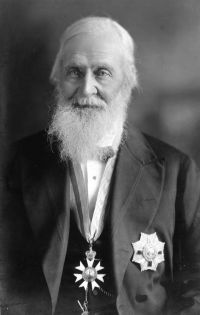
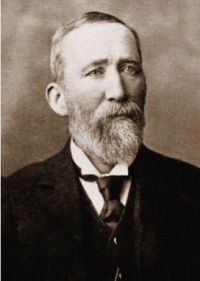
Portrait of John Smith Flett John Smith Flett,  1911 Encyclopædia Britannica (1911)

“ The oolitic limestones form a special group distinguished by their consisting of small rounded or elliptical grains resembling fish roe; when coarse they are called pisolites. Many of them are very pure and highly fossiliferous. The oolitic grains in section may have a nucleus, e.g. a fragment of a shell, quartz grain, &c., around which concentric layers have been deposited. In many cases there is also a radiating structure. They consist of calcite or aragonite, and between the grains there is usually a cementing material of limestone mud or granular calcite crystals. ”
Source: Wikisource

John Allen Howe,  1911 Encyclopædia Britannica (1911)

“ The Pea Grit series contains pisolitic limestone and coarse, iron-stained oolite and sandy limestone. The freestones are compact oolite limestones. The rag stones are fossiliferous, earthy and iron-stained oolitic limestones. The “grits” are really coarse-grained limestones or calciferous sandstones. Between Andoversford and Bourton-in-the-Water the Inferior Oolite is represented by rag stones (Ferruginous beds, Clypeus Grit, Trigonia bed, Notgrove Freestone, Gryphite Grit) and freestones (Upper Freestones and Harford Sands, Oolite Marl, Lower Freestone) . ”
Source: Wikisource

Guide to Rocks and Minerals of Illinois

“ If such fossils are very abundant, the rock is called fossiliferous limestone. 14 Limestone composed of tiny, rounded concretions is called oolite or oolitic limestone.
Limestone effervesces freely in dilute hydrochloric acid, but dolomite must be powdered before it will effervesce. In nature, limestones may be dissolved by percolating water containing weak acid (such as carbonic acid, composed of water and carbon dioxide) . At many places in southern and southwestern Illinois such solution of limestones has produced caves and caverns.
”
Source: Gutenberg

Get perspective with Kwize: daily news enlightened by great literature