
Planting bed

Definition and stakes

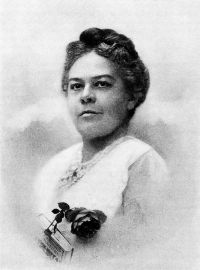
Portrait of L. H. Bailey L. H. Bailey,  Manual of Gardening (Second Edition…

“ Bedding is ordinarily a temporary species of planting; that is, the bed is filled anew each year. However, the term may be used to designate a permanent plantation in which the plants are heavily massed so as to give one continuous or emphatic display of form or color. Some of the best permanent bedding masses are made of the various hardy ornamental grasses, as eulalias, arundo, and the like. The color effects in bedding may be secured with flowers or with foliage. ”
Source: Gutenberg

Portrait of L. H. Bailey L. H. Bailey,  Manual of Gardening (Second Edition…

“ This, nor any kind of bed, should not be planted near large trees, as their greedy roots will rob the soil not only of its food, but of moisture. The shade also will be a menace. As the plants stand so thick, the soil should be well enriched, and spaded at least a foot deep. In planting, a space of at least six inches must be left between the outer row of plants and the edge of the grass. The very style of the bed requires that lines be straight, the curves uniform, and that they be kept so by the frequent and careful use of the shears. During dry periods watering will be necessary. ”
Source: Gutenberg

Sutton & Sons Ltd.,  The Culture of Vegetables and Flowers From Seeds and Roots

“ Culture in Beds.—The Hyacinth will grow well in any ordinary garden soil, but that which suits it best is a light rich loam. The bed should be effectually drained, for though the plant loves moisture it cannot thrive in a bog during the winter. It is advisable to plant early, and to plant deep. If a rich effect is required, especially in beds near the windows of a residence, the bulbs should be six inches apart, but at a greater distance a good effect may be produced by planting nine inches apart. ”
Source: Gutenberg

Get perspective with Kwize: daily news enlightened by great literature