Polychromy

Definition and stakes

Thomas Wright,  Archaeological Journal (1845)

“ Polychromy is observable in all the architectural subjects throughout the manuscript; the arches, and even the mouldings, and different parts of the columns, are painted of various hues. The colours most frequent are yellow and blue. It may perhaps be doubted how far we may depend on the strict truth of the colours employed by the early artists, for in some instances they seem to be extremely fanciful. ”
Source: Wikisource

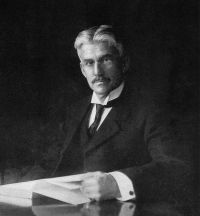
Portrait of A. H. Munsell A. H. Munsell,  A Color Notation

“ It will be remembered that the chroma of the sphere ceased with 5 at the equator. The color tree prolongs 24 this through 6, 7, 8, and 9. The branch ends carry colored balls, representing the most powerful red, yellow, green, blue, and purple pigments which we now possess, and could be lengthened, should stronger chromas be discovered.12
(35) Such models set up a permanent image of color relations. Every point is self-described by its place in the united scales of hue, value, and chroma. These scales fix each new perception of color in the child’s mind by its situation in the color solid.
”
Source: Gutenberg

Henry Hunt Snelling,  The History and Practice of the Art of Photography

“ If a pencil of the sun's rays fall upon a prism, it is bent in passing through the transparent medium; and some rays being more refracted than others, we procure an elongated image of the luminous beam, exhibiting three distinct colors, red, yellow and blue, which are to be regarded as primitives--and from their interblending, seven, as recorded by Newton, and shown in the accompanying wood cut. These rays being absorbed, or reflected differently by various bodies, give to nature the charm of color. ”
Source: Gutenberg

Get perspective with Kwize: daily news enlightened by great literature