Selenite

Definition and stakes

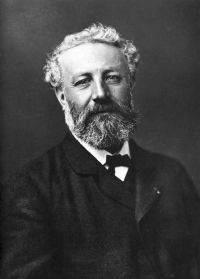
Portrait of Jules Verne Jules Verne,  All Around the Moon

“ Consequently a Selenite could catch an occasional glimpse of our Earth, without altogether quitting the dark side."
"No matter for that!" cried Ardan; "if we ever become Selenites we must inhabit the visible side. My weak point is light, and that I must have when it can be got."
"Unless, as perhaps in this case, you might be paying too dear for it," observed M'Nicholl. "How would you like to pay for your light by the loss of the atmosphere, which, according to some philosophers, is piled away on the dark side?"
”

Source: Gutenberg

Various,  Encyclopaedia Britannica, 11th Edition…

“ Many of the best localities for selenite are in the New Red Sandstone formation (Trias and Permian) , notably the salt-mines of Hall and Hallein, near Salzburg, and of Bex in Switzerland. Excellent crystals, usually of a brownish colour arranged in groups, are often found in the brine-chambers and the launders used in salt-works. Selenite also occurs in fine crystals in the sulphur-bearing marls of Girgenti and other Sicilian localities; whilst in Britain very bold crystals are yielded by the Kimeridge clay of Shotover Hill near Oxford. ”
Source: Gutenberg

Portrait of Thomas C. Chamberlin Thomas C. Chamberlin,  Geology (1906)

“ Satinspar—a variety of selenite or gypsum.
Selenite—a distinctly crystallized transparent form of gypsum.
Serpentine—a hydrous magnesium silicate; usually in pseudomorph forms; also fibrous, granular, cryptocrystalline, and amorphous; H. 2.5–4; luster subresinous to greasy, pearly or earthy, resinous or wax-like; feel, smooth and somewhat greasy; leek-green to blackish green and siskin green verging into brownish and other colors; apparently derived most commonly from chrysolite or olivine and also from other magnesian minerals; sometimes constitutes the bulk of rock masses.
”
Source: Gutenberg

Get perspective with Kwize: daily news enlightened by great literature