“ In brief the laws of prize distribution enunciated by the great founders of international law of the sixteenth and seventeenth centuries appear to be as follows:1. The state is the only power which can prosecute war and make prize.2. The right of private reprisal can only be exercised under specific commission from the state.3. The title to all prizes vests originally in the state.4. Distribution should be decreed only after [27] adjudication of the prize by a regular tribunal of the state.5. The method of distributing prize money is determined by municipal law. ”
Prize (law)
Definition and stakes
The legal concept of "prize" refers to the seizure of property—typically ships or cargo—during wartime, regulated by principles of international and maritime law. Historically, scholars such as Quincy Wright emphasized the state’s exclusive authority over the allocation of prizes, stressing the need for adjudication by state tribunals to establish ownership.
Others, like Penrhyn Wingfield Coussens, focused on the law's role in bestowing recognition based on merit, while judicial opinions from figures like Joseph Story highlighted the procedural strictness required to confirm the legitimacy of a prize. These viewpoints together illustrate a framework that balances state power, legal formalism, and the ethical considerations of justice in times of war.
Quotes about “prize (law)”
Various, Blackwood's Edinburgh Magazine…
“ The influence of the great prize of the law, the church, and other professions in this country, has often been insisted upon with great reason: it has been said, and truly said, that not only do these prizes reward merit already passed through its probationary stages, but serve as inducements to all who are pursuing the same career. ”
“ A treaty with Flanders of 1426 contains the provision that "no prizes shall be divided at sea or in a foreign harbour but shall be brought entire to a port of England and there it will be adjudged by the king and council, the chancellor or the admiral whether the prize belonged to friends or enemies and [36] it will be disposed of in good and brief manner." [9] Here we seem to have a distinct enunciation of the most modern principles of prize law that no title to prize is legally conferred until after adjudication by a competent organ of the state making the capture. ”
Penrhyn Wingfield Coussens, The Jade Story Book — The Mysterious Garden (1922)
“ But you know the law of this country which says that honors may be conferred upon no one who has not proved worthy to receive them. It is my desire that you attain high rank, but this you cannot reach by remaining at court. You will therefore go out into the world and try to earn, by your own endeavor, the prize promised by the law, and which I shall delight to bestow upon you. ”
William Johnson, The Bello Corrunes — Opinion of the Court
“ Citizens of the United States, therefore, present themselves to this Court to demand restitution of a prize which they had made in violation of the most solemn stipulations of a treaty, and provisions of a law of their own country, and of which they have been dispossessed by their own associates in guilt. ”
The Nereide — Opinion of the Court
“ The words 'made good and lawful prize,' do not refer to the capture merely: the act speaks of the capture first, and then adds, 'and made good and lawful prize.' The capture, too, must be of enemy's goods, either in fact, or in contemplation of law. To say, that the goods are, by the act of capture, made good and lawful prize, because the capture is made by a lawfully commissioned cruiser, is to drop more than a moiety of the definition of good and lawful prize, or, rather, to insist on that which is not an essential part of its definition. ”
Archibald Prentice, History of the Anti-Corn Law League (1853)
“ There are fêtes, soirées, given to the free-traders;—eclat, warmth, and life are communicated by their presence to those great oratorical jousts in which the condition of the masses is discussed;—a magnificent prize is held out to the most eloquent orator, or to the most indefatigable defender of liberty. ”
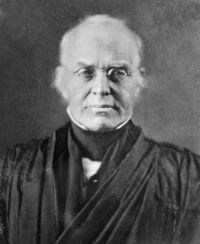 Joseph Story,
The Anne — Opinion of the Court
“ This is the ordinary course of prize courts, especially where it becomes material to ascertain the circumstances of the capture; for in such cases the facts lie as much within the knowledge of the captors as the captured, and the objection of interest generally applies as strongly to the one party as to the other. It is a mistake, to suppose that the common law doctrine, as to competency, is applicable to prize proceedings. In courts of prize, no person is incompetent merely on the ground of interest. ”
Joseph Story,
The Schooner Andeline and Cargo…
“ No proceedings can be more unlike than those in the Courts of common law and in the admiralty. In prize causes, in an especial manner, the allegations, the proofs and the proceedings are, in general, modelled upon the civil law, with such additions and alterations as the practice of nations and the rights of belligerents and neutrals unavoidably impose. The Court of prize is emphatically a Court of the law of nations ”
 Salmon P. Chase,
The Sir William Peel — Opinion of the Court
“ The claimants in this case are neutrals, subjects of Great Britain, and as such have a persona standi in the prize court to allege, according to the regular procedure of the prize jurisdiction, whatever is pertinent and significant on the question 'of lawful prize of war,' under the law of nations, as bearing upon the sentence of restitution or condemnation to be passed in the cause. ”
L. Oppenheim, International Law. A Treatise. Volume 2…
“ Every prize court in a British possession shall enforce within its jurisdiction all orders and decrees of the High Court and of any other prize court in a British possession in prize causes, and all orders of the Supreme Prize Court constituted under this Act in prize appeals. ”
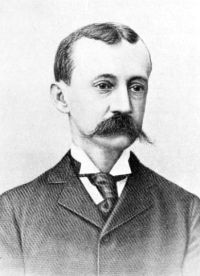 George Fox Tucker,
International Law
“ The prize master delivers the documents and the inventory to prize commissioners, who are appointed by the court, and reports to the district attorney, who files a libel against the prize property and sees "that the proper preparatory evidence is taken by the prize commissioners, and that the prize commissioners also take the depositions de bene esse of the prize crew, and of other transient persons cognizant of any facts bearing on condemnation or distribution." ”
“ It is admitted on the part of the captors that their claim rests wholly on the order of council, the proclamation and the prize act. It is not denied that independent of these instruments the whole subject matter is in the hands of the crown as well in point of interest as in point of authority. Prize is altogether a creature of the crown. No man has or can have any interest, but what he takes as the mere gift of the crown. ”
“ That in view of these ideas all the individual benefit to the profit of agents of the state which exercises the right of capture ought to be excluded and that the loss suffered by individuals from the taking of prize ought to be finally borne by the state to which they belong ”
Horace Gray, Cushing v. Laird Foster — Opinion of the Court
“ Rodney, 2 Doug. 613, 614, Lord MANSFIELD said:'The end of a prize court is to suspend the property till condemnation; to punish every sort of misbehavior in the captors; to restore instantly, velis levatis, (as the books express it, and as I have often heard Dr. Paul quote,) if, upon the most summary examination, there don't appear a sufficient ground; to condemn finally if the goods really are prize, against everybody, giving everybody a fair opportunity of being heard. ”
 Maria Montessori,
The Montessori Method
“ If, in such a moment, someone vested with authority comes forward to offer us a medal or a prize, he is the important destroyer of our real reward—"And who are you?" our vanished illusion shall cry, "Who are you that recalls me to the fact that I am not the first among men? Who stands so far above me that he may give me a prize?" The prize of such a man in such a moment can only be Divine. ”
 Bertha von Suttner,
Memoirs of Bertha von Suttner: The Records of an Eventful Life…
“ I should like to dispose of a part of my fortune by founding a prize to be granted every five years—say six times, for if in thirty years they have not succeeded in reforming the present system they will infallibly relapse into barbarism. ”
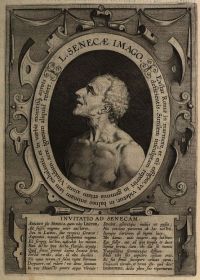 Lucius Annaeus Seneca,
L. Annaeus Seneca on Benefits
“ You are mistaken if you suppose that the judge will assist you: no law will make full restitution to you, you must look only to the honour of the receiver. Thus only can benefits retain their influence, and thus only are they admirable: you dishonour them if you make them the grounds of litigation, "Pay what you owe" is a most just proverb; and one which carries with it the sanction of all nations; but in dealing with benefits it is most shameful. "Pay!" How is a man to pay who owes his life, his position, his safety, or his reason to another? None of the greatest benefits can be repaid. ”
 Charles Perrault,
The Fairy Tales of Charles Perrault
(1922)
“ A thousand instances attend mankind: For thou—O may it not displease the fair— A fleeting pleasure art, but lasting care. And always proves, alas! too dear the prize, Which, in the moment of possession, dies. ”
 Melville Fuller,
United States v. Dewey — Opinion of the Court
“ But while the property in question was, in general, susceptible of condemnation in prize, it was, nevertheless, taken subject to the exercise of the power of restitution. The right of the government is supreme, and when, in its judgment, the public interest demands it, prizes may be restored, and the courts cannot proceed to condemnation. ”
William Johnson, L'Invincible — Opinion of the Court
“ But it is contended that, admitting the general principle, that the exclusive cognizance of prize questions belongs to the capturing power, still the peculiar circumstances of this case constitute an exception, inasmuch as the recapture of the Mount Hope puts it out of the power of the French courts to exercise jurisdiction over the case. ”
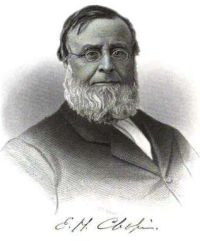 E. H. Chapin,
Humanity in the City
“ And here, daily, the lists are opened, and men contend for success, for station, for power. But these are meretricious and perishable awards. The real prize is a spiritual gain, a crown that "fadeth not away." ”
Various, New York Times Current History…
“ From the accompanying copy of the Order in Council, which is to be published today, you will observe that a wide discretion is afforded to the prize court in dealing with the trade of neutrals in such manner as may, in the circumstances, be deemed just, and that full provision is made to facilitate claims by persons interested in any goods placed in the custody of the Marshal of the prize court under the order. ”
 Virginia Woolf,
The Dial
(1923)
“ We can only reply that the dictionary and good usage are the pedants, not ourselves; we are using words in their accurate and accepted sense when we say that a prize is something contested for and that an award is something given. In France books and manuscripts of books are specifically entered for prizes; in America, as in the case of the Pulitzer prize, publications of various sorts come automatically within the scope of the prize and are considered by the judges. ”
James Anson Farrer, Crimes and Punishments
“ If prizes offered by academies to the discoverers of useful truths have caused the multiplication of knowledge and of good books, why should not virtuous actions also be multiplied, by prizes distributed from the munificence of the sovereign? The money of honour ever remains unexhausted and fruitful in the hands of the legislator who wisely distributes it. ”
 Samuel Freeman Miller,
United States v. Farragut — Opinion of the Court
“ Where the award finds facts it is conclusive, where it finds or announces concrete propositions of law, unmixed with facts, its mistake, if one is made, could have been corrected in the court below, and can be corrected here. Where a proposition is one of mixed law and fact, in which the error of law, if there be one, cannot be distinctly shown, the parties must abide by the award. ”
Horace Gray, United States v. Steever — Opinion of the Court
“ Although prize-money is, strictly speaking, a matter of bounty and not of right, and no one has any absolute title to it before adjudication, yet, unless the government, acting through the proper department, has clearly manifested an intention to revoke the grant, or to alter the mode of distribution, it is to be awarded and distributed according to the laws in force and the facts existing at the time of the capture. ”
United States. Congress, Abridgment of the Debates of Congress…
“ In this respect, a doubt might exist in the case of prizes, which could not exist in the case of a man. Individuals on each side claimed the property, and therefore their rights could be brought into court, and there contested as a case in law or equity. The demand of a man made by a nation stands on different principles.Having noticed the particular letters cited by the gentleman from New York, permit me now, said Mr. M., to ask the attention of the House to the whole course of Executive conduct on this interesting subject. ”
Salmon P. Chase,
Andromeda v. United States — Opinion of the Court
“ The rule is, that a libel in prize must allege generally the fact of capture as prize of war, and the libel in the record is in conformity with this rule.The decree of the District Court must be affirmed. ”
Dorothy Dudley Leal, ../../ (1913)
“ In place of one person, the honor may be bestowed upon a society; or it may be kept back entirely, but each prize must be given once in every five years. Besides the cash prize, each winner receives a diploma and a gold medal bearing a portrait of Alfred Nobel. The prizes are a real factor in increasing the dignity of a scientific career, and in encouraging such work. The money value is large, but the fame attached to the honor is all but priceless. ”
Nathan Clifford, The Blackwall — Opinion of the Court
“ More than one set of salvors, however, may contribute to the result, and in such cases all who engaged in the enterprise and materially contributed to the saving of the property, are entitled to share in the reward which the law allows for such meritorious service, and in proportion to the nature, duration, risk, and value of the service rendered. ”
Parliament of the United Kingdom, Honours (Prevention of Abuses) Act 1925 (1925)
“ If any person accepts or obtains or agrees to accept or attempts to obtain from any person, for himself or for any other person, or for any purpose, any gift, money or valuable consideration as an inducement or reward for procuring or assisting or endeavouring to procure the grant of a dignity or title of honour to any person, or otherwise in connection with such a grant, he shall be guilty of a misdemeanour. ”
Henry Sampson, A History of Advertising from the Earliest Times
“ And for the farther Encouragement of all and every the Person and Persons who shall apprehend and convict any Offender or Offenders in any of the Offences aforesaid, the said Subscribers do hereby promise to use their Endeavours for procuring the speedy Payment of such Reward as such Person or Persons may be entitled to by any Law now in Being. ”
Unknown, The Story of Burnt Njal: The Great Icelandic Tribune…
“ So the bell was rung, and all men went to the Hill of Laws, and Hall of the Side stood up and spoke, "In this suit, in which we have come to an award, we have been all well agreed, and we have awarded six hundred in silver, and half this sum we the daysmen will pay, but it must all be paid up here at the Thing. But it is my prayer to all the people that each man will give something for God's sake." ”
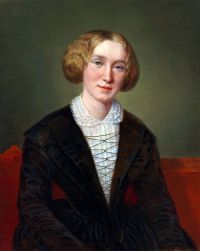 George Eliot,
Felix Holt, the Radical
“ And what's more, I should do this, as men are doing it every day, for a ridiculously small prize—perhaps for none at all—perhaps for the sake of two parlors, a rank eligible for the churchwardenship, a discontented wife, and several unhopeful children. ”
“ The title to all prize vests originally in the state.Phillimore says, "The maxim 'Bello Parta Cedunt Reipublicae,' is recognized by all civilized states. In England all acquisitions of war belong to the sovereign who represents the commonwealth. The Sovereign is the fountain of booty and prize." ”
Privateering and Piracy in the Colonial Period
“ IV. That if any Person spies a Sail, and she proves to be a Prize worth One Hundred Pieces of Eight a Share, he shall receive Forty Pieces of Eight at Six Shillings. And the first Man who enters on boarding a Prize in an engagement, and strikes her Colours, shall receive Half a Share for his Bravery. ”
United States. Congress, Abridgment of the Debates of Congress…
“ Madison.—If paper, or the honor of statues or medals can discharge the debts of justice, payable in gold or silver, we can not only exonerate ourselves from those due to the original holders, but from those of the assignees. So far as paper goes, the latter have received the compensation. If honor can discharge the debt, they have received civil honors; look around to the officers of every Government in the Union, and you find them sharing equal honors with those bestowed on the original creditors. ”
Henry Alexander Munro-Butler-Johnstone, Handbook of Maritime Rights (1876)
“ If justice is denied by the prize courts of a belligerent nation, or if its decisions are notoriously contrary to justice, then such a pretext is a just cause of remonstrance and even of war, principle of the locality of prize courts had never been called in question. ”
Privateering and Piracy in the Colonial Period
“ Very early this morneinge, I found worcke ready for me to heare and decide divers complaincts between the Inhabitants. Some of the Counsell of Warre dined with me; presently after dinner I caused a Proclamation pro forma to be made by sound of the Drumme, concerninge the Bussinesse of our new gotten prize: viz, That if anyone could make a claime to any of the said Prize goods or saye anything why adjudication of her being lawfull Prize should not be granted; they should come in by such a daye and should be heard accordinge to Justice. ”
Related terms
Authors who wrote about “prize (law)”
Quincy WrightDorothy Dudley LealHenry Alexander Munro-Butler-JohnstoneGeorge Fox TuckerHenry SampsonHorace GrayPenrhyn Wingfield CoussensVariousJoseph StoryWilliam Johnson Charles Dickens
 HomerSalmon P. ChaseArchibald PrenticeMelville FullerL. OppenheimMaria MontessoriBertha von SuttnerCharles PerraultLucius Annaeus Seneca
George Fox TuckerHenry SampsonHorace GrayPenrhyn Wingfield CoussensVariousJoseph StoryWilliam JohnsonCharles DickensHomerSalmon P. ChaseArchibald PrenticeMelville FullerL. OppenheimMaria MontessoriBertha von SuttnerCharles PerraultLucius Annaeus Seneca