“ Nearly all manuscript copy is indebted to the compositor and proof-reader for the proper punctuation; and many errors in spelling, made by men who probably know better, but write hastily, are silently corrected in the printing-office. Contradictions, errors of fact, anachronisms, imperfect sentences, solecisms, barbarisms, are modestly pointed out to the author by the proof-reader’s “quære,” or by a carefully worded suggestion; and, most usually, the proof is returned without comment,—and none is needed,—corrected according to the proof-reader’s intimations. ”
Proof (printing)
Definition and stakes
The theme of “proof (printing)” has been addressed by authors such as F. Horace Teall, Benjamin Drew, United States. Government Printing Office, Theodore Low DeVinne and Charles Shattuck Hill and Theodore Low De Vinne. It is often associated with terms like proofreader, author, error, manuscript and compositor.
Quotes about “proof (printing)”
Theodore Low DeVinne and Charles Shattuck Hill, The New International Encyclopædia…
“ Proofs are taken from the type in galley and in page form, which are read for errors, so that corrections may be made before the type is sent to press. At least two proofs of the type—a galley proof and a page proof—are always taken and read for errors, and very often in careful work several proofs of each kind are ‘pulled’ and read by different persons. See Proof-Reading. The printer's form may consist of any number of pages from 2 to 128. ‘Imposition’ is a method of arranging pages so that they will follow one another upon the printed paper in the proper consecutive order. ”
Anonymous, The Daily Newspaper: The History of Its Production and Distibution
“ In the early days of printing, the proof-readers were eminent scholars, and it was no unusual thing for a proof to pass through the hands of several of the most learned men of the time and neighborhood before the sheets were printed. ”
F. Horace Teall, Proof-Reading
“ A proof-reader, on the contrary, can not choose his subjects. He must undertake what is ready for him, whether it be some ordinary work, using common words only, or a scientific book filled with unfamiliar words.59 Authors of scientific works often make abominable copy. They do not realize that the terminology so well known by them is not equally well known to the workers in printing-offices, and the most particular words are frequently written more carelessly than the common words in their manuscript. ”
United States. Government Printing Office, Manual of Style Governing Composition and Proof Reading in the Government Printing Office
“ When a proof is taken out, the reader should inform himself fully as to the character of the work, whether there are any special instructions or peculiarities concerning it, whether proof will be sent out or the work go directly to press, and get such other information as he may think will assist him; and before beginning to read he should make sure that copy agrees with proof and that the entire proof is legible. It is well to do preparatory work and take a general survey of a proof before beginning to read it. ”
United States. Government Printing Office, Manual of Style Governing Composition and Proof Reading in the Government Printing Office
“ Compositors should take every precaution to prevent the soiling of proof sheets, as it is necessary for the reviser to see clearly every mark on the margin of a proof after it has been corrected.Do not try to cover up or hide an accident. After a proof is read the first time, if a word or line is pied, or if a “dropout” occurs, or any accident happens to the type, it is the duty of the workman to call attention to it in writing on the latest proof sheet, whether it be a galley revise, page revise, stone revise, press revise, or foundry revise. ”
United States. Government Printing Office, Manual of Style Governing Composition and Proof Reading in the Government Printing Office
“ The time to be spent in reading a proof should be governed, in a great measure, by its importance. While in certain classes of ordinary work the reader is not expected to detect more than the plainer errors and make his proof correct to copy, in work of value he should read critically and try to discover more serious blunders than spelling, capitalization, punctuation, etc. But speed should never be greater than is consistent with practical correctness.A single reading of figures, either in columns or lines, should be sufficient. ”
F. Horace Teall, Proof-Reading
“ The only way successfully to combat unreasonable whim is by opposing it with true principle; yet even this will not always succeed. When a clear statement of principle fails to convince a writer that he is at fault, of course the proof-reader must yield, often to his great disadvantage. All intelligent people know that printed matter passes through the hands of a proof-reader, and they naturally attribute to his carelessness or incompetency all errors in printing. ”
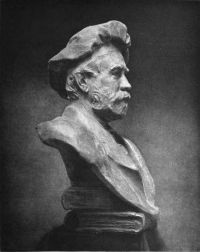 Theodore Low De Vinne,
Correct Composition
(1901)
“ Proof read and corrected too often by one reader only may have errors in the last proof that did not exist in the first. A page of the ordinary book consists of at least one thousand and sometimes of five thousand distinct pieces of metal. The omission or the transposition of any one makes a fault which may be serious. Printing-house rules for meddling with type are not sufficiently stringent. No one should be allowed to touch type but the workman in whose charge it is placed. ”
1911 Encyclopædia Britannica, Volume 22… (1911)
“ Times, however, have changed since, as the elder D'Israeli wrote. “it became the glory of the learned to be correctors of the press to eminent printers,” and to-day in every printing office the proofreader is found—an unobtrusive functionary, known to publishers, authors, editors and journalists, but for the most part unknown to the general reading public; a functionary who yet does useful, often valuable, and always indispensable work. The influence of good proof-reading upon the character of book, newspaper and general printing is too often underrated. ”
United States. Government Printing Office, Manual of Style Governing Composition and Proof Reading in the Government Printing Office
“ The marks of the copy preparer must be given consideration by all. He has probably handled the entire work and is in a position to know more about its peculiarities than the man who reads but a small portion.GALLEY-PROOF REVISING.The importance of revising proofs well can not be overestimated. While a reviser is not expected to read proof, it is not enough for him to slavishly follow the marks found on the proof sheet which has been to the composing room for correction. ”
“ The proof-reader knows, that (as we have already remarked) every printing-office has a style of its own; that, if left to itself, its style would be practically uniform and always respectable,—and he soon learns that some writers for the press have very firm opinions about matters of little or no consequence, and are very tenacious, if not pugnacious, in preferring tweedledee to tweedledum ”
Perry Wayland Sinks, The Reign of the Manuscript
“ The invention of printing, through its associated process of proof corrections, has virtually exempted books from the mundane laws of decay and has greatly aided as well in their preservation and their widest circulation. ”
F. Horace Teall, Proof-Reading
“ Some kinds of changes proof-readers should not make, even if they think the writing is wrong. When a plainly written manuscript, showing care at all points, contains something about the “setting up of the first printing-press,” this should not be printed “setting-up of the first printing press”; neither should some one be changed to someone, though the barbarous someone happens to be the “style of the office.” There is no good reason for making a compound of setting up, and there is no reason for making anything but a compound of printing-press ”
F. Horace Teall, Proof-Reading
“ If the writer can not himself produce such copy, his manuscript should be carefully revised by some one else. Any person doing such work of revision should be very cautious in order to preserve the writer’s intended expression, for often even an extra comma is disastrous. This applies also to proof-reading. The writer should be consulted, when consultation is possible, about changes from copy.When authors have cultivated the habit of writing as they should write, or of having their copy made good for them, there will be no reasonable excuse for bad errors in printing. ”
Maxime Lalanne, A Treatise on Etching
“ It follows from this that the possessor of a proof without title has the best the plate can afford to give. But, as the pictures by the masters do not stand in need of a signature to be recognized, so the proofs before lettering may well do without the guaranty which is found in the absence of a title; even without this guaranty an amateur knows how to recognize the virgin freshness of an early impression, which is still further augmented by the extreme care bestowed on the printing of these exceptional proofs, but which cannot be kept up through a long edition. ”
Frank Allaben, Concerning Genealogies
“ If the reader is not himself an expert genealogist, or is printing his first work, the services of the right kind of proof-reader are still more indispensable. But, in fact, all writers are largely dependent upon the printer and proof-reader for the systematic carrying out of a correct style of punctuation, capitalization and spelling. ”
United States. Government Printing Office, Manual of Style Governing Composition and Proof Reading in the Government Printing Office
“ Every paragraph containing an alteration in a proof that makes one or more overruns must be reread as first proof. It must be read aloud by copyholder, word for word, to the end of the paragraph, or at least far enough to satisfy the reviser that the proper correction has been made and no new errors have slipped in while the lines were being handled. ”
United States. Government Printing Office, Manual of Style Governing Composition and Proof Reading in the Government Printing Office
“ Corrections so made are not respected by the compositor, and he is frequently annoyed and delayed in deciphering what they mean and to what they refer. In reading proof of wide tables the reader should take advantage of white space as near as possible to the error and place the correction therein, thus aiding all who have occasion to handle the proof afterwards. ”
United States. Government Printing Office, Manual of Style Governing Composition and Proof Reading in the Government Printing Office
“ The style in which correction marks are made on a proof is an element of considerable importance. Straggling, unsymmetrical characters, disconnected marks placed in the margins above or below the lines to which they relate, irregular lines leading from an incorrect letter or word to a correction, large marks, marks made with a blunt pencil, indistinct marks, a frequent use of the eraser to obliterate marks hastily or incorrectly made, are all faults to be avoided. ”
United States. Government Printing Office, Manual of Style Governing Composition and Proof Reading in the Government Printing Office
“ The substance of the preceding paragraph applies also to “fol. lit.” matter, especially bills, laws, and court work.When an entire “take” or proof seems to have been set uniformly, a reader should never make important changes in indentions of tables or make like corrections which will cause a great deal of work without consulting the foreman, the copy preparer, or the man at the proof table. ”
Samuel Jesse Vaughn, Printing and bookbinding for schools (1912)
“ Then the type is covered with a moist paper, the sponged side up, or a regular proof paper. If there is no proof press the proof planer, a smooth faced block of hard wood, with face covered with felt, Fig. 15, is laid on the top of the paper, and tapped squarely and firmly with the mallet. If the proof planer does not cover the form, its position is changed and the mallet used again. The impression left on the paper is the first proof. See proof marks, page 27. In school, it is wise to have the pupils read their own proofs. 22 Fig. ”
John Wilson, The Importance of the Proof-reader
“ The true proof-reader should not only be a practical printer, but he should be a lover of literature, familiar with the classics of all languages, with the results accomplished by science, and indeed with every subject that concerns his fellow-men. When an author prepares a work for the press, he often uses many abbreviations, his capitalization is frequently incorrect, his spelling occasionally not in accordance either with Worcester or Webster, his punctuation inaccurate, his historical and biographical statements careless, and his chirography frequently very bad. ”
Samuel Jesse Vaughn, Printing and bookbinding for schools (1912)
“ This proof should be submitted to the instructor for approval. It may be necessary to make a number of proofs before a perfect impression is gotten. In case of a sufficient quantity of matter to necessitate its division into pages or columns, the proof is taken in the galley without tying up, Fig. 16. The form is locked tightly in the galley by means of furniture and quoins, Fig. 16. This is somewhat like the lockup described on page 32, except that furniture is placed only on one side of the mass of type. 23 Fig. ”
F. Horace Teall, Proof-Reading
“ When good printers work from manuscript that can not be misread, with all details of spelling, punctuation, etc., properly attended to, and with explicit understanding that copy is to be followed literally, one proof47 is sufficient for an author who does not have to make many changes in the wording of what has been written. ”
“ When there is enough matter to fill a “galley” (a metallic or wooden casing about two feet in length) , an impression, or “proof,” is taken on a strip of paper wide enough to receive in the margin the correction of such errors as may be found. This proof, with the corresponding copy, is carried to the proof-reader’s desk for examination and correction. ”
John Wilson, The Importance of the Proof-reader
“ Jeremy Belknap, in his Papers, says that there are four things necessary to constitute a man: “first, he should build a house; second, he should write a book; third, he should get a child; fourth, he should plant a tree.”Now, let us not only do all these things prescribed, but let us supplement them by four others, which the proof-reader thinks are just as, if not more, important; namely: let our chirography be readable, our spelling correct, our punctuation faultless, and our rhetoric such that “he who runs may read.” ”
“ The proof-reader is, however, or should be, perfectly callous to all captious criticisms and foolish comments; he need care nothing for “harshness” or other nonsense, provided his work is well and thoroughly done. Let no nervous or touchy man meddle with proof-reading.For the especial benefit of our non-professional readers, we will here point out the usual routine in regard to proofs. The editor or publisher of a book or periodical sends to the printer such portions of reading-matter or manuscript as he can, from time to time, conveniently supply. ”
Anonymous, The Daily Newspaper: The History of Its Production and Distibution
“ When the galley becomes filled it is "locked up"—an operation made plain by our illustration—and "proofs" taken. This is done by "inking" the type by means of a roller, then placing a sheet of damped paper upon it and passing a heavy iron roller, surrounded by a "blanket," over it.The proof is then sent to the proof-reader, who goes over it carefully, comparing it with the copy, which is read aloud to him by the "copy-holder." Any corrections to be made are indicated by certain hieroglyphical marks, which, with slight variations, are recognized by printers everywhere. ”
“ The “third proof” is now sent to the author, editor, or publisher, with so much copy as may cover it, the copy-holder being careful, however, to retain the “mark-off”; i. e., the sheet on which is marked off the place where the next “first proof” is to begin. But when the work is of such sort as not to require extraordinary care, the second proof is sent out, a single reading by copy being deemed sufficient. If the work is read twice by copy, only one reader should attend to the punctuation. ”
“ But the detection and marking of wrong letters forms a comparatively small part of a proof-reader’s duty. He must be able to tell at sight whether a lead is too thick or too thin, and to discriminate between a three-em space and a four-em space. Many other important matters fall within his province,—and these we shall endeavor to point out before closing the present chapter.Other things being equal, printers make the best proof-readers. We have known two or three remarkably skillful readers, whose work could not be surpassed, who never imposed a form, nor set a line of type. ”
“ The best proof-reader must confess to some unguarded moments; and it would be very awkward, after having had two hundred and forty chapters stereotyped, to find that two chapter V.’s have been cast, that every subsequent chapter is numbered one less than it should have been, and that compositor and proof-reader have exactly followed copy.Examine your manuscript carefully with reference to the points. Avoid the dash when any other point will answer your purpose. A manuscript that is over-punctuated occasions more perplexity than one that is scarcely pointed at all. ”
Related terms
Authors who wrote about “proof (printing)”
F. Horace TeallBenjamin DrewUnited States. Government Printing OfficeTheodore Low DeVinne and Charles Shattuck HillTheodore Low De VinneMcGraw-Hill Publishing CompanySamuel Jesse VaughnPerry Wayland Sinks Simon GreenleafFrank AllabenMaxime LalanneJohn WilsonAnonymous
 Florian Cajori
 John Percival PostgateJim TinsleyJames Anson FarrerWillard Grosvenor Bleyer
 Hermann Wilhelm Vogel
 Virginia Penny
Theodore Low De VinneMcGraw-Hill Publishing CompanySamuel Jesse VaughnPerry Wayland SinksSimon GreenleafFrank AllabenMaxime LalanneJohn WilsonAnonymousFlorian CajoriJohn Percival PostgateJim TinsleyJames Anson FarrerWillard Grosvenor BleyerHermann Wilhelm VogelVirginia Penny