Protist

Definition and stakes

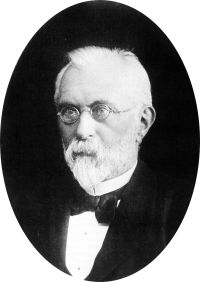
Portrait of Wilhelm Bölsche Wilhelm Bölsche,  Haeckel (1906)

“ To botany and zoology is now added protistology.
The name “protists” (from protiston, the very first) is familiar to every one in biology to-day. If protistology has not yet been securely established as a special branch of science, that is due to the circumstance that a strict limit cannot be determined on either the plant or the animal side, so that the botanist encroaches on the province at one point and the zoologist at another.
”

Source: Gutenberg

William Henry Matthews,  Texas Fossils: An Amateur Collector's Handbook

“ It is not always easy to tell whether certain organisms are plants or animals, and because of this some scientists have suggested that these “in-betweens” be placed in a separate kingdom—the Protista. The protistans are primarily unicellular organisms and are represented by such forms as bacteria, algae, diatoms, and the protozoans (see below) . ”
Source: Gutenberg

Marcus Hartog,  The Cambridge natural history, Vol… (1906)

“ Classification.—The classification of the Protozoa is no easy task. We omit here, for obvious reasons, the unmistakable Plant Protists that have a holophytic or saprophytic nutrition; that are, with the exception of a short period of locomotion in the young reproductive cells, permanently surrounded with a wall of cellulose or fungus-cellulose, and that multiply and grow freely in this encysted state: to these consequently we relegate the Chytridieae, which so closely allied to the Proteomyxa and the Phycomycetous Fungi ”
Source: Gutenberg

Get perspective with Kwize: daily news enlightened by great literature