Qadar

Definition and stakes

Sylvanus Griswold Morley,  An Introduction to the Study of the Maya Hieroglyphs… (1915)

“ Having learned the number, length, and names of the several periods into which the Maya divided their year, and the sequence in which these followed one another, the next subject which claims attention is the positions of the several days in these periods. In order properly to present this important subject, it is first necessary to consider briefly how we count and number our own units of time, since through an understanding of these practices we shall better comprehend those of the ancient Maya.
It is well known that our methods of counting time are inconsistent with each other.
”
Source: Wikisource

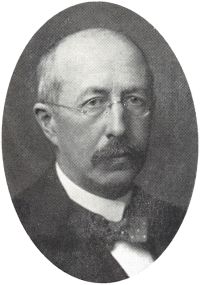
William Liest Readwin Cates,  1911 Encyclopædia Britannica, Volume 6… (1911)

“ On the contrary, the scholarship of to-day regards the fifth millennium B.C. as well within the historical period for such nations as the Egyptians and the Babylonians. It has come to be fully accepted that when we use such a phrase as “the age of the world” we are dealing with a period that must be measured not in thousands but in millions of years; and that to the age of man must be allotted a period some hundreds of times as great as the five thousand and odd years allowed by the old chronologists. ”
Source: Wikisource

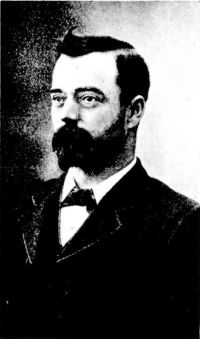
Portrait of John T. Short John T. Short,  The North Americans of Antiquity (1879)

“ The people of Yucatan painted a small circle in which they placed the four hieroglyphics of the initial days which constitute the left-hand column of signs given on page 436. Kan was placed in the east, Muluc in the north, Ix in the west and Cauac in the south. These signs were termed the “carriers of the years” because no month or year could begin on any of the twenty days, but on one of these. Since twenty days constitute a current month, it is apparent that every month in a given year must begin with the same day. ”
Source: Gutenberg

Get perspective with Kwize: daily news enlightened by great literature