Railway engineering

Definition and stakes

Portrait of Thomas Curtis Clarke Thomas Curtis Clarke,  The American Railway: Its Construction…

“ While it is true that the avoidance of large expenditure, when possible, is a mark of the best engineering, yet great structures often become absolutely necessary in the development of railway communication. Wide rivers must be crossed, deep valleys must be spanned, and much study has been given to the best methods of accomplishing these results. In the early history of railways in Europe substantial viaducts of brick and stone masonry were generally built ”
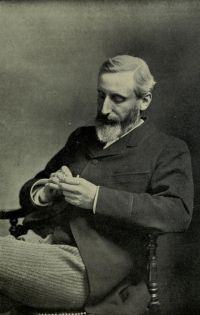
Source: Gutenberg

Portrait of Grant Allen Grant Allen,  Biographies of Working Men

“ The great advantage, indeed, of a level railway over an up-and-down ordinary road is simply that in the railway the resistance and friction are almost entirely got rid of.
It was in 1810, when Stephenson was twenty-nine, that his first experiment in serious engineering was made. A coal-pit had been sunk at Killingworth, and a rude steam-engine of that time had been set to pump the water out of its shaft; but, somehow, the engine made no headway against the rising springs at the bottom of the mine.
”
Source: Gutenberg

Samuel Smiles,  Lives of the Engineers

“ It was ingenious, clever, scientific, and all that; but railways were commercial enterprises, not toys; and if the atmospheric railway could not work to a profit, it would not do. Considered in this light, he even went so far as to call it “a great humbug.” “Nothing will beat the locomotive,” said he, “for efficiency in all weathers, for economy in drawing loads of average weight, and for power and speed as occasion may require.” ”
Source: Gutenberg

Get perspective with Kwize: daily news enlightened by great literature