Reed bunting

Definition and stakes

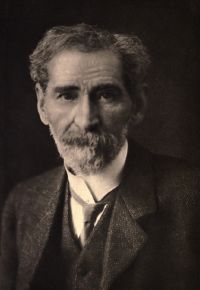
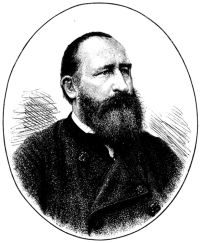
Portrait of Alfred Edmund Brehm Alfred Edmund Brehm,  Cassell's book of birds; vol. 1

“ These birds are much attached to their young, and the mother will actually permit herself to be removed from the nest by force rather than desert her offspring. In its general attributes the Reed Bunting certainly stands superior to most of its fellows, far exceeding them in the activity it displays either when hopping on the ground or jumping from twig to twig: its flight is rapid and undulating, occasionally varied by more energetic efforts as the light and elegant bird rises swiftly into the air, where it performs a variety of evolutions, and then as speedily descends. ”
Source: Gutenberg

Alfred Newton,  1911 Encyclopædia Britannica (1911)

“ In most other respects the buntings greatly resemble the finches, but their eggs are generally distinguishable by the irregular hair-like markings on the shell. In the British Islands by far the commonest species of bunting is the yellow-hammer (E. citrinella) , but the true bunting (or corn-bunting, or bunting-lark, as it is called in some districts) is a very well-known bird, while the reed-bunting (E. schoeniclus) frequents marshy soils almost to the exclusion of the two former. In certain localities in the south of England the cirl-bunting (E. cirlus) is also a resident ”
Source: Wikisource

Portrait of Alfred Edmund Brehm Alfred Edmund Brehm,  Cassell's book of birds; vol. 1

“ The Reed Bunting is about six inches long and twenty-nine broad, the wings and the tail measuring rather more than two inches. The female is not quite so large. The head and entire throat of the male are deep black, a white stripe passes from the corner of the beak towards the shoulder, uniting itself with a band of the same hue that encircles the neck; the back is brown, each feather being edged with a lighter shade, and having a dark shaft, giving to this part of the plumage a somewhat sparrow-like appearance ”
Source: Gutenberg

Get perspective with Kwize: daily news enlightened by great literature