 John Locke,
Some Thoughts Concerning Education…
John Locke,
Some Thoughts Concerning Education…
“ The reservedness and distance that fathers keep, often deprive their sons of that refuge which would be of more advantage to them than an hundred rebukes and chidings. ”
Reservedness, the practice of restraint in expression and behavior, has long been examined as a marker of self-control and dignity. From John Locke’s reflection on parental distance as a missed opportunity for guidance to Lillian Eichler Watson’s depiction of reserve as a calm, principled composure, the theme reveals varied dimensions.
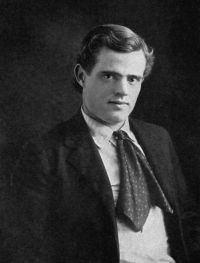
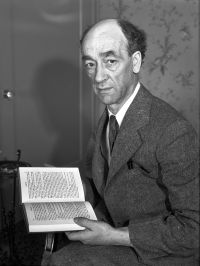
Confucian teachings frame it within propriety, while L. Frank Baum highlights its potential to create emotional barriers. Authors like Jack London and Gilbert Keith Chesterton further explore its interplay with identity and societal expectations. These perspectives collectively underscore reservedness as a nuanced balance between self-respect and relational dynamics.
John Locke,
Some Thoughts Concerning Education…
“ The reservedness and distance that fathers keep, often deprive their sons of that refuge which would be of more advantage to them than an hundred rebukes and chidings. ”
 Lillian Eichler Watson,
Book of Etiquette, Volume II
Lillian Eichler Watson,
Book of Etiquette, Volume II
“ Reserve, on the other hand, is a calm dignity that comes with the knowledge that one does and says only what is entirely correct. It is that certain well-poised sureness of oneself entirely devoid of all semblance of pride,—yet with sufficient self-respect to attract instinctively the respect of others. ”
Confucius's students, Confucian Analects (1872)
“ The Master said, "Respectfulness, without the rules of propriety, becomes laborious bustle; carefulness, without the rules of propriety, becomes timidity; boldness, without the rules of propriety, becomes insubordination; straightforwardness, without the rules of propriety, becomes rudeness. ”
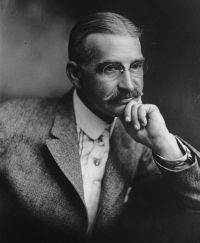 L. Frank Baum,
Mary Louise Solves a Mystery — Chapter XVI. THE PUZZLE BECOMES INTRICATE
(1917)
L. Frank Baum,
Mary Louise Solves a Mystery — Chapter XVI. THE PUZZLE BECOMES INTRICATE
(1917)
“ You have never been able to get beneath his reserve. You came to him from a luxurious life, a petted and pampered child, and his simple tastes and unemotional nature repelled you from the first. Is it not so? ”
“ It is all a question of varying degree of possession of the other-personality. In myself, the degree of possession is enormous. My other-personality is almost equal in power with my own personality. And in this matter I am, as I said, a freak—a freak of heredity. ”
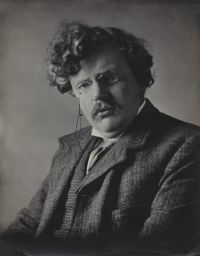 Gilbert Keith Chesterton,
Heretics — Chapter 10: On Sandals and Simplicity
(1905)
Gilbert Keith Chesterton,
Heretics — Chapter 10: On Sandals and Simplicity
(1905)
“ Let us put a complex entree into a simple old gentleman; let us not put a simple entree into a complex old gentleman. So long as human society will leave my spiritual inside alone, I will allow it, with a comparative submission, to work its wild will with my physical interior. ”
 Maria Montessori,
Spontaneous Activity in Education
Maria Montessori,
Spontaneous Activity in Education
“ But is this the chief reason why we must not steal?—No, Sir, but because we ought to respect the property as well as the persons of others.—Very good. Property is an extension of human personality and must be respected as such. ”
 D. H. Lawrence,
England, My England
D. H. Lawrence,
England, My England
“ Should he give himself over? Should he make over his own life and body to the control of something which he knew was inferior, in spirit, to his own self? Should he commit himself into the power of an inferior control? ”
Eliza Allen Southall, A Brief Memoir with Portions of the Diary…
“ Oh, the rebellious pride of choosing our own self-will, and our own way, when the privilege may be ours of becoming the obedient and loving children of God—of receiving from Him the willing and the obedient heart which we may offer up to Him again, and which He will accept! ”
 George Bernard Shaw,
Man and Superman — Act I
(1903)
George Bernard Shaw,
Man and Superman — Act I
(1903)
“ It is this consideration of other people or rather this cowardly fear of them which we call consideration that makes us the sentimental slaves we are. To consider you, as you call it, is to substitute your will for my own. ”
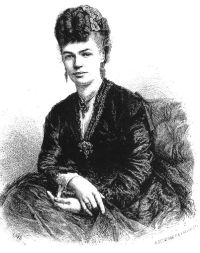 Wilhelmine von Hillern,
Only a Girl: or, A Physician for the Soul
Wilhelmine von Hillern,
Only a Girl: or, A Physician for the Soul
“ I love forms, because they are pleasant and useful. I hate propriety, because it would be our master, and by propriety you mean decorum--I understand you perfectly. Yes, then, yes: I love the forms of society, that give an æsthetic charm to existence, and make it smooth and easy, but I hate what people call decorum. ”
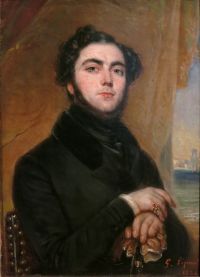 Eugène Sue,
Paula Monti; or, The Hôtel Lambert
Eugène Sue,
Paula Monti; or, The Hôtel Lambert
“ But for the very reason that this absolute and unrestricted freedom must naturally lead you to the very extreme limit of propriety, so much the more scrupulous must you be not to transgress any outward duty ”
 Giacomo Casanova,
The Memoirs of Jacques Casanova de Seingalt…
Giacomo Casanova,
The Memoirs of Jacques Casanova de Seingalt…
“ My ardent nature, my irresistible love of pleasure, my unconquerable independence, would not allow me to submit to the reserve which my new position in life demanded from me. I began to lead a life of complete freedom, caring for nothing but what ministered to my tastes, and I thought that, as long as I respected the laws, I could trample all prejudices under my feet. ”
Cicely Hamilton, Marriage as a Trade (1909)
“ So long as you deprive a human being of the right to make use of its own mental property, so long do you keep that human being in a state of serfdom. You may disguise the fact even from yourself by an outward show of deference and respect, the lifting of a hat or the ceding of a pathway ”
Edward Lucas White, The Song of the Sirens and Other Stories (1919)
“ When he found in me no disposition to intrude upon his reserve, and felt my manner untinged by either condescension, which I did not feel, or curiosity, which I sedulously repressed, he surrendered himself somewhat to the pleasure of exchanging ideas as an equal with a man of his own kind. We came to an unspoken understanding and talked openly on a level footing as two men of education, as two aspirants after culture. ”
 Henry Osborn Taylor,
The Mediaeval Mind (Volume 2 of 2…
Henry Osborn Taylor,
The Mediaeval Mind (Volume 2 of 2…
“ The intent to possess is crucial. Thus a ring put in the hand of a sleeper is not possessed for lack of intent on his part. You possess naturally when with mind and body (yours or another’s who represents you) you hold or sit upon with intent to possess. Corporeal things you properly possess, and acquire possession of, by your own or your agent’s hand. In the same manner you retain. Incorporeal things cannot be possessed properly speaking, but the civil law accords a quasi possession of them. ”
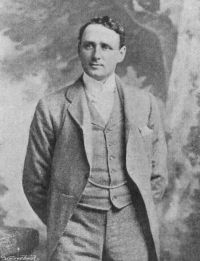 Guy Newell Boothby,
A Bid for Fortune
(1895)
Guy Newell Boothby,
A Bid for Fortune
(1895)
“ I mixed with everyone, was pampered and flattered far beyond what was good for me, derived a false notion of my own importance, and when I came to man's estate was, to all intents and purposes, quite unprepared and unfitted to undertake the duties and responsibilities of my position. ”
 John Ruskin,
Arrows of the Chace, vol. 2/2
John Ruskin,
Arrows of the Chace, vol. 2/2
“ We cannot choose our relations, but we can our servants; and what sagacity we have and knowledge of human nature cannot be better employed. If your house is to be comfortable, your servants' hearts must be sound, as the timber and stones of its walls ”
“ If you find out they somehow like you,One thought will naturally strike you;Give warning—instantly, and sayYour work is hard, with slender pay;You really must have some advance,"Service is no inheritance." ”
Lord Henry Home Kames, Elements of Criticism, Volume II
“ But as to the emotions of propriety and impropriety, and in general as to all emotions involving the sense of right or wrong, custom has little authority, and ought to have none at all. Emotions of this kind, being qualified with the consciousness of duty, take naturally place of every other feeling ”
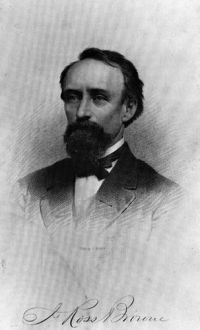 J. Ross Browne,
The Land of Thor
J. Ross Browne,
The Land of Thor
“ There may be among the more polished classes a certain degree of formality which to a stranger bears the appearance of reserve; but this quickly passes away, and the pleasure is all the greater in finding that there is really very little reserve about them. With all their adhesion to forms and ceremonies, they are simple and unaffected in their manners, and have a natural repugnance to whatever is meretricious. ”
 John Stuart Mill,
Autobiography
John Stuart Mill,
Autobiography
“ I saw that though our character is formed by circumstances, our own desires can do much to shape those circumstances; and that what is really inspiriting and ennobling in the doctrine of freewill is the conviction that we have real power over the formation of our own character; that our will, by influencing some of our circumstances, can modify our future habits or capabilities of willing. ”
 Robert Green Ingersoll,
The Works of Robert G. Ingersoll…
Robert Green Ingersoll,
The Works of Robert G. Ingersoll…
“ When you have stripped him of former restraints, do you leave him anything in their stead, except indeed a sense of honor, self-respect, and self-interest?—worthy motives, no doubt, but all too feeble to withstand the fearful temptations that assail him. ”
L. Tyerman, Wesley's Designated Successor
“ But I begin to find that pious thoughts may sanctify an occupation as insignificant as even this, and that a renouncing of one’s own will from compliance with that of others is not without its utility. ”
Joseph Rickaby, Moral Philosophy: Ethics, Deontology and Natural Law
“ Even broad mental reservation is permissible only as a last resource, when no other means are available for the preservation of some secret which one has a duty to others, or grave reason of one's own, to keep. ”
 Ralph Waldo Emerson,
Miscellanies
(1855)
Ralph Waldo Emerson,
Miscellanies
(1855)
“ Can anything be so elegant as to have few wants and to serve them one’s self, so as to have somewhat left to give, instead of being always prompt to grab? It is more elegant to answer one’s own needs, than to be richly served ”
 Anna Katharine Green,
The Amethyst Box
Anna Katharine Green,
The Amethyst Box
“ I waited in anxious expectancy for the word which was to enlighten me. Happily it came soon, and from the old lawyer's lips."You do not feel yourself worthy?" he queried, in tones I had not heard from him before. "Why? What have you done that you should forego an inheritance to which these others feel themselves honestly entitled?" ”
 F. H. Bradley,
Ethical Studies — Essay IV.
(1876)
F. H. Bradley,
Ethical Studies — Essay IV.
(1876)
“ In the ought the self is commanded, and that self is the sensuous self in me, which is ordered, and which, if I obey, is forced by the non-sensuous formal will which stands above the empirical element, and, equally with that, is myself. The ought is the command of the formal will, and duty is the obedience, or, more properly, the compulsion of the lower self by that will, or the realization of the form in and against the recalcitrant matter of the desires. ”
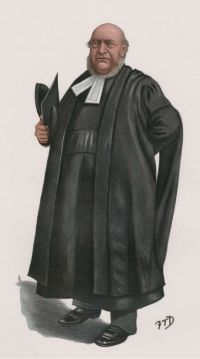 Thomas Fowler,
Progressive Morality: An Essay in Ethics
Thomas Fowler,
Progressive Morality: An Essay in Ethics
“ And I may be the more emboldened in my refusal, when I consider how mixed, or how selfish, are often the motives of those who solicit me, and that the love of notoriety, or the gratification of a feeling of self-importance, or a fussy restlessness, or the craving for preferment is frequently quite as powerful an incentive of their activity as a desire to promote the objects explicitly avowed. ”
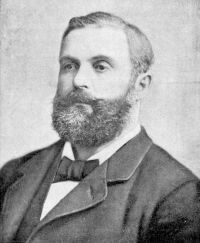 Thomas Wallace Knox,
Hunters three: Sport and adventure in South Africa
(1895)
Thomas Wallace Knox,
Hunters three: Sport and adventure in South Africa
(1895)
“ We have a rule that no one is to disturb the property of anybody else, and we abide by it strictly. So, although everything may appear in disorder, we can each of us lay hands on everything of our own that we want, because we know exactly where it is. ”
Ralph Waldo Emerson,
Miscellanies
(1855)
“ Each requires of the practitioner a certain shutting of the eyes, a certain dapperness and compliance,{226} an acceptance of customs, a sequestration from the sentiments of generosity and love, a compromise of private opinion and lofty integrity. Nay, the evil custom reaches into the whole institution of property, until our laws which establish and protect it, seem not to be the issue of love and reason, but of selfishness. ”
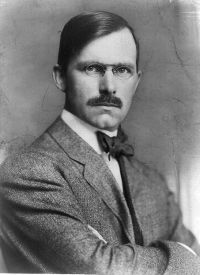 David Grayson,
Adventures in Contentment
David Grayson,
Adventures in Contentment
“ How sweet an emotion is possession! What charm is inherent in ownership! What a foundation for vanity, even for the greater quality of self-respect, lies in a little property! ”
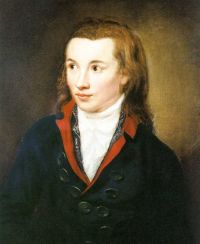 Georg Philipp Friedrich Freiherr von Hardenberg,
Novalis Schriften
(1907)
Georg Philipp Friedrich Freiherr von Hardenberg,
Novalis Schriften
(1907)
“ In all relative relationships, the individual once and for always subject to arbitrariness—and when I go to a desert—isn't it my primary interest to be subject to the arbitrariness of my own individuality? ”
 Susan Edmonstoune Ferrier,
Marriage — Miss Ferrier's Novels
(1818)
Susan Edmonstoune Ferrier,
Marriage — Miss Ferrier's Novels
(1818)
“ You'll say that rule is absurd, inasmuch as it is not observed in human life: that I allow, but we know the inflictions of Providence are for wise purposes, therefore our reason willingly submits to them. ”
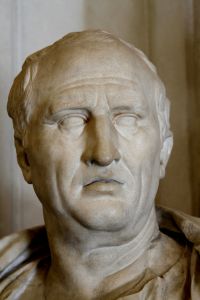 Marcus Tullius Cicero,
The Academic Questions, Treatise De Finibus…
(1891)
Marcus Tullius Cicero,
The Academic Questions, Treatise De Finibus…
(1891)
“ And when this principle has been laid down, it is easy to conjecture that those parts of us are most desirable which have the most dignity; so that the virtue of each most excellent part which is sought for its own sake, is also deserving of being principally sought after. ”
 Kathleen Thompson Norris,
The Story of Julia Page
Kathleen Thompson Norris,
The Story of Julia Page
“ This shall be permitted, this shall not be permitted; what is in your heart and brain concerns us not at all; where your soul spends its solitudes is not our affair; so that you keep a certain surface smoothness, so that you dress and talk and spend as we bid you, you—for such time as we please—shall be one of us! ”
Onanism display'd (1719)
“ Now this curious Observation upon the efficacy of Custom being introduc’d in a Paragraph treating of Modesty and Chastity, I appeal to all Persons of any sense or discernment, whether it does not imply, that all Modesty and Virtue is establish’d only by Custom, and whether it does not entirely destroy the notion of an innate Principle. ”
 Elizabeth Rundle Charles,
The Ravens and the Angels, with Other Stories and Parables
Elizabeth Rundle Charles,
The Ravens and the Angels, with Other Stories and Parables
“ Who ever said we could get on unless you took care of us? You are not Things indeed! You are servants of Things. We possess you, use you, and outlast you. Who stays in the house—the owner, or the servants? ”
 Walter Rauschenbusch,
The Social Principles of Jesus
Walter Rauschenbusch,
The Social Principles of Jesus
“ A glance across history or a simple acquaintance with human life in any community will show us that private property is at the same time a necessary expression of personality and stimulator of character, and, on the other hand, a chief outlet and fortification of selfishness. ”
“ I have striven to make a rule of life for myself and to follow it, but I have not sought to impose my laws on any one else—not on you, certainly. Still there are elementary duties which we owe to one another and which cannot be renounced by either of us. ”
 Letitia Elizabeth Landon,
Lady Anne Granard
(1842)
Letitia Elizabeth Landon,
Lady Anne Granard
(1842)
“ The proud swell of the heart, ever courting distinction, ever conscious of the value of rank, and that still more active principle assumed as the right of personal attraction, by which nature asserts her rights as superior to all artificial distinctions, lay dormant. ”
 Desiderius Erasmus,
Familiar Colloquies
(1877)
Desiderius Erasmus,
Familiar Colloquies
(1877)
“ What have I to do with Custom, that is the Mistress of all evil Practices? We ought to accustom ourselves to the best Things: And by that Means, that which was uncustomary would become habitual, and that which was unpleasant would become pleasant ”
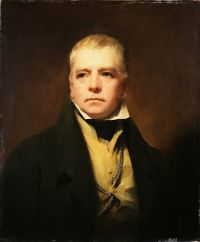 Sir Walter Scott,
Tales of My Landlord
(1816)
Sir Walter Scott,
Tales of My Landlord
(1816)
“ We must observe, once for all, that such liberties seem only to have been taken by the learned gentleman where his own character and conduct are concerned; and surely he must be the best judge of the style in which his own character and conduct should be treated of. ”
Alexander Andrew Knox, Once a Week (1860)
“ He considers your circumstances—your little peculiarities of constitution—your habits, and then passes his arm under your own, and, with soft expressions of sympathy and commiseration, blandly edges you into your grave. He knows that the business in hand is a ticklish one. ”
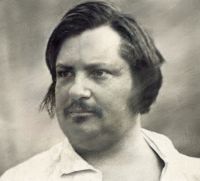 Honoré de Balzac,
Letters of Two Brides
(1841)
Honoré de Balzac,
Letters of Two Brides
(1841)
“ He will cease to have a will and character of his own, and become mere clay in your hands. You will have so completely moulded him to your likeness, that your household will consist of only one person instead of two, and that one necessarily imperfect. ”
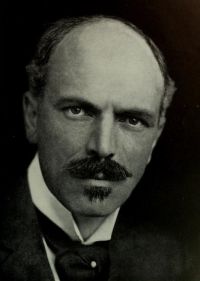 Maurice Hewlett,
The Village Wife's Lament
Maurice Hewlett,
The Village Wife's Lament
“ What the function of man is, what the power, what the dignity have been well paraphrased in these words: [Pg 62] "'Neither a fixed abode, nor a form in thine own likeness, nor any gift peculiar to thyself alone, have we given thee, O Adam, in order that what abode, what likeness, what gifts thou shalt choose may be thine to have and to possess. The nature allotted to all other creatures, within laws appointed by ourselves, restrains them. ”