Scab (labor)

Definition and stakes

Portrait of Jack London Jack London,  War of the Classes (1905)

“ A capitalist may get most for least in dealing with his laborers, and in so far be a non-scab; but at the same time, in his dealings with his fellow-capitalists, he may give most for least and be the very worst kind of scab. The most heinous crime an employer of labor can commit is to scab on his fellow-employers of labor. Just as the individual laborers have organized into groups to protect themselves from the peril of the scab laborer, so have the employers organized into groups to protect themselves from the peril of the scab employer. ”
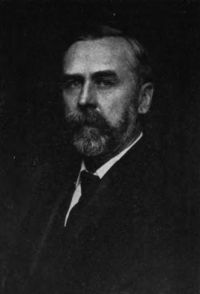
Source: Wikisource

Portrait of Jack London Jack London,  War of the Classes

“ He is no more generous with his energy than the chattel slave and the convict laborer, who, by the way, are the almost perfect scabs. They give their labor power for about the minimum possible price. But, within limits, they may loaf and malinger, and, as scabs, are exceeded by the machine, which never loafs and malingers and which is the ideally perfect scab.
It is not nice to be a scab. Not only is it not in good social taste and comradeship, but, from the standpoint of food and shelter, it is bad business policy.
”
Source: Gutenberg

Paul F. Brissenden,  The I. W. W.: A Study of American Syndicalism

“ The craft form or organization creates three types very obnoxious to the industrial unionist, viz., the "aristocrat" of labor, the "union" scab, and the "labor lieutenant." The "union" scab—the man who continues at work at his particular trade when the men of an allied trade in the same industry are on strike—is a scab in the sense that he is often—through this indirect scabbing—a fatal, perhaps the only obstacle, to the success of the strike. ”
Source: Gutenberg

Get perspective with Kwize: daily news enlightened by great literature