Scald (poet)

Definition and stakes

Dr. Doran,  The History of Court Fools

“ The Sapphic verses of the Scalds often conveyed a double meaning, and perhaps this species of wit caused the idea of the bards being a species of jesters. That they were magnificently rewarded there is no doubt, seeing that Hiarne, the Scald, wrote an epitaph on Frotho I. of Denmark, which so delighted the people that they elected the poet to the vacant throne. The people must have been poor judges of poetry, for the epitaph is but an indifferent production. ”
Source: Gutenberg

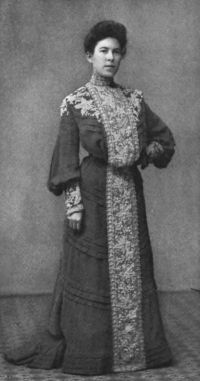
Portrait of Jessie Belle Rittenhouse Jessie Belle Rittenhouse,  The Younger American Poets

“ Scollard’s inspiration, doubtless the first in point of time, is his delight in nature. Here, too, the objective side predominates. He is footfaring, with every sense alert to see, to hear, and to enjoy; he slips the world of men as a leash and becomes the fetterless comrade of the vagrant things of earth. He stops to do no philosophizing by the way,—the analogies, the laws, the evolving purposes of nature, are rarely touched upon in his verse; nor is he one of the poet-naturalists, intent to observe and record with infinite fidelity the fact, with its mystic spirit of beauty. ”
Source: Gutenberg

1911 Encyclopædia Britannica (1911)

“ Others, e.g. Skeat, refer it to Swed. skalla, Icel. skjalla, to make a loud noise or clatter, and take the original sense to have been a “ loud talker.” This would link the word with “ scold," to rail at, find fault with, which is formed from Dutch schold, past tense of scheldan, cf. Ger. schelten, in the same sense.
Of different origin is the verb “ scald," to burn or injure the skin or flesh by hot liquid or steam (see Burns and Scalds) ; also to cleanse an object, or to remove hair, bristles, feathers &c., from an animal, by exposure to moist heat, such as boiling water, steam, &c.
”
Source: Wikisource

Get perspective with Kwize: daily news enlightened by great literature