Summary

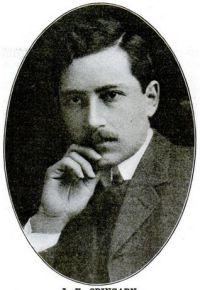
Portrait of Joel Elias Spingarn Joel Elias Spingarn A History of Literary Criticism in the Renaissance

Each art has its own rules of proper expression. The historian or the philosopher does not aim at all the beauties or elegancies of expression, but only such as are proper to history or philosophy. But to the poet no grace, no embellishment, no ornament, is ever alien; he does not consider the particular beauty of any one field,—that is, the singular, or particular, of Aristotle,—but all that pertains to the simple idea of beauty and of beautiful speech.
Source: Gutenberg

Portrait of Joel Elias Spingarn Joel Elias Spingarn A History of Literary Criticism in the Renaissance

The style of the philosopher is dry and obscure, without any force or beauty by itself; and the delightful instruction of poetry is far more effective than the abstract and harsh teachings of philosophy. Poetry, indeed, was the only form of philosophy that primitive men had, and Plato, while regarding himself as an enemy of poets, was really a great poet himself, for he expresses all his ideas in a wondrously harmonious rhythm, and with great splendor of words and images.
Source: Gutenberg

Portrait of Joel Elias Spingarn Joel Elias Spingarn A History of Literary Criticism in the Renaissance

On the other hand, the historian deals with particular instances, with vices and virtues so commingled that the reader can find no pattern to imitate. The poet makes history reasonable; he gives perfect examples of vices and virtues for human imitation; he makes virtue succeed and vice fail, as history can but seldom do. Poetry, therefore, conduces to virtue, the end of all learning, better than any other art or science, and so deserves the palm as the highest and the noblest form of human wisdom.
Source: Gutenberg

Get perspective with Kwize: daily news enlightened by great literature