The term "scruple," originating from the Latin scrupulum (a sharp stone), initially referred to a minute unit of weight in ancient Rome, equivalent to 1/24 of an ounce or 1.14 grams. Metaphorically, it conveys the prickling feeling of moral discomfort. Authors such as Honoré de Balzac examined its psychological impact within narrative tension, while Giacomo Casanova analyzed its function as a "malicious whim" that clouds judgment.
Charles Brockden Brown associated it with societal influence, and Joseph Conrad portrayed it as an obstacle to power. These diverse viewpoints highlight scruple as both a quantifiable measure and a nuanced moral concept, connecting physical accuracy with ethical uncertainty.
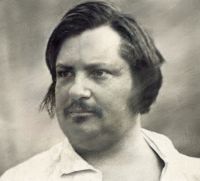 Honoré de Balzac,
The Lily of the Valley
Honoré de Balzac,
The Lily of the Valley