Sheath knife

Definition and stakes

R. Austin Freeman,  The Singing Bone — The Echo of a Mutiny (1912)

“ A sailor's sheath-knife takes a deal of shaking out as a rule. It is intended to be used in working on the rigging when the man is aloft, so that he can get it out with one hand while he is holding on with the other. It has to be and usually is very secure, for the sheath holds half the handle as well as the blade. What makes one notice the matter in this case is that the man, as you see, carried a pocket-knife; and, as this would serve all the ordinary purposes of a knife, it seems to suggest that the sheath-knife was carried for defensive purposes: as a weapon, in fact. ”
Source: Wikisource

Claude P. Fordyce,  Touring Afoot

“ Except on an extended trip you will not need a sheath knife. One with a five-inch blade and housed in a leather sheath with belt loop is best. A good butcher knife makes an admirable implement for the purpose. The waterproof match box of metal or rubber should always be carried on the person and see to it that it is kept well filled. The supply for this pocket safe is to be drawn from the moisture tight match can carried in the pack sack. ”
Source: Gutenberg

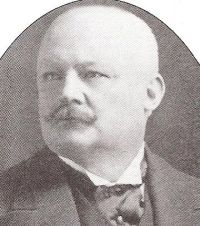
Portrait of Frank Froest Frank Froest,  The Grell Mystery

“ The dagger still remained in the wound, and it was that riveted Foyle's attention. He stepped back quickly to one of the men at the door. [Pg 16]
"Send Mr. Grant to me," he ordered.
Returning to the body, he gently withdrew the knife, handling it with the most delicate care. "I've never seen anything like this before," he said. "Queer thing, isn't it?"
It was a sheath knife with a blade of finely tempered steel about three inches long and as sharp as a razor. Its abnormality lay in a hilt of smooth white ivory set horizontally and not vertically to the blade, as is a rule with most knives.
”
Source: Gutenberg

Get perspective with Kwize: daily news enlightened by great literature