Ship speed

Definition and stakes

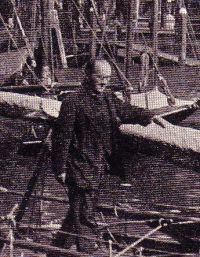
J. W. S. Marr,  Into the Frozen South

“ For long spaces of time we would find ourselves jammed tightly between floes as high as our bulwarks, where, with engines rattling away at full speed, we failed to make an inch of headway. Then it was a case of stopping and going astern, after which the ship was stopped again, engines opened to full speed ahead, and like a ram we crunched into the solid mass and bored a little way farther towards our goal, with the broken ice grating and roaring and screaming along our sides in a crashing chorus of spite. ”
Source: Gutenberg

Percy F. Westerman,  The Mystery Ship: A Story of the 'Q' Ships During the Great War

“ At a reduced speed of ten knots and an M.L. is a difficult craft to handle at slow speed—the flotilla plugged seawards.
The short steep tide rip at the harbour's mouth gave place to the long sullen undulations of the North Sea. Although navigation was carried on without steaming lights, the chances of collision were hardly worth taking into consideration, since the noise of the exhausts could be plainly audible for a distance of a couple of miles.
”
Source: Gutenberg

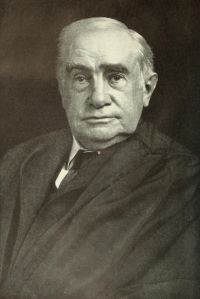
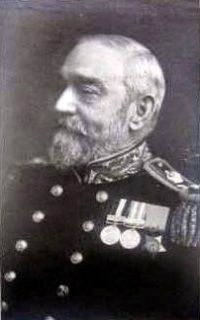
Portrait of French Ensor Chadwick French Ensor Chadwick,  Ocean Steamships

“ The primary condition for high speed is fineness of form, so that the water at the bow of the vessel may be separated and thrown to one side, and brought to rest again at the stern and behind the vessel with the least possible disturbance, and the measure of efficiency of form for the maximum speed intended is inversely as the height of the waves of disturbance. A ship that has been designed to attain a speed of 15 knots will, when moving at 12 knots, show a very slight disturbance indeed, and in one designed for 18 knots, when moving at this lower speed, it will be scarcely observable ”
Source: Gutenberg

Get perspective with Kwize: daily news enlightened by great literature