Sou'wester

Definition and stakes

Friedrich Kluge,  An Etymological Dictionary of the German Language (1891)

“ Weste, feminine, ‘vest, waistcoat,’ adopted as a current term in the last century. Since the word is unknown to the older dialects, it must have been borrowed from French veste (Latin vestis) ; had it, however, appeared earlier in the Old Teutonic dialects, it would have been primitively allied to Latin vestis. The modern dialectic form, Middle High German wester, ‘christening gown’ (found especially in compounds) , is based on the same Aryan root as Latin vestis. ”
Source: Wikisource

Hamilton W. Pierson,  In the brush (1881)

“ I have met a great many very odd and strange characters in the Southwest. The peculiar life of the people developed their originality. They were not restrained by the laws and customs that control older and more established communities. Every man was a law unto himself. All that was unusual and peculiar in their natural characters grew in unrestrained luxuriance like the wild vines on their hill-sides and in their valleys. What any man or community might think of their actions or mode of life had the least possible influence in deciding what they should do or not do. ”
Source: Gutenberg

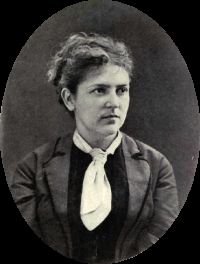
Portrait of Fanny Van de Grift Stevenson Fanny Van de Grift Stevenson,  The Dynamiter

“ Suffice it, that it is to her I owe my present lodging, and, dear Somerset, the pleasure of your acquaintance. It appears she knew the house. You see dear fellow, I make no concealment: all that you can care to hear, I tell you openly.’
‘For God’s sake,’ cried the wretched Somerset, ‘hold your tongue! You cannot imagine how you torture me!’
A shade of serious discomposure crossed the open countenance of Zero.
‘There are times,’ he said, ‘when I begin to fancy that you do not like me. Why, why, dear Somerset, this lack of cordiality? I am depressed; the touchstone of my life draws near
”
Source: Gutenberg

Get perspective with Kwize: daily news enlightened by great literature