Spacetime

Definition and stakes

William George Hooper,  Aether and Gravitation

“ Why from the smallest meteorite or satellite, to the largest star that shines in the firmament of heaven, there is nothing but motion; each satellite, planet, sun, and star moving on and on, ever and ever through the countless ages of time until its course is run and its existence ended. But rest, never! Such a thing as rest is unknown in the entire universe, whether it be in the atomic systems of matter, or the systems of stars and suns that form the universe of worlds. ”
Source: Gutenberg

Various,  The Catholic World, Vol. 19, April 1874‐September 1874

“ The telescope resolved the whitish nebulæ in the sky into myriads of stars, worlds, solar and planetary systems; and the earth with its inhabitants, hitherto imagined to be the crown and centre of existence, was degraded from its imaginary height to be a mere atom moving in universal space. The distances of the celestial bodies are so immense that our intellect wonders at the contemplation of them, and becomes confused. Light, moving with a velocity of millions of miles in a minute, required no less than two thousand years to reach the earth from the galaxy! ”
Source: Gutenberg

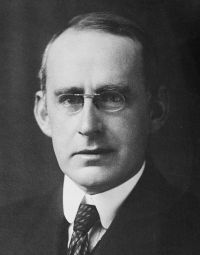
Portrait of Sir Arthur Stanley Eddington Sir Arthur Stanley Eddington,  The nature of the physical world (1928)

“ What has happened to the theory of the earth has happened also to the theory of the world of space-time. An observer at rest at the earth’s centre represents what is happening in a frame of space and time constructed on the usual conventional principles which give what is called a flat space-time. He can locate the events in his neighbourhood without distorting their natural simplicity. Objects at rest remain at rest; objects in uniform motion remain in uniform motion unless there is some evident cause of disturbance such as hammering; light travels in straight lines. ”
Source: Gutenberg

Get perspective with Kwize: daily news enlightened by great literature