“ Biologically the species is the accumulation of the experiments of all its successful individuals since the beginning, and the World State of the Modern Utopist will, in its economic aspect, be a compendium of established economic experience, about which individual enterprise will be continually experimenting, either to fail and pass, or to succeed and at last become incorporated with the undying organism of the World State. ”
Species richness
Definition and stakes
The theme of “species richness” has been addressed by authors such as Charles Darwin, Alfred Russel Wallace, Thomas Henry Huxley, Charles Lyell and Sir Charles Lyell. It is often associated with terms like natural, selection, animal, biology and competition.
Quotes about “species richness”
George John Romanes, Animal Intelligence
“ If their presence proved useful to the species which had seized them—if it were more advantageous to the species to capture workers than to procreate them—the habit of collecting pupæ, originally for food, might by natural selection be strengthened and rendered permanent for the very different purpose of raising slaves. ”
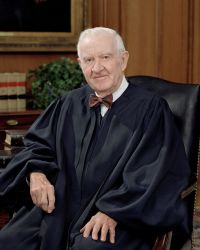 John Paul Stevens,
Lujan v. Defenders of Wildlife…
John Paul Stevens,
Lujan v. Defenders of Wildlife…
“ Given that finding, we have no license to demean the importance of the interest that particular individuals may have in observing any species or its habitat, whether those individuals are motivated by aesthetic enjoyment, an interest in professional research, or an economic interest in preservation of the species. ”
United Nations World Commission on Environment and Development, Brundtland Report (1987)
“ Species conservation is not only justified in economic terms. Aesthetic, ethical, cultural, and scientific considerations provide ample grounds for conservation. For those who demand an accounting, the economic values inherent in the genetic materials of species are alone enough to justify species preservation. ”
 Alfred Russel Wallace,
Contributions to the Theory of Natural Selection
Alfred Russel Wallace,
Contributions to the Theory of Natural Selection
“ We have here an illustration of the simple and effectual means by which animals are brought into harmony with the rest of nature. That slight amount of variability in every species, which we often look upon as something accidental or abnormal, or so insignificant as to be hardly worthy of notice, is yet the foundation of all those wonderful and harmonious resemblances which play such an important part in the economy of nature. ”
 Herbert Spencer,
Popular Science Monthly
(1881)
Herbert Spencer,
Popular Science Monthly
(1881)
“ We saw, too, that great uniformity of surface, of mineral products, of flora, of fauna, are impediments; and that on the special characters of the flora and fauna, as containing species favorable or unfavorable to human welfare, in part depends the individual prosperity required for social growth. ”
Alfred Russel Wallace,
Island Life — Chapter IV.
(1895)
“ They then become what are termed dominant species, maintaining themselves in vigour and abundance over very wide areas, displacing other species with which they come into competition, and, under still further changes of conditions, becoming the parents of a new set of diverging species. ”
Cora May Williams, A Review of the Systems of Ethics Founded on the Theory of Evolution
“ And it is this period of increase, of abundance, not a period of struggle, which has developed the variations we now have before our eyes. In the same manner one must conclude, with regard to the rarer species, that the formerly existing numerous varieties were destroyed during the period of decline, that is, of overpowering pressure. We have abundant proof of this in the fact that domesticated species, which are carefully tended and fed, and so wholly withdrawn from the struggle for existence, vary enormously, and produce the most wonderful monstrosities. ”
Various, The Catholic World, Vol. 08, October…
“ The transformation of races, which must not be confounded with that of species, is itself conditional and relative, is soon effaced if nothing disturbs the return of the race to the pure type of the species, and yet we are told of the power of natural selection and of the battle of life which consecrates this power! This selection, this vital concurrence, this action of means, have been all employed to modify the proximate species, as the horse and the ass; domestication offered here all its resources; the hand of man could choose, ally, and cross the types at will. ”
 Charles Darwin,
The Origin of Species by Means of Natural Selection
Charles Darwin,
The Origin of Species by Means of Natural Selection
“ Yet unless it be thoroughly engrained in the mind, the whole economy of nature, with every fact on distribution, rarity, abundance, extinction, and variation, will be dimly seen or quite misunderstood. We behold the face of nature bright with gladness, we often see superabundance of food; we do not see or we forget that the birds which are idly singing round us mostly live on insects or seeds, and are thus constantly destroying life; or we forget how largely these songsters, or their eggs, or their nestlings, are destroyed by birds and beasts of prey ”
Thomas Alfred Coward, Bird Haunts and Nature Memories… (1922)
“ Having realised that man not only has been, but still is, responsible for great changes in animal life, many of which entail the passing of species, two questions may with reason he asked. Why should we endeavour to preserve any of those animals which are so feeble that they can no longer compete? To that I would answer with other questions. Do we desire to see any of the existing forms follow after those which have gone? And do we look forward with joy to a land, nay a world, peopled only by man, his domesticated slaves, his animate commercial assets and his parasites? ”
comte de Georges Louis Leclerc Buffon, Buffon's Natural History. Volume 06…
“ By dignity of species I mean those whose nature is permanent, invariable, and not subject to degradation. In those animals to which this singular advantage belongs, the characteristics are so strongly marked, that they cannot be mistaken nor confounded with any other species. In man, the noblest being of the creation, the species is sole and entire, because all the individuals of it, of whatever race, climate, or complexion, may intermix and produce together; and because it cannot be said that any animal approaches to man in any natural degree. ”
Thomas Alfred Coward, Bird Haunts and Nature Memories… (1922)
“ Simply this, that the joy and success of one species spells sorrow and failure for others. The supply of victuals, whether animal or vegetable, of each species is not inimitable, and when your successful species gets to grips with others the weaker kinds suffer famine. ”
David Starr Jordan, A Guide to the Study of Fishes…
“ It is not the preservation of the most useful features, but of those which actually existed in the ancestral individuals, which distinguish such species. Natural selection must include not only the process of the survival of the fittest, but also the results of the survival of the existing. This means the preservation through heredity of the traits not of the species alone, but those of the actual individuals set apart to be the first in the line of descent in a new environment. ”
Alfred Russel Wallace,
Contributions to the Theory of Natural Selection
“ Alluding to the supposed economy of nature, in the adaptation of each species to its own place and its special use, the reviewer remarks: “To this universal law of the greatest economy, the law of natural selection stands in direct antagonism as the law of ‘greatest possible waste’ of time and of creative power. ”
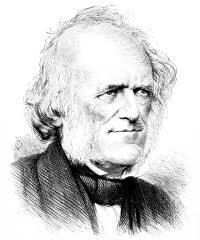 Sir Charles Lyell,
Principles of Geology
Sir Charles Lyell,
Principles of Geology
“ If the resources of a species be so limited, and its habits and faculties be of such a confined and local character, that it can only flourish in a few particular spots, it can rarely be of great utility. ”
In Far Bolivia: A Story of a Strange Wild Land
“ On both sides, then, is Nature just, for though she does her best to keep living species extant until evolved into higher forms of life, she permits each species to prey on the overgrowth or overplus of others that it may live. ”
U. P. Hedrick, The Grapes of New York
“ First, the species are so distributed throughout the United States, and individuals of the species grow in such abundance and luxuriance, as to suggest that we shall be able to improve and domesticate some one or more of them for all of the agricultural regions of the country. ”
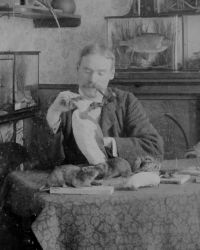 Oxley Grabham,
The Zoologist
(1897)
Oxley Grabham,
The Zoologist
(1897)
“ Surely in such cases as these no one can find fault with the wish to preserve and save from decay any species of the animal world in the nearest approach to its original form and beauty, for when so preserved they are a lifelong delight to their owner and to others of a kindred spirit. ”
Charles Darwin,
The Origin of Species by Means of Natural Selection
“ On the Absence or Rarity of Transitional Varieties.—As natural selection acts solely by the preservation of profitable modifications, each new form will tend in a fully-stocked country to take the place of, and finally to exterminate, its own less improved parent-form and other less-favoured forms with which it comes into competition. ”
Reginald Crundall Punnett, Mimicry in Butterflies
“ Even though the losses were distributed pro rata the more abundant species would profit to some extent. For {16}the less abundant species the gain would of course be relatively greater. Theoretically therefore, all of the five species would profit if in place of five distinct warning patterns they exhibited but a single one in common. And since it is profitable to all concerned what more natural than that it should be brought about by natural selection? ”
Alfred Russel Wallace,
Tropical nature, and other essays
(1878)
“ The air, the earth, the undergrowth, the tree-trunks, the flowers, and the fruits, all support their specially adapted tribes of birds. Each species fills a place in nature, and can only continue to exist so long as that place is open to it; and each has become what it is in every detail of form, size, structure, and even of colour, because it has inherited through countless ancestral forms all those variations which have best adapted it among its fellows to fill that place, and to leave behind it equally well adapted successors. ”
Robert Chambers, Vestiges of the Natural History of Creation
“ But how does this notion comport with what we have seen of the gradual advance of species, from the humblest to the highest? How can we suppose an immediate exertion of this creative power at one time to produce zoophytes, another time to add a few marine mollusks, another to bring in one or two conchifers, again to produce crustaceous fishes, again perfect fishes, and so on to the end? This would surely be to take a very mean view of the Creative Power—to, in short, anthropomorphize it, or reduce it to some such character as that borne by the ordinary proceedings of mankind. ”
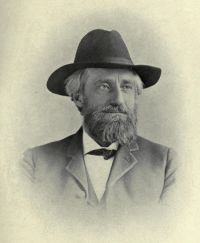 Nathaniel Southgate Shaler,
Domesticated animals
Nathaniel Southgate Shaler,
Domesticated animals
“ It should be made plain, not only that the success of our civilization depends now as in the past on the coöperation which mankind has had from the domesticated animals, but also that the development of this relation is one of the most interesting features in all history. On through the ages of the geologic past comes this great procession of life, in the endless succession of species whose numbers in the aggregate are to be reckoned by the scores, if not by the hundreds of millions. Until this modern age, the throng goes forward blindly, groping its way towards the higher planes of life. ”
Alfred Russel Wallace,
Social Environment and Moral Progress
“ In the whole animal world, as we have seen, every species is preserved in harmony with the slowly changing environment by modifications of its own organs or faculties, thus gradually leading to the production of new species equally adapted to the new environment as its ancestor was before the change occurred. ”
Sir Charles Lyell,
Principles of Geology
“ When we recollect how complicated are the relations of these instincts with co-existing species, both 607 of the animal and vegetable kingdoms, it is scarcely possible to imagine that a bastard race could spring from the union of two of these species, and retain just so much of the qualities of each parent stock as to preserve its ground in spite of the dangers which surround it. ”
Charles Darwin,
The Variation of Animals and Plants under Domestication…
“ Hence perhaps it is that the few domesticated animals kept by savages partake, as has been remarked by more than one writer, of the wild appearance of their masters, and likewise resemble natural species. Even in long-civilised countries, at least in the wilder parts, natural selection must act on our domestic races. It is obvious that varieties having very different habits, constitution, and structure, would succeed best on mountains and on rich lowland pastures. ”
Samuel Butler, Luck, or Cunning, as the Main Means of Organic Modification
“ If those members of the species which have but ordinary shares of it, nevertheless survive by virtue of other superiorities which they severally possess, then it is not easy to see how this particular attribute can be developed by natural selection in subsequent generations.” (For if some other superiority is a greater source of luck, then natural selection, or survival of the luckiest, will ensure that this other superiority be preserved at the expense of the one acquired in the earlier generation.) ”
 Thomas Henry Huxley,
Critiques and Addresses
Thomas Henry Huxley,
Critiques and Addresses
“ Bring forward any instance in which a part of the world, formerly inhabited by one stock, is now the dwelling-place of another, and we will prove the change to be the result of migration, or of intermixture, and not of modification of character by climatic influences. Finally, prove to us that the evidence in favour of the specific distinctness of many animals, admitted to be distinct species by all zoologists, is a whit better than that upon which we maintain the specific distinctness of men. ”
Charles Darwin,
The Variation of Animals and Plants under Domestication
“ The term is so far a good one as it brings into connection the production of domestic races by man’s power of selection, and the natural preservation of varieties and species in a state of nature. For brevity sake I sometimes speak of natural selection as an intelligent power;—in the same way as astronomers speak of the attraction of gravity as ruling the movements of the planets, or as agriculturists speak of man making domestic races by his power of selection. ”
Horatius Flaccus, Life: Its True Genesis
“ In the field of the fossilized fauna and flora, these treasures are of the highest value and interest, all indicating not only wide areas of distribution, but immense periods of time, in which species have existed without any greater changes in character than the necessary shadings into varieties would seem to require. ”
Charles Darwin,
On The Origin of Species
(1859)
“ Who can explain why one species ranges widely and is very numerous, and why another allied species has a narrow range and is rare? Yet these relations are of the highest importance, for they determine the present welfare and, as I believe, the future success and modification of every inhabitant of this world. ”
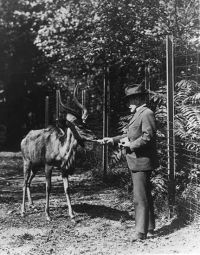 William T. Hornaday,
Popular Official Guide to the New York Zoological Park…
William T. Hornaday,
Popular Official Guide to the New York Zoological Park…
“ Our wild creatures are not immortal; and, like human beings, they live out their allotted lives and pass away. The great majority do not perpetuate themselves in captivity, 6 and the depleted ranks must be filled by new gifts and new purchases. Gifts of specimens, and funds for purchases, must constantly be forthcoming.In the acquisition of certain representative species of great variety but particular desirability, the Society has been much favored by its friends, both at home and abroad. ”
Charles Darwin,
The Origin of Species by Means of Natural Selection
“ Whether such variations or individual differences as may arise will be accumulated through natural selection in a greater or less degree, thus causing a greater or less amount of permanent modification, will depend on many complex contingencies—on the variations being of a beneficial nature, on the freedom of intercrossing, on the slowly changing physical conditions of the country, on the immigration of new colonists, and on the nature of the other inhabitants with which the varying species come into competition. ”
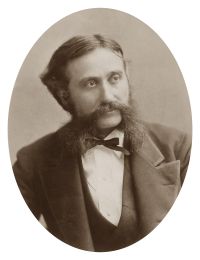 Hubert Howe Bancroft,
The Native Races [of the Pacific states…
Hubert Howe Bancroft,
The Native Races [of the Pacific states…
“ With the products of human skill, in its varying stages of development, are mingled the fossil trees and plants of different species which flourished and became locally extinct as the centuries passed away. So animal remains, no less abundant than the others, indicate successive changes in the fauna and its relations to human life, the animals pursued at different epochs for food, the introduction of domestic animals, and the transition from the chase to agriculture as a means of subsistence. ”
Homer Heath Nugent, A Book of Exposition
“ The fundamental species, a poor resource in their original state, we borrowed as they were from the natural treasury of the vegetable world; the perfected race, rich in alimentary materials, is the result of our art. ”
United Nations World Commission on Environment and Development, Brundtland Report (1987)
“ Species and their genetic materials promise to play an expanding role in development, and a powerful economic rationale is emerging to bolster the ethical, aesthetic, and scientific cases for preserving them. The genetic variability and germplasm material of species make contributions to agriculture, medicine, and industry worth many billions of dollars per year. ”
Related terms
Authors who wrote about “species richness”
Charles DarwinAlfred Russel WallaceThomas Henry Huxley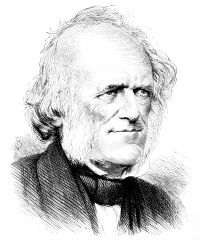 Charles LyellSir Charles LyellHerbert SpencerNathaniel Southgate ShalerUnited Nations World Commission on Environment and DevelopmentVarious
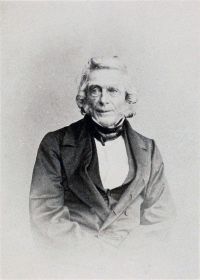 Patrick Matthew
 A. S. PackardReginald Crundall PunnettThomas Alfred CowardJohn Paul StevensU. P. HedrickDavid Starr Jordancomte de Georges Louis Leclerc BuffonCora May Williams
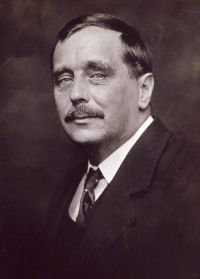 H. G. WellsGeorge John Romanes