Stellar spectrum

Definition and stakes

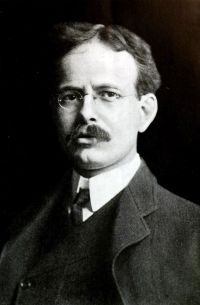
Portrait of Richard A. Proctor Richard A. Proctor,  Pleasant Ways in Science

“ A stellar spectrum with bright lines is always a highly interesting phenomenon for any one acquainted with stellar spectrum analysis, and well worthy of deep consideration. Although in the chromosphere (sierra) of our sun, near the limb, we see numerous bright lines, yet only dark lines appear in the spectrum whenever we produce a small star-like image of the sun, and examine it through the spectroscope. ”

Source: Gutenberg

Portrait of Cecilia Payne-Gaposchkin Cecilia Payne-Gaposchkin,  Stellar atmospheres (1925)

“ The spectrum of a star nearly always consists of a continuous background, in which the energy distribution corresponds more or less to that of a black body, and of absorption and emission lines and bands. The observed stellar spectrum is the integrated contribution from all parts of the disc, the unlined portion representing radiation that passes undisturbed from the photosphere through the reversing layer, and the light within any individual absorption line coming from the greatest depth in the reversing layer that can be penetrated by light of the corresponding frequency. ”
Source: Gutenberg

Portrait of Cecilia Payne-Gaposchkin Cecilia Payne-Gaposchkin,  Stellar atmospheres (1925)

“ Matter can be studied terrestrially in small quantities only, and when a laboratory source is used in obtaining a spectrum, all the contributing material is collected into a very small region. With the stellar source it is quite otherwise. An enormous mass of matter, spread over a very large region, gives rise to the spectrum, and probably widely different physical conditions prevail at the origin of light of different wave-lengths. The present chapter contains a brief survey of the chief components which go to make up the stellar spectrum. ”
Source: Gutenberg

Get perspective with Kwize: daily news enlightened by great literature