Stoma (botany)

Definition and stakes

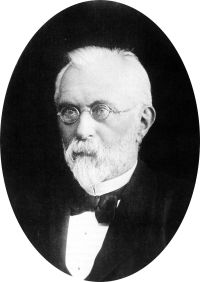
Portrait of L. H. Bailey L. H. Bailey,  Beginners' botany (1921)

“ In some cases the hairs are glandular, as in Chinese primrose of the greenhouses (Primula Sinensis) and certain hairs of pumpkin flowers. The hairs often protect the breathing-pores, or stomates, from dust and water.
Stomates (sometimes called breathing-pores) are small openings or pores in the epidermis of leaves and soft stems that allow the passage of air and other gases and vapours (stomate or stoma, singular; stomates or stomata, plural) . They are placed near the large intercellular spaces of the mesophyll, usually in positions least affected by direct [88] sunlight. Fig.
”

Source: Gutenberg

Portrait of A. C. Seward A. C. Seward,  Fossil plants, Vol. 1: [A text-book… (1898)

“ Renault [878] has described some silicified leaves of Sphenophyllum from Autun in which the laminae consist of thin-walled loose parenchyma, traversed by small groups of tracheids constituting the simple or forked veins. The epidermis is made up of a single layer of cells, with here and there indistinct indications of stomata. A more perfect stoma has, however, been described by Solms-Laubach from the epidermis of a bract in a strobilus (fig. 107, A) .
400
Fig.
”
Source: Gutenberg

Get perspective with Kwize: daily news enlightened by great literature