“ As your body swings back, your feet are to press against the stretcher and drive the slide back, in order that, by the combination of body-swing and leg-drive, you may retain the power which you have applied at the beginning evenly throughout the whole of the stroke. ”
Stroke (rowing)
Definition and stakes
The theme of “stroke (rowing)” has been addressed by authors such as R. C. Lehmann, James H. Sterrett, William Broadfoot, Richard Lamb and Charles Murray Pitman. It is often associated with terms like muscle, swimming, leg, oar and body.
Quotes about “stroke (rowing)”
“ The swing must be slow and balanced, for "the time occupied in coming forward should be the body's rest, when the easy, measured swing, erect head, braced shoulders, and open chest, enable heart and lungs to work freely and easily, in preparation for a defined beginning of the next stroke." ”
“ But a real heavy-weight is almost invariably slow and lacking in initiative when placed at stroke, although, in the middle of the boat, with another man acting as fugleman for him, he may be able to row perfectly well at any rate of stroke that may be set to him. ”
“ But if you put this man at No. 3 in a Four, the results are sure to be disastrous. An easier style of movement is required for a Four. A strenuous application of all the body-weight at the beginning of the stroke is still, no doubt, necessary. ”
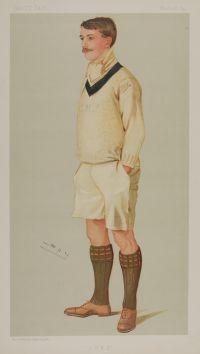 Charles Murray Pitman,
1911 Encyclopædia Britannica
(1911)
“ The secret of good rowing is the simultaneous application of leg and bodywork from end to end of the stroke. The instant the blades are covered the whole weight must be lifted from the stretcher and applied to the oar-handle, and must remain so applied until the hands come in to the chest. In order to ensure that the pressure so applied to the blade shall be as long and as lhard as possible, the body must be swung forward to its full extent, and during the stroke the shoulders must always be swinging back faster than the seat, while at the same time the legs are driving hard at the stretcher. ”
“ When the body is full forward the knees should be opened to about the breadth of the arm-pits, the flanks closed in against the thighs. The knees should bend steadily and gradually into this position, and at the moment of beginning they must maintain themselves there and not fall loosely apart. Such a movement entails a great loss of power at the beginning of the next stroke. Nor, on the other hand, ought the knees to be clipped together as the stroke begins. ”
William Blaikie, How to Get Strong and How to Stay So
“ Laying any weight on the foot, and lifting it clear from the ground, will also call on this muscle. So will fastening the feet into straps, like those on a boat-stretcher or rowing-weight, and swaying the body of the sitter back and forth; for these muscles have heavy work to do to aid in pulling the body forward, so that the rower may reach his hands out over his toes for a new stroke. ”
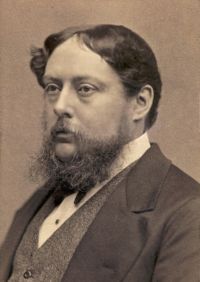 Richard A. Proctor,
Rough Ways Made Smooth: A series of familiar essays on scientific subjects
“ At Cambridge "length" is acquired by making the men "finish the stroke," that is, by making them "swing well back" beyond the perpendicular. Of course the oar remains longer in the water, but we maintain that the extra time it is kept there by the backward motion of the body is time lost. The "swinging back" throws a tremendous strain on the abdominal muscles, the weakest rowing muscles in the body; very soon the men feel this strain, become exhausted, and unable to "get forward," and finally lose time and swing and "go all to pieces." Length obtained by going backwards is of no possible use. ”
Donald Walker, Walker's manly exercises (1855)
“ The oar must consequently cross the boat, and be held on its opposite side, so as to clear the back of the man before.It should be neither held nor pulled obliquely to the side by twisting the body, as is practised by many, because the muscles in that case act disadvantageously, and are sooner fatigued. The stroke must be longer in sea than in river rowing. The oar must be thrown out with a heave, caused by the simultaneous extension of the body and the arms. It is still more essential to feather in sea than in river rowing. ”
Frederick Gymer Parsons, John Gray McKendrick, and Leonard Erskine Hill, 1911 Encyclopædia Britannica (1911)
“ The venous obstruction quickly leads to diminished diastolic filling of the heart, and to such a decreased velocity of blood flow that the effort is terminated by the lack of oxygen in the brain. During any violent exercise, such as running, the skeletal muscles alternately contract and expand, and the full flood of the circulation flows through the locomotor organs. The stroke of the heart is then both more energetic and more frequent, and the blood circulates with increased velocity. ”
“ The whole stroke should be practised together, so that it is smoothly and accurately done. First, the upper arm catches the water, the body is slightly rolled, head twisted so that breath may be inhaled during the pull, the legs are opened at start of pull and closed at the end of pull. ”
William Blaikie, How to Get Strong and How to Stay So
“ The better the beginning of a stroke is caught in the water, the more the fulcrum of water itself solidifies, and by so much more can the rower throw his weight on then, and at just the right time. The effect with the rubber straps is the very reverse; for, in throwing the weight on at the beginning, the straps do not offer enough resistance to have the desired effect, while they offer too much at the finish of the stroke. ”
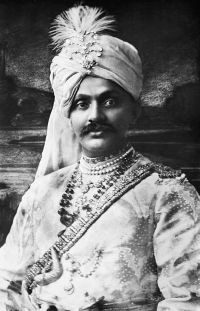 Ranjitsinhji Vibhaji II,
The Jubilee Book of Cricket
(1897)
“ In fact, experiment has proved to me that by standing with most of the weight upon the left leg backstrokes are actually weakened. Why this is so I cannot understand; perhaps it may be explained as follows: whether a man is playing back or forward, his stroke is strengthened if he gets into it some of the weight of his body; for in each case the ball is played away from him and in front of him. Now, the weight of the body cannot be brought to bear on the stroke unless the body moves in the direction in which the ball is going from the bat. ”
Benjamin Garno, Modern Billiards
“ To kiss to d, the natural angle of reflection, cue-ball 1⁄2 below, object-ball 7⁄8 right; stroke, “ordinary.”To a, the acute angle, cue-ball 5⁄8 below, object-ball 7⁄8 right; stroke, “hard.” The “draw” imparted to the cue-ball, together with the kiss and the extreme velocity obtained from the cushion resulting from the hard stroke, tends to rebound the cue-ball in a direct line across the table. 68 PLATE XII. PRACTICAL ILLUSTRATION OF THE MASSÉ STROKE. Illustrating the most difficult stroke that may be made without the personal aid of a teacher. ”
Various, Harper's Young People, August 9…
“ The action of the legs in swimming is most important. The strokes should come from the knees, not from the hips, the feet spreading wide apart, and striking backward and downward, in order to obtain the greatest amount of resistance from the water, and the ankle-joints firm.When you have learned the stroke with the arms and that with the legs, you are able to swim. Always make your strokes with steadiness, and not too rapidly, taking a fresh breath every time you strike out. ”
Claude Harris Miller, Outdoor Sports and Games
“ If we take up fast swimming, we must learn one of the various overhand or overarm strokes. The chief difference between these strokes and the simple breast stroke is that the arms as well as the legs are used to propel the body through the water, and this power is applied so steadily and uniformly that instead of moving by jerks we move with a continuous motion and at a greater speed. The single overarm is easier to learn than the double overarm or “trudgeon” stroke. ”
James H. Sterrett, How to swim (1917)
“ As in many other things where greater speed is required, the over-arm side stroke gives better pace and a longer run, because of the fact that the body, being on the side, presents less resistance than when on the breast, and, by minimizing the negative parts of the stroke, we get a maximum amount of positive action, resulting in more speed, with no greater effort. ”
Ranjitsinhji Vibhaji II,
The Jubilee Book of Cricket
(1897)
“ In the case of a young player it would be a very good plan for the coach to give a practical illustration of all forcing-strokes one by one, showing first how they ought to be done and then how they ought not It is particularly necessary to demonstrate how the weight originally on the right leg is thrown on to the left leg in making forward-strokes. It is just this transference of weight from leg to leg that brings the body well into the stroke. ”
Every Boy's Book: A Complete Encyclopædia of Sports and Amusements
“ The eye must be educated to guide the hand, and, hit or miss, the stroke should be given at once. There should be no hesitation, no see-sawing of the cue to and fro, and no violent motions whatever. The body should be so placed as to give firmness to the bridge, ease to the right arm—which should be kept straight, with the point of the cue slightly above the surface of the cloth—and a general freedom from constraint, which is highly essential to success. ”
 Adam Smith,
The Essays of Adam Smith
“ When we see a stroke aimed and just ready to fall upon the leg or arm of another person, we naturally shrink and draw back our own leg or our own arm; and when it does fall, we feel it in some measure, and are hurt by it as well as the sufferer. ”
“ The breathing in this stroke is hard to master. As the face is in the water, the breath is taken only every two or three strokes by turning the head quickly as the upper arm is being brought down; the exhaling is done under water, while the under arm goes forward. This is for racing; a breath may be taken at each stroke when the stroke is slower. ”
Benjamin Garno, Modern Billiards
“ As the strength of stroke is increased the ball necessarily imbeds itself more firmly in the cushion, and the sudden rebound, together with the resistance from the rubber through indentation, throws it off with greater velocity and produces a more acute angle. ”
Three Hundred Things a Bright Boy Can Do
“ Pg 55General Advice.—In all kinds of strokes swing back slowly with your left shoulder down and the forefinger of your right hand well down the club. Ever have your eye upon the ball, and finish every stroke to the very end. In all your strokes let your arms go well out from your body. ”
The Sportswoman's Library, Vol…
“ The striker's ball, when so placed and struck is at once in play, and can roquet any other ball in play or be roqueted whether it has made the first hoop or not.5. Stroke, when taken.—A stroke is considered to be taken if a ball be moved in the act of striking; but should a player, in taking aim, move his own or any other ball accidentally, it must be replaced to the satisfaction of the umpire or the adversary, and the stroke be then taken. If a ball be moved in taking aim, and then struck without being replaced, the stroke is foul (see Law 25) . ”
Various, Harper's Round Table, August 18…
“ As soon as the stroke is begun the palms should be turned a little outward so as to assist in moving the body forward. The hands should not be separated to any great extent until they have been pushed out almost to arm's length, and when they are brought backwards in the stroke they should not be allowed to pass much behind the line of the shoulders. ”
A. R. Calhoun, Healthful Sports for Boys
“ As this stroke is being made, shoot out the sustainer quickly forwards, and while this arm is pulled in towards the body the legs and propeller are quickly brought into action for the next stroke. The learner will have to count one, two, only in effecting this movement, as, when the propeller and legs are striking, the sustainer is shot out, and vice versa.OTHER WAYS Swimming on the back is very easy, once the confidence is assured. ”
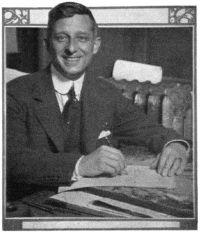 Lester Chadwick,
The Eight-Oared Victors
(1913)
“ Over and over again, with the eyes of seven of the men on the back of the man in front of him timing the movement, and with the eyes of the stroke on the coxswain, to catch the slightest signal. Stroke after stroke—movement after movement, one just like the other—twenty-eight to the minute, Jerry having started them off with that minimum. ”
 James Bell Pettigrew,
Animal Locomotion; or, walking…
“ Macgillivray in his British Birds, Mr. Bishop in his article “Motion” in the Cyclopedia of Anatomy and Physiology, and M. Liais “On the Flight of Birds and Insects” in the Annals of Natural History, all assert that the stroke is delivered downwards and more or less backwards.To obtain an upward recoil, one would naturally suppose all that is required is a downward stroke, and to obtain an upward and forward recoil, one would naturally conclude a downward and backward stroke alone is requisite. ”
William Broadfoot, Billiards (1896)
“ Beginners should be cautioned to watch carefully for foul strokes, especially when the rest or spider is being used. A knowledge of the spot stroke and its variations is invaluable, involving, as this stroke does, every form of screw, stab, and following stroke; while the stop stroke is also most useful—i.e. a sort of stab that leaves the white ball on the place just vacated by the red.When a player is familiar with ordinary winning hazards, and can make them with some facility, he should devote himself to the making of breaks—i.e. ”
“ Each stroke is simplicity itself, less than the A B C of the game. Yet by the monotony and tiresome iteration of it, their nerves get bored; there is no failure of muscular power, but they are unable to hit with the minimum of correctness after a very few minutes. Here is temporary staleness in its most elementary form, but it is some similar nerve-failure which is at the root of most staleness; incapability of correct work occurs without such fatigue of the muscle as would account for it ”
 Walter Bradford Woodgate,
Boating
“ In dealing with scientific racing we have previously remarked that the point wherein a tiring oarsman first gives way is in his recovery, because of the relative weakness of the muscles which conduct that portion of the action of the stroke. ”
Mind Amongst the Spindles. A Miscellany…
“ For the back stroke therefore, and that the arm may not only bend at the elbow, but also extend and straighten itself with force, other muscles, the longus, and brevis brachiæus externus, and the aconæus, placed on the hinder part of the arms, by their contractile twitch, fetch back the fore-arm into a straight line with the cubit, with no less force than that with which it was bent out. The same thing obtains in all the limbs, and in every moveable part of the body. ”
James Bell Pettigrew,
Animal Locomotion; or, walking…
“ When the lower portion of the body and posterior extremities of these creatures are flexed and tilted, as happens during the back and least effective stroke, the naturally expanded feet are more or less completely closed or pressed together, in order to diminish the extent of surface presented to the water, and, as a consequence, to reduce the resistance produced. The feet are opened to the utmost during extension, when the more effective stroke is given, in which case they present their maximum of surface. They form powerful propellers, both during flexion and extension. ”
Related terms
Authors who wrote about “stroke (rowing)”
 R. C. LehmannJames H. SterrettWilliam BroadfootRichard LambCharles Murray PitmanWalter Bradford WoodgateJames Bell PettigrewWilliam HenryPortal:Royal Asiatic Society of Great Britain and IrelandRanjitsinhji Vibhaji IIBenjamin GarnoFrank Eugen DaltonWilliam BlaikieArthur BroadleyCharlotte OelschlagerClaude Harris MillerLeta Severance HilesAlbrecht JensenVariousDonald Walker
