Subtropics

Definition and stakes

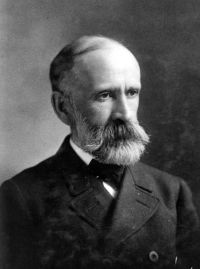
Portrait of Josiah Willard Gibbs Josiah Willard Gibbs,  Scientific Papers of Josiah Willard Gibbs (1906)

“ To ascertain the nature of the derived surface and its relations to the primitive surface sufficiently to construct it when the latter is given, it is only necessary to use the principle that the volume, entropy, and energy of the whole body are equal to the sums of the volumes, entropyes, and energies respectively of the parts, while the pressure and temperature of the whole are the same as those of each of the parts. Let us commence with the case in which the body is in part solid, in part liquid, and in part vapor. ”

Source: Wikisource

Nelson W. Green,  Popular Science Monthly (1880)

“ There is no conceivable situation in which gases could be expected to force subterranean water in a direction opposed to gravity in such quantities as to satisfy the conditions.
Is it possible, then, to point out any other force in nature which not only may, but which positively must, force waters out of springs at high elevations?
Let a, a, a, be a great circle of the earth attained by passing a plane through the earth's center C, perpendicular to its axis, and b, b, b, the circle cut by the same plane through the inner surface of the earth's supposed crust.
”
Source: Wikisource

William Bower Taylor,  Kinetic Theories of Gravitation… (1876)

“ And after some little thinking, it occurred to me that if this medium be of the same nature as our atmosphere and other gaseous bodies, that is, if it be capable of being expanded by heat and contracted by cold, then the sun being a very hot body, and the heat being so much the greater the nearer we are to him, the density of the medium ought therefore to decrease with a decreasing and increase with an increasing distance, the same as Newton would have it. ”
Source: Wikisource

Get perspective with Kwize: daily news enlightened by great literature