Geotropism

Definition and stakes

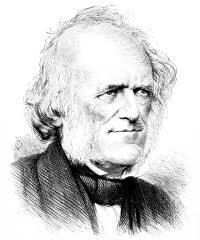
Portrait of Jagadis Chandra Bose Jagadis Chandra Bose,  Life Movements in Plants, Volume II

“ No phenomenon of tropic movement appears so inexplicable as that of geotropism. There are two diametrically opposite effects induced by the same stimulus of gravity, in the root a movement downwards, and in the shoot a movement upwards. The seeming impossibility of explaining effects so divergent by the fundamental reaction of stimulus, has led to the assumption that the irritability of stem and root are of opposite character. ”

Source: Gutenberg

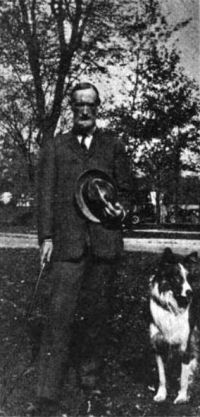
Portrait of August Weismann August Weismann,  Essays Upon Heredity and Kindred Biological Problems

“ But geotropism is not a primitive attribute of the plant, and it is even now absent from those plants which, like many Algae, have no definite position. Geotropism cannot have arisen before plants first became fixed in the earth. If any one were to assume that the direct influence of gravity, continuous through countless generations, had at length conferred upon the root the power of growing in a geotropic direction, how would it be possible to explain the fact that the shoot which has been under precisely the same influence has acquired the power of growing in an exactly opposite direction? ”
Source: Gutenberg

The New Student's Reference Work (1914)

“ Geotropism (jḗ-ŏt′rṓ-pĭz’m) is the sensitiveness of plants to the action of the earth's gravitation, to which they respond by changing the rate of growth or the turgor (which see) of certain regions. This produces a curvature which alters the position of attached parts with reference to the direction of gravitation. Most plant-parts assume a position, fixed by the time they are mature, which is a resultant of the effect of various external factors, especially of light and gravity. ”
Source: Wikisource

Get perspective with Kwize: daily news enlightened by great literature