“ The most my brain could take in of her explanation was something like: "Rocket, then phototropism." Now that makes scant sense. So far as I know, phototropism—movement toward light—is an organic phenomenon. One thinks of it as a response of protoplasm, in some plants and animal organisms, most of them simple, to the stimulus of light; certainly not as a force capable of moving inorganic matter. ”
Phototropism
Definition and stakes
The theme of “phototropism” has been addressed by authors such as Jagadis Chandra Bose and Edgar Pangborn. It is often associated with terms like light, plant, chemical, visible and spectrum.
Quotes about “phototropism”
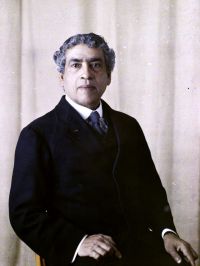 Jagadis Chandra Bose,
Life Movements in Plants, Volume II
Jagadis Chandra Bose,
Life Movements in Plants, Volume II
“ The effect of geotropism in opposition to phototropism will be found in the following experiments, where the opposing action of light of different intensities is seen to give rise to a partial, to an exact, or to an over-balance. ”
Jagadis Chandra Bose,
Life Movements in Plants, Volume II
“ It is, moreover, not easy to discriminate the effect of one agency from that of the other. [Pg 527] The combined effects of different factors will evidently be very numerous. This will be understood from consideration of the number of possible combinations with only two variables, geotropism and phototropism. The effect of geotropism may be strong G, or feeble, g. Similarly we may have strong effect of light L, or feeble effect of light l. Light may exert positive phototropic action +L or negative action -L. Thus from two variables we obtain the following eight combinations: G + L ”
Jagadis Chandra Bose,
Life Movements in Plants, Volume II
“ Sachs observed a positive phototropic curvature in the stems of Tropæolum majus in autumn; but this was reversed into negative in summer; similarly in the hypocotyl of Ivy, the positive curvature in autumn is converted into negative curvature in summer.Certain organs are apparently insensitive to the action of light. Thus no phototropic response is found in the tendril of Passiflora even under the action of strong light. The tendrils of Vitis and Ampelopsis exhibit, according to Wiesner, positive phototropism under feeble, and negative phototropism under strong light. ”
Henry Hunt Snelling, The History and Practice of the Art of Photography
“ The most active chemical change, you will perceive, is produced by the rays above the yellow a; viz. 4, 3, 2 and 1 (as at b) the green (4) being the least active, and the blue (3) and violet (1) rays the most so, the action still continuing far beyond the point b which is the end of the luminous image. Suppose we wish to copy by the Daguerreotype, or Calotype process, any objects highly colored--blue, red and yellow, for instance predominating--the last of course reflects the most light, the blue the least ”
Various, Chambers's Edinburgh Journal, No…
“ On looking at the sun in the polariscope, the image, as before observed, is seen to be purely white—a proof that the medium through which the luminous substance is made visible to us is gaseous. If it were liquid, the light would be coloured; and as regards solidity, that is out of the question—the rapid change of spots proves that the outer envelope of the sun is not solid. On whatever day of the year we examine, the light is always white. Thus, these experiments remove the theory out of the region of simple hypothesis, and give certainty to our conclusions respecting the photosphere. ”
Robert Hunt, The Poetry of Science; or, Studies of the Physical Phenomena of Nature
“ Not only do we find that the chemical action is not extended over the whole length of the prismatic spectrum, but we discover that over spaces, which correspond with the maximum points of light and heat, a protective action is exerted. That is, that highly sensitive photographic agents, which blacken rapidly under exposure to diffused daylight, are entirely protected from change in full sunshine, if at the same time as a strong light is thrown upon them by reflection, the yellow and extra red rays are brought to bear upon their surface. ”
active 1883-1912 James Weir, The Energy System of Matter: A Deduction from Terrestrial Energy Phenomena
“ The presence of sunlight is one of the essential conditions for the successful working of certain transformations of plant life, and these transformations vary not only in degree but in nature, according to the variation of the imposed light in intensity and quality. Some of the processes of growth are no doubt chemical in nature. Here, again, light may be readily conceived to [Pg 60] have a direct determining influence upon them, exactly as in the cases of its well-known action in chemical phenomena—for instance, as in photography. ”
Popular Science Monthly (1875)
“ In animal phosphorescence, as in all her works, Nature exhibits an immense variety in the forms in which she displays her power; in one case, the luminosity will be visible in a fluid secretion; in another, it will manifest itself through the action of a minute and complicated organ; one species of animal will shine with a yellow light; a second, with brilliant green; a third, with pale lilac; and we are acquainted with one instance in which the light changes successively to the chief colors of the solar spectrum. The causes which produce these phenomena are still very obscure. ”
Edward S. Sears, The shadow on the spark (1927)
“ A photograph of the heavens will sometimes reveal something which the eye could not see. So, a photographic plate will sometimes catch the smaller particles as well as the largest stars, too far away to be seen.“If you consider the light as moving in waves it is easier to understand what effect light waves have on these discoveries. Artificial light travels in waves farther apart than in the case of natural light. The waves of this kind of light are so far apart that the colloid or small microbe can lie between the waves and make no impression on the eye or on the photographic plate.” ”
Matthew Luckiesh, Artificial Light: Its Influence upon Civilization
“ These are often designated chemical or actinic rays in order to distinguish the group as a whole from other groups such as ultra-violet, visible, and infra-red. Light is a unique agent in chemical reactions because it is not a material substance. It neither contaminates nor leaves a residue. Although much information pertaining to photochemistry has been available for years, the absence of powerful light-sources emitting so-called chemical rays in large quantities inhibited the practical development of the science of photochemistry. ”
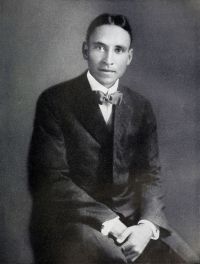 E. Newton Harvey,
The Nature of Animal Light
E. Newton Harvey,
The Nature of Animal Light
“ However, not all phosphorescent materials are also thermoluminescent. The production of light by animals is quite another phenomenon from thermoluminescence. [Pg 26] Phosphorescence and Fluorescence.—Although the word phosphorescence has been used in a very loose way to indicate all kinds of luminescence, and particularly that of phosphorus or of luminous animals, to the physicist it has a very definite meaning, namely, the absorption of radiant energy by substances which afterwards give this off as light. Phosphorescence does not strictly apply to the light of white phosphorus. ”
Fernand Papillon, Popular Science Monthly (1873)
“ When white light is decomposed by the prism, we obtain seven groups of visible rays, of unequal refractive power, violet, indigo, blue, green, yellow, orange, and red. The spectrum or ribbon of colors thus obtained widens and spreads out by invisible radiations. Beyond the red, there exist radiations of dark heat, or calorific rays, and, outside of the violet, radiations which are called chemical or ultraviolet rays. The first affect the thermometer, the last occasion energetic reactions in chemical compounds. What is their influence upon vegetation? ”
Ellen Prescott, Popular Science Monthly (1880)
“ The "persistence of force" and the "indestructibility of matter" must first be proved, before it could be shown that the phenomena of phosphorescence are due to the same causes as the light evolved by electrical discharge, chemical combination, or mechanical movement. If, as Dr. Young has shown, light be motion or vibration of a luminiferous ether which fills space and permeates all bodies, the conditions of inexorable law are as fully met in the pale glimmer of luminous plants, the flash of the fire-fly, or the radiance of the glow-worm, as in the light evolved by the heavenly bodies. ”
E. Newton Harvey,
The Nature of Animal Light
“ In fact, for a black body λmax.×T=2890, and at 5000° C. (about the temperature of the sun) λmax. lies within the visible spectrum. In gas or electric lights it lies in the infra-red region. The area enclosed by these spectral energy curves represents the total energy emitted, and, knowing this and the area enclosed by the curve of visible radiation, it is easy to determine how efficient a source of light is as a light-producing body. We shall inquire more fully into this question in Chapter III, in considering the efficiency of the firefly as a source of light. ”
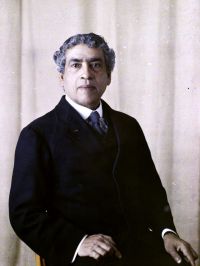 Jagadish Chandra Bose,
Collected Physical Papers
(1927)
Jagadish Chandra Bose,
Collected Physical Papers
(1927)
“ Growth is modified by the action of visible light; two different effects are produced depending on the intensity. Strong stimulus of light induces a diminution while feeble stimulus induces an acceleration of the rate of growth. The effectiveness of light in modifying growth depends moreover on the quality of light; the effect is very strong in the ultra-violet region of the spectrum with its extremely short wave-length of light; it declines almost to zero as we move towards the less refrangible rays, the yellow and the red, with their comparatively long wave-length. ”
Jagadis Chandra Bose,
Sir Jagadis Chunder Bose, His Life and Speeches
“ Can anything appeal more to the imagination than the fact that we can detect the peculiarities in the internal molecular structure of an opaque body by means of light that is itself invisible? Could anything have been more unexpected than to find that a sphere of China-clay focuses invisible light more perfectly than a sphere of glass focuses the visible; that in fact, the refractive power of this clay to electric radiation is at least as great as that of the most costly diamond to light? ”
 Alfred Russel Wallace,
Tropical nature, and other essays
(1878)
Alfred Russel Wallace,
Tropical nature, and other essays
(1878)
“ When all the colour-producing rays are reflected in due proportion, the colour of the object is white; when all are absorbed the colour is black. If blue rays only are absorbed the resulting colour is orange-red; and generally, whatever colour an object appears to us, it is because the complementary colours are absorbed by it. The reason why rays of only certain refrangibilities are reflected, and the rest of the incident light absorbed by each substance, is supposed to depend upon the molecular structure of the body. ”
Henry Hunt Snelling, The History and Practice of the Art of Photography
“ If we receive a prismatic spectrum on some papers, we have evidence that the molecular or chemical disturbance bears some relation to the color of each ray, or, in other words, that colored light so modifies the action of ENERGIA that the impression it makes is in proportion to the color of the light it accompanies, and hence there results a molecular arrangement capable of reflecting colors differently. ”
Robert Hunt, The Poetry of Science; or, Studies of the Physical Phenomena of Nature
“ In these allied phenomena we have effects which are evidently dependent upon several dissimilar causes. The phosphorescence of the living animal is due, without doubt, to nervous excitation: that of the living vegetable to solar luminous influence; and in the case of the mosses of caverns, &c. to the chemical agency of the sun’s rays, which appears to be capable of conduction. In the dead organic matter we have a purely chemical action developing the light, and in the inor [Pg 162] ganic bodies we have peculiar molecular constitution, by which an absorption of light appears to take place. ”
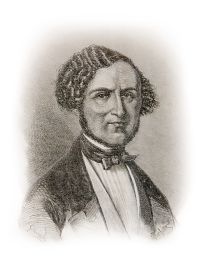 Macedonio Melloni,
Scientific Memoirs
(1837)
Macedonio Melloni,
Scientific Memoirs
(1837)
“ But this curious fact, which constitutes, as it were, the basis of our inquiries, ceases to surprise us as soon as we feel convinced that bodies which are transparent and colourless act upon heat in a manner similar to that in which coloured media act upon light. For, as upon the intensity of the colour depends the degree of transparency, that is, the number of luminous rays that pass through the coloured substances, in like manner upon this species of invisible calorific tint which diaphanous bodies possess will depend whether a greater or a less quantity of heat be transmitted [8] . ”
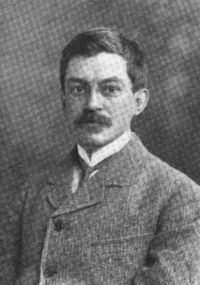 Harold Jacoby,
Practical Talks by an Astronomer
Harold Jacoby,
Practical Talks by an Astronomer
“ Let us imagine that the exposure has been made with an ordinary lens and camera, and that it is a landscape seeming to grow beneath the experimenter's eyes. At first only the most conspicuous objects make their appearance. But gradually the process extends, until finally every tiny detail is reproduced with marvellous fidelity to the original. The photographic plate, when developed in this way, is called a "negative." For in Nature luminous points, or sources of light, are bright, while the developing negative turns dark wherever light has acted. ”
Various, Scientific American Supplement…
“ Photographers can leave their usual sensitive, chemically prepared plates exposed to yellow light and red light without experiencing any sensible effect; but when you get toward the blue end of the spectrum, the photographic effect begins to tell, more and more as you get toward the violet end. When you get beyond the violet, there is the invisible light known chiefly by its chemical action. From yellow to violet we have visual effect, heating effect, and chemical effect, all three ”
E. Newton Harvey,
The Nature of Animal Light
“ The weaker light at temperatures above the optimum is also more yellow in color. I believe this difference in color is a function of the slowed reaction velocity, for a mixture of luciferin and luciferase which gives a bluish luminescence at room temperature, will give a weaker and yellowish luminescence if diluted with water. Dilution with water will slow the reaction velocity. If the difference in color were not real but due to change in color sensitivity of the eye with different intensities of such relatively weak light (Purkinje phenomenon) , the weaker light should appear more blue. ”
 Edward Carpenter,
The Drama of Love and Death: A Study of Human Evolution and Transfiguration
Edward Carpenter,
The Drama of Love and Death: A Study of Human Evolution and Transfiguration
“ It would be perfectly natural, then, for a body composed of such molecules to come into the region of possible photography in the camera through the ultra-violet rays before it came into the region of visibility to the human eye by means of ordinary light. And thus the seeming paradox may be accounted for—of the appearance of spirit-forms, or even thought-forms, on the photographic plate which are not yet discernible by the eye. At a later stage of materialization the form may of course yield an image both to the eye and to the camera. ”
Henry Hunt Snelling, The History and Practice of the Art of Photography
“ In selecting subjects, all striking contrasts in color should be avoided, and sitters for portraits should be cautioned not to wear anything that may produce the effect spoken of--dark dresses always being the best. The action of light both combines and decomposes bodies. For instance, chlorine and hydrogen will remain in a glass vessel without alteration if kept in the dark; but if exposed to the rays of the sun, they immediately enter into combination, and produce hydrochloric acid. ”
 Mary Somerville,
On the Connexion of the Physical Sciences
Mary Somerville,
On the Connexion of the Physical Sciences
“ In attempting to explain the extinction of light on the corpuscular doctrine, we have to account for the light so extinguished as a material body, which we must not suppose annihilated. It may, however, be transformed; and among the imponderable agents, heat, electricity, &c., it may be that we are to search for the light which has become thus comparatively stagnant. The heating power of the solar rays gives a primâ facie plausibility to the idea of the transformation of light into heat by absorption. ”
Pierre Jules César Janssen, Popular Science Monthly (1883)
“ It is proper to remark at this point that, when we analyze light in this way to examine it in its elements, we perform an operation entirely parallel to that of the chemist who separates the simple elements of a compound body. The elementary ray is a chemical species in light. It has all the characteristics of a species. It is incapable of decomposition, it has an individuality of its own, characterized by its wave-length, by the physiological effects it induces, whether acting alone or in association with other rays, and by the phenomena which it exhibits in its relations with bodies. ”
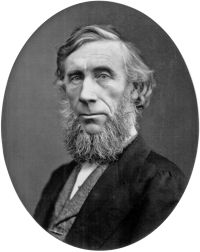 John Tyndall,
Six Lectures on Light
John Tyndall,
Six Lectures on Light
“ Perhaps no experiment proves more conclusively the substantial identity of light and radiant heat, than the formation of invisible heat-images. Employing the mirror already used to raise the beam to its highest [Pg 180] state of concentration, we obtain, as is well known, an inverted image of the carbon points, formed by the light rays at the focus. Cutting off the light by the ray-filter, and placing at the focus a thin sheet of platinized platinum, the invisible rays declare their presence and distribution, by stamping upon the platinum a white-hot image of the carbons. ”
