“ This, in fact, is the principal advantage derived from the use of superheated steam, although it is also lighter for a given volume, and therefore, a less weight of steam is required, to fill the cylinder up to the point of cut-off. The economical degree of superheating is considered to be that which will prevent the condensation of any steam on the walls of the cylinder up to the point of cut-off, thus keeping them at all times free from moisture. ”
Superheated steam
Definition and stakes
The theme of “superheated steam” has been addressed by authors such as Robert Henry Thurston, Babcock & Wilcox Company, William S. Monroe, Dionysius Lardner and by Sadi Carnot. It is often associated with terms like boiler, condensation, engine, heat and water.
Quotes about “superheated steam”
Babcock & Wilcox Company, Steam, Its Generation and Use
“ If the saturated steam is moist, the saving due to superheat is more and ordinarily the gain in economy due to superheated steam, for equal boiler efficiencies, as compared with commercially dry steam is, say, 5 per cent for each 100 degrees of superheat. Aside from this gain, as already stated, superheated steam prevents erosion of the turbine buckets that would be caused by water in the steam, and for the reasons enumerated it is standard practice to use superheated steam for turbine work. ”
Babcock & Wilcox Company, Steam, Its Generation and Use
“ Superheated steam, as already stated, is steam the temperature of which exceeds that of saturated steam at the same pressure. It is produced by the addition of heat to saturated steam which has been removed from contact with the water from which it was generated. The properties of superheated steam approximate those of a perfect gas rather than of a vapor. Saturated steam cannot be superheated when it is in contact with water which is also heated, neither can superheated steam condense without first being reduced to the temperature of saturated steam. ”


Related terms
Authors who wrote about “superheated steam”
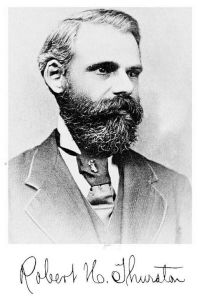 Robert Henry ThurstonBabcock & Wilcox CompanyWilliam S. Monroe
 Dionysius Lardnerby Sadi Carnot
 James Alfred EwingJames NasmythN. HawkinsGeorge Iles
 John Henry PepperRobert RoutledgeTraveling Engineers' AssociationAlfred Charles William HarmsworthC. E. John BourneThomas RaineyEdward W. ByrnArchibald Williams
 Charles T. PorterHubert E. Collinsby Sir William Thomson
