“ A proportion of ten to one between capital and aggregate demand obligations would probably be justified by American experience. The present practice of fixing the surplus fund at twenty per cent of the capital would be justifiable if the capital fund were properly regulated in amount. ”
Surplus fund
Definition and stakes
The theme of “surplus fund” has been addressed by authors such as George Garr Henry, William Amasa Scott, Burton J. Hendrick, of the Bank of England John Francis and Roy B. Kester. It is often associated with terms like dividend, capital, government, treasury and interest.
Quotes about “surplus fund”
of the Bank of England John Francis, Chronicles and characters of the stock exchange (1850)
“ The question of the sinking fund has greatly occupied the attention of financial men, and upon few schemes have so many and such various opinions been given. To view the subject by the light of common sense, it seems palpably absurd that more money than was necessary should be borrowed for the sake of paying it again, or that, while a surplus fund remained in the Exchequer, new loans should be raised. ”
Various, The Bay State Monthly, Volume 3…
“ It would only be necessary to go through the form of carrying one-tenth of the net profits to surplus, whereupon, if the surplus be net profits available for the purpose of a dividend, the amount so carried can be withdrawn and paid away at once, thereby defeating the obvious purpose of the law in requiring a portion of each six month's earnings to be carried to the surplus fund, that purpose being to provide that a surplus fund equal to twenty per cent, of the bank's capital shall be accumulated. ”
 John Stuart Mill,
Principles of Political Economy
John Stuart Mill,
Principles of Political Economy
“ This surplus is the fund from which the enjoyments, as distinguished from the necessaries of the producers, are provided; it is the fund from which all are subsisted who are not themselves engaged in production, and from which all additions are made to capital. The capital of the employer forms the revenue of the laborers, and, if this exceeds the necessaries of life, it gives them a surplus which they may either expend in enjoyments or save. ”
 John Sherman,
Recollections of Forty Years in the House…
John Sherman,
Recollections of Forty Years in the House…
“ A sinking fund promised by a government is nothing more or less than a name for the surplus revenue of the government. A government without a surplus revenue cannot possibly have a sinking fund. There is no way to pay a debt except by having an income above your expenditures, and you can call your surplus revenue a sinking fund if you choose. I said that under existing law the department was required to purchase one per cent. ”
Various, The Bay State Monthly, Volume 3…
“ This question is virtually answered above, for if the object of the law in requiring the creation of a surplus fund may not be defeated by one means it may not by another; if it may not be defeated by paying away the amounts carried to surplus in dividends, neither may it be by charging losses to the surplus and at the same time using the other earnings for dividends. ”
 Grover Cleveland,
A Compilation of the Messages and Papers of the Presidents…
Grover Cleveland,
A Compilation of the Messages and Papers of the Presidents…
“ The Government thus applying a surplus fortunately in its Treasury to the payment of expenses not met by its current revenues is not at all to be likened to a man living beyond his income and thus incurring debt or encroaching on his principal. It is not one of the functions of our Government to accumulate and make additions to a fund not needed for immediate expenditure. With individuals it is the chief object of struggle and effort. The application of an accumulated fund by the Government to the payment of its running expenses is a duty. ”
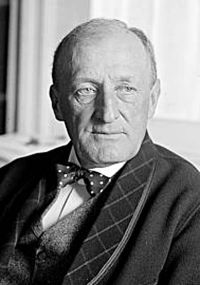 James Clark McReynolds,
New York Life Insurance Company v…
James Clark McReynolds,
New York Life Insurance Company v…
“ The difference between their sum and the total of advance payments and other income, then becomes the 'overpayment' or surplus fund for immediate pro rata distribution among policy holders as dividends or for such future disposition as the contracts provide. An 'annual dividend' policy holder receives his proportionate part of this fund each year in cash or as a credit upon or abatement of his next premium. ”
Benjamin Harrison, A Compilation of the Messages and Papers of the Presidents…
“ We should not collect revenue for the purpose of anticipating our bonds beyond the requirements of the sinking fund, but any unappropriated surplus in the Treasury should be so used, as there is no other lawful way of returning the money to circulation, and the profit realized by the Government offers a substantial advantage. ”
Various, Popular Science Monthly (1910)
“ The savings in part effected by the new arts are paid over for the use of the capital. The existence of an interest rate which, eliminating the element of risk, probably varies between two per cent, and eight per cent, is the shadow of this law of progress which says in substance that the product of the annual work of the exceptional men tends to vary as the square of the population, and it follows that as population slowly increases, this surplus fund comes into existence out of which interest is paid. ”
A Compilation of the Messages and Papers of the Presidents…
“ When the national debt is paid, the duties upon those articles which we do not raise may be repealed with safety, and still leave, I trust, without oppression to any section of the country, an accumulating surplus fund, which may be beneficially applied to some well-digested system of improvement. ”
William Hunt, The history of England, from the accession of George III. to the close of Pitt's first administration…
“ The bill passed both houses without a division. The highest expectations were founded upon it, for people generally, in common with Pitt himself and Price, regarded the new fund as an infallible means of discharging the national debt solely by the uninterrupted operation of compound interest. That the application of surplus revenue to the payment of debt is sound finance, and that to treat surpluses designed for that purpose as a separate fund is a convenient arrangement need no demonstration. ”
Thomas Hart Benton, Thirty Years' View (Vol. 1 of 2…
“ There cannot be found a stock, with an interest in its favor sufficiently strong to compete with the interests which, with a large surplus revenue, will be ever found in favor of expenditures. It must be perfectly obvious to all who have the least experience, or who will duly reflect on the subject, that were a fund selected in which to vest the surplus revenue for future use, there would be found in practice a constant conflict between the interest in favor of some local or favorite scheme of expenditure, and that in favor of the stock. ”
 William Johnson Galloway,
Advanced Australia
(1899)
William Johnson Galloway,
Advanced Australia
(1899)
“ The money, it was decided, should come out of the Consolidated Fund, that being considered the simplest way of dealing with the matter, more especially as of late years there has been a considerable surplus of revenue over expenditure, and there appears to be every probability that that surplus will be sufficient to provide the amount required without increasing the burden of taxation. ”
Chester Arthur Phillips, Readings in Money and Banking
“ In order to obtain the means for granting industrial credit and to dispose of the enormous amounts of newly created industrial securities, it was and is necessary to attract in as large a measure as possible the surplus funds of the community available for capital investments. ”
Vincent Henry Penalver Caillard and Elias John Wilkinson Gibb, 1911 Encyclopædia Britannica, Volume 27… (1911)
“ The reserve fund was created primarily to make good any deficiency in the revenues below the amount required to pay the interest due. If such drafts upon the reserve fund become necessary, they are to be made good in the following years out of the surplus above mentioned. The reserve fund is increased by the interest it may earn, but when the capital amount of the fund reaches £T2,000,000 the interest earned is merged in the general receipts of the public debt administration. ”
George Garr Henry, How to Invest Money
“ The recognition of this fact, combined with the ability to set aside a reserve fund, has brought many men to a consideration of the best way in which to dispose of it. It is obviously a waste of income to have the surplus in bank-accounts; more than that, there would be a constant temptation to use it and to confuse it with working capital. Its best disposition is plainly in some safe interest-bearing security, which can be readily sold, so that it will be available for use if necessity demands. ”
Thomas Hart Benton, Thirty Years' View (Vol. 1 of 2…
“ B., to absorb every dollar of our surplus, and the bank stock besides. The surpluses, he was certain, would be wholly insufficient, and the bank stock, by a solemn resolution of the two Houses of Congress, should be devoted to the object. As a fund was set apart, and held sacred and inviolable, for the payment of the public debt so; should a fund be now created for national defence, and this bank stock should be the first and most sacred item put into it. It is the only way to save that stock from becoming the prey of incessant contrivances to draw money from the treasury. ”
Roy B. Kester, Accounting theory and practice… (1922)
“ These concern largely the bond interest, the sinking fund reserve, and the dividend transactions. Bond interest is an expense. The sinking fund reserve is a reserve of net profits. Two methods are employed in showing the appropriation of net profits. Under the one method the total net profit is transferred to Surplus account, which then shows not only the profit for the current year but also the undistributed balance of previous years. ”
 Scott Nearing,
The American Empire
Scott Nearing,
The American Empire
“ Besides these personal incomes, each industry which paid these dividends and profits, through its depreciation, amortization, replacement, new construction, and surplus funds was reinvesting in the industries billions of wealth that would be used in the creation of more wealth. The normal processes of the growth of the modern economic system has forced upon the masters of life the problem of disposing of an ever increasing amount of surplus.During prosperous periods, the investment funds of a community like England and the United States grow very rapidly. ”
Charles Evans Hughes, Helvering v. Powers — Opinion of the Court
“ Surplus income is to be transferred to the reserve fund and that fund is to be used to meet deficiencies. If it is insufficient for that purpose, the trustees are required to notify the treasurer and receiver general of the commonwealth, and the commonwealth is to pay the amount of the deficit ascertained according to the act. ”
Thomas V. Cooper, American politics (non-partisan… (1892)
“ So high is the credit of the government, and so abundant are the resources of our people after a comparatively short period of general prosperity, that they seem to have plenty of surplus funds with which to aid any funding operation, however low the rate of interest, if the government—State or National—shows a willingness to pay. ”
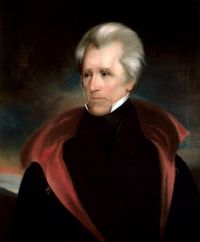 Andrew Jackson,
State of the Union Addresses
Andrew Jackson,
State of the Union Addresses
“ Thus the wealth and business of every region from which these surplus funds proceed must be to some extent injured, while that of the place where the funds are concentrated and are employed in banking are proportionably extended. ”
Various, Punch, or the London Charivari…
“ I don't say that nine millions would be enough thoroughly to carry out the design I have in view, but your surplus might serve as a central fund to begin upon, to which Parliament, no doubt, would cheerfully add another five or six millions if required. ”
“ In the determination of the size of capital and surplus funds and of the amount of the liability of stockholders for subscriptions in case of failure, no well-founded principles have been developed for the guidance of legislators. They should be great enough to cover prospective losses and to induce conservatism, honesty, and efficiency in management, and not so great as to prevent the free flow of an adequate amount of capital into the business. ”
 Carl Schurz,
The Currency Question
Carl Schurz,
The Currency Question
“ Every business man knows better than that. Nearly $150,000,000 of 4 per cent. bonds have, within two years, been sold. They are scattered all over the country, especially the West; and who owns them? Mostly small people, who consider the Government funds a better depository for their savings than the savings banks, and who thus invested in small amounts, from $50 upward. You honest farmer or laboring man, who put your little surplus into a Government security, are you aware that you have sunk down to the level of the bloated bloodsuckers, who fatten upon the sweat of the people? ”
 E. E. Brown,
The Life and Public Services of James A. Garfield
E. E. Brown,
The Life and Public Services of James A. Garfield
“ A steady and constant Revenue drawn from sources that represent the prosperity of the nation,—a Revenue that grows with the growth of national wealth, and is so adjusted to the expenditures, [Pg 445] that a constant and considerable surplus is annually left in the Treasury above all the necessary current demands, a surplus that keeps the Treasury strong, that holds it above the fear of sudden panic, that makes it impregnable against all private combinations, that makes it a terror to all stock-jobbing and gold-gambling,—this is financial health. ”
Sir James Steuart, An Inquiry into the Principles of Political Oeconomy…
“ When, in the early times of public credit, the repayment of the capital was the chief object of the lender, a much more extensive fund was necessary than at present, when no more is required than the payment of the interest. As such funds never can be formed but from taxes, or general contributions from the people, the greater they are, the larger must the contribution be. ”
 David Ricardo,
On The Principles of Political Economy…
David Ricardo,
On The Principles of Political Economy…
“ No sinking340 fund can be efficient for the purpose of diminishing the debt, if it be not derived from the excess of the public revenue over the public expenditure. It is to be regretted, that the sinking fund in this country is only such in name; for there is no excess of revenue above expenditure. It ought by economy, to be made what it is professed to be, a really efficient fund for the payment of the debt. ”
Scott Nearing,
The American Empire
“ Many, if not most of these rich people, carry heavy insurance, invest in securities, or in some other way add to surplus. In the third place there are the small investors, savings-bank depositors, insurance policy holders who, from their income, have saved something and have laid it aside for the rainy day. The masters of economic life—bankers, insurance men, property holders, business directors—are in control of all three forms of surplus.The billions of surplus wealth that come each year under the control of the masters carry with them an immense authority over the affairs of the community. ”
Sir James Steuart, An Inquiry into the Principles of Political Oeconomy…
“ To estimate, therefore, the total value, in any nation, of what is the object of taxation, we must go another way to work. The first article must be the annual income of all funds. By funds, here, I understand the capital wealth already made, in opposition to the produce of industry, which may be considered as the materials of which such funds are composed. The fund therefore is the accumulation of savings, which, not having been spent by the industrious, form 587a capital of a nature to produce an income, either from land, or from any other valuable thing. ”
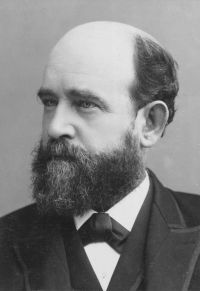 Henry George,
Progress and Poverty, Volumes I and II
Henry George,
Progress and Poverty, Volumes I and II
“ For instance, of $100,000 devoted in an old country to manufactures, $80,000 would probably be expended for buildings, machinery and the purchase of materials, leaving but $20,000 to be paid out in wages; whereas in a new country, of $30,000 devoted to agriculture, etc., not more than $5,000 would be required for tools, etc., leaving $25,000 to be distributed in wages. In this way it is explained that the wage fund may be comparatively large where capital is comparatively scarce, and high wages and high interest accompany each other. ”
Anonymous, The Atlantic Monthly (1866)
“ The advocates of the stock plan contend that, by a low rate of premium, they furnish their assured with a full equivalent for that division of profits which is the special boast of other companies. In a corporation purely mutual, the whole surplus is periodically applied to the benefit of the assured, either by a dividend in cash, or by equitable additions to the amount assured without increase of premium, or by deducting from future premiums, while the amount assured remains the same. ”
Burton J. Hendrick, The Story of Life Insurance — Chapter VI, The Raid on the Surplus
“ That they must earn to maintain solvency; anything beyond is theoretically returned to the policy-holders. Thus they have an absolute standard of investment earnings; the unpardonable sin is the realization of less than three per cent. If they have securities yielding less than this minimum, they have a deficit in the reserves which must be made up from other sources—that is, the surplus. Because these companies have this great accumulation to fall back upon they have sunk millions in investments that do not realize the interest rate needed to maintain solvency. ”
Related terms
Authors who wrote about “surplus fund”
George Garr HenryWilliam Amasa ScottBurton J. Hendrickof the Bank of England John FrancisRoy B. KesterSir James Steuart Andrew CarnegieScott NearingChester Arthur PhillipsLawrence Ari FleischerBenjamin HarrisonVariousJohn Stuart MillGrover ClevelandCarl Schurz
 Adam SmithDavid RicardoThomas Hart Benton
 George W. BushAmerican School of Correspondence
Andrew CarnegieScott NearingChester Arthur PhillipsLawrence Ari FleischerBenjamin HarrisonVariousJohn Stuart MillGrover ClevelandCarl SchurzAdam SmithDavid RicardoThomas Hart BentonGeorge W. BushAmerican School of Correspondence