Sympathetic nervous system

Definition and stakes

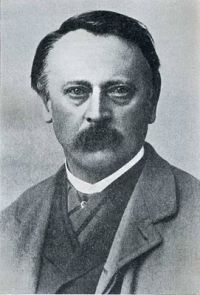
Portrait of Henry Lindlahr Henry Lindlahr,  Nature Cure: Philosophy & Practice Based on the Unity of Disease & Cure

“ The sympathetic nervous system is the conveyor of vital force to the organs and cells of the body. Just what this vital force is and where it ultimately comes from, we do not know. It is a manifestation of that which we call God, Nature, Life, the Higher Power or the Divine Within.
Heart action, the circulation of the blood, respiration, digestion, assimilation of food, elimination and all other involuntary activities and functions of the human organism are controlled by means of the sympathetic nervous system. The nature of the controlling force itself is not known to us.
”
Source: Gutenberg

Mary F. Porter,  Applied Psychology for Nurses

“ The beating of the heart, the contraction of the blood-vessels, hence the flowing of the blood, the processes of digestion, the functioning of the glands, are all directed by the sympathetic. In other words, the central nervous system normally controls the movements of the voluntary muscles; the sympathetic controls those of the involuntary muscles. ”
Source: Gutenberg

1911 Encyclopædia Britannica (1911)

“ One great difference between the efferent paths of the sympathetic and those of the ordinary cerebro-spinal system is that the former carry nervous impulses not only to muscular tissue but to secreting glands, whereas the latter convey them to muscle only, indeed only to muscle of the striated kind. Another difference is that the efferent path which the sympathetic affords from the great central nervous centres to its muscles and glands consists always of two nerve-cells or neurones, whereas the efferent path afforded by the cerebro-spinal motor nerves consists of one neurone only. ”
Source: Wikisource

Get perspective with Kwize: daily news enlightened by great literature