Tax credit

Definition and stakes

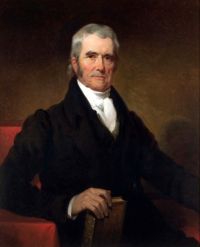
United States Supreme Court,  King v. Burwell (2015)

“ According to petitioners, however, those provisions are an empty promise in States with a Federal Exchange. In their view, an applicable taxpayer in such a State would be eligible for a tax credit—but the amount of that tax credit would always be zero. And that is because—diving several layers down into the Tax Code—Section 36B says that the amount of the tax credits shall be "an amount equal to the premium assistance credit amount," §36B (a) ”
Source: Wikisource

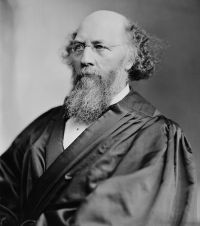
by John Marshall Harlan,  County Court of Scotland County v…

“ As the commercial credit of the county, in respect to its negotiable bonds, could only be protected, under ordinary circumstances, by the prompt payment of both principal and interest at maturity, and there is nothing to show that payment was to be made in any other way than through taxation, it necessarily follows that power to tax to meet the payment was one of the essential elements of the power to protect the credit. If what the law requires to be done can only be done through taxation, then taxation is authorized to the extent that may be needed, unless it is otherwise expressly declared. ”
Source: Wikisource

Portal:Supreme Court of the United States,  Helvering v. Ohio Leather Company…

“ An examination of the entire legislative background of the undistributed profits tax demonstrates, contrary to taxpayers' contentions, that Congress intended the tax to be imposed primarily upon income not distributed in the form of dividends, rather than only upon corporate income which was not distributed at all and accordingly meant to limit severely credits for a corporation's payment of debts and precisely to define the area in which taxpayers were to be entitled to the credit. ”
Source: Wikisource

Get perspective with Kwize: daily news enlightened by great literature