Tea urn

Definition and stakes

Rodris Roth,  Tea Drinking in 18th-Century America…

“ Contrary to its name, the tea urn seldom held tea. These large silver or silver-plated vessels, some of which looked like vases with domed covers, usually had two handles on the shoulders and a spout with a tap in the front near the bottom. “Ponty pool, japanned, crimson, and gold-striped Roman tea urns” imported from Europe were among the fashionable teawares advertised at the end of the 18th century. [72] The urn might be placed on a stand of its own near the table or on the tray or table in the midst of the other equipage as it is in the painting titled The Honeymoon (fig. 9) . ”
Source: Gutenberg

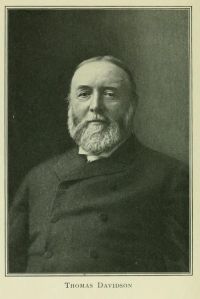
Portrait of Thomas Davidson Thomas Davidson,  Chambers's Twentieth Century Dictionary 1908… (1908)

“ Tea′-things, the tea-pot, cups, &c.—ns. Tea′-tree, the common tea-plant or shrub; a name of various Australian myrtaceous and other plants; Tea′-urn, a vessel for boiling water or keeping it hot, used on the tea-table.—Black tea, that which in the process of manufacture is fermented between rolling and firing (heating with charcoal in a sieve) , while Green tea is that which is fired immediately after rolling. Among black teas are bohea, congou, souchong, and pekoe; among green, hyson, imperial, and gunpowder. The finest black is Pekoe; the finest green, Gunpowder. ”
Source: Wikisource

Portrait of Donald Mackenzie Wallace Donald Mackenzie Wallace,  Russia

“ If you are an experienced traveller you will be able to reply in the affirmative, for good tea can be bought only in certain well-known shops, and can rarely be found in hotels. A huge, steaming tea-urn, called a samovar—etymologically, a "self-boiler"—will be brought in, and you will make your tea according to your taste. ”
Source: Gutenberg

Get perspective with Kwize: daily news enlightened by great literature