“ There is nothing more beautiful in nature than a fine old white-thorn tree in full blossom; and those who are aware of the great age to which the thorn-tree attains, will not be surprised that such trees should have been selected as landmarks. ”
Thorn tree
Definition and stakes
The theme of “thorn tree” has been addressed by authors such as Julia Ellen Rogers, A. C. Apgar, Annie Oakes Huntington, Henry Nicholson Ellacombe and C. E. Smith. It is often associated with terms like plant, leaf, botany, forest and fruit.
Quotes about “thorn tree”
Elizabeth Godfrey, The New Forest
“ Here and there is an aged thorn which has attained almost the size and girth of a forest tree, and in places Scotch firs lift their stately heads. In their tops the sea-sound murmurs, and about them is the hot fragrance the sun draws out of their resinous branches mingling with the tanny odour of the bracken. An alley through hollies meeting overhead is like a tunnel; it issues on a broad sunny level where four roads meet, each beckoning so enticingly, one is fain to sit down awhile to weigh their claims. One source of the peculiar loveliness of such a holm is that all the ways are green. ”
The Book of Scottish Song (1843)
“ Oh! for the thorn tree—the fair, the spreading thorn tree!— The flame o' love lowes bonnily aneath a spreading thorn tree! The glow o' youth beam'd on her cheek, And love was lowin' in her e'e, And Cupids play'd at hide-and-seek Around us at the thorn tree. Oh! for the thorn tree—the fair, the spreading thorn tree!— The flame o' love lowes bonnily aneath a spreading thorn tree! ”
 W. H. Hudson,
Dead Man's Plack and an Old Thorn
“ First as a diminutive scrubby shrub, with numerous iron-hard stems, with few and small leaves but many thorns, it keeps its poor flowerless frustrate life for perhaps half a century or longer, without growing more than a couple of feet high; and then, as by a miracle, it will spring up until its top shoots are out of reach of the browsing sheep, and in the end it becomes a tree with spreading branches and fully developed leaves, and flowers and fruit in their season. ”
W. H. Hudson,
Dead Man's Plack and an Old Thorn
“ For how comes it, I asked, that a thorn can grow to a tree and live to a great age in such a situation, on a vast, naked down, where for many centuries, perhaps for thousands of years, the herbage has been so closely fed by sheep as to have the appearance of a carpet, or newly mown lawn? ”
C. E. Smith, Trees, Shown to the Children (1908)
“ Hawthorn Tree in Early Summer2. Leaves and Blossoms3. FruitEven in that far-off time people had discovered that nothing makes so good a hedge as young [111] thorn trees. They grow very quickly and send out many side-shoots and small branches. Each branch bears sharp thorns, and so closely do these thorny branches grow together that it is impossible to push your hand through the hedge without being badly scratched. Young cattle and horses love to feed on the Hawthorn leaves, and one wonders how they can eat them without getting many scratches. ”
W. H. Hudson,
Dead Man's Plack and an Old Thorn
“ A wide prospect, whose grateful silence was only broken by the cry or song of some wild bird. Great thickets of dwarf thorn tree and brambles and gorse, aflame with yellow flowers or dark to blackness by contrast with the pale verdure of the earth. And open reaches of elastic turf, its green suffused or sprinkled with red or blue or yellow, according to the kind of flowers proper to the season and place. The sight, too, of wild creatures: fallow deer, looking yellow in the distance when seen amid the black gorse ”
 Edward Thomas,
The Heart of England
“ Sometimes even a thorn has been thus spared and honoured, but here they are not each knotted into impenetrable globes of twigs or interlaced in pairs as elsewhere. What fantasy persuades men to make those little wayside and even railwayside suggestions of a mild tree worship surviving yet? In places the walls are interrupted and replaced by a smooth, blue sheet of natural rock based in grass and making a home for vertebrate ferns, and stamped by white and yellow and green algæ which look as if they were the stains of a sunshine too strong to be wiped out. ”
 William Hone,
The Every-day Book and Table Book…
“ There certainly was in the abbey church-yard a hawthorn-tree, which blossomed in winter, and was cut down in the time of the civil wars: but that it always blossomed on Christmas-day was a mere tale of the monks, calculated to inspire the vulgar with notions of the sanctity of the place. There are several of this species of thorn in England, raised from haws sent from the east, where it is common. One of our countrymen, the ingenious Mr. Millar, raised many plants from haws brought from Aleppo, and all proved to be what are called Glastonbury thorns. ”
Julia Ellen Rogers, Trees Worth Knowing
“ It is a round-headed tree reaching forty feet in height, in moist soil. Its distinguishing feature is the black fruit, ripe in August and September, lustrous, thin-fleshed, sweet, one-half an inch long. The thorns are stout and sharp, rarely exceeding one inch in length. The leathery dark-green [Pg 159] leaves, one to four inches long, commend this black-fruited thorn of the West to the Eastern horticulturists. It has proved hardy in gardens to the Atlantic seaboard and in Nova Scotia. ”
 Olive Thorne Miller,
Upon The Tree-Tops
“ Before I left, however, I committed the little family in the thorn-tree to the care of my friend [Pg 70] the bird-lover; and a few weeks later there came over the mountains to me this conclusion to the story, written by Mrs. Nelly Hart Woodworth, of St. Albans:—"I was at the shrikes' nest Thursday last. I sat down on the knoll beyond the nest, and waited quietly for fifteen minutes. No signs of life in nest or neighborhood, save the yearning cry of the lark, as it alighted on the top of the thorn-tree. ”
Baron Edward Hugessen Knatchbull-Hugessen Brabourne, River Legends; Or, Father Thames and Father Rhine
“ There was a very large thorn-tree, growing near a spring 118at the side of a hill, close to which a species of rude cottage had been built into the hill, so that it had the appearance of being—and perhaps was—the way by which those who had the right, and the will to do so, could enter into the bowels of the earth. ”
Henry H. Gibson, American Forest Trees
“ Finally the seedlings overtop the brambles, gain the mastery, shade the thorns to death, and develop valuable forests. The thorn trees shed their leaves annually. Their seeds are slow to germinate, some not sprouting until the second year. The fruit is worthless for human consumption, but some of it has a tart and not unpleasant taste. It is of many colors and sizes, depending on species. ”
W. H. Hudson,
Dead Man's Plack and an Old Thorn
“ On the summit it vanishes once more, but those who use it know it for a laborious road crossing several high ridges before dropping down into the valley road leading to Salisbury.When, standing in the village street, your eye travels up that white band, you can distinctly make out even at that distance a small, solitary tree standing near the summit—an old thorn with an ivy growing on it. My walks were often that way, and invariably on coming to that point I would turn twenty yards aside from the road to spend half an hour seated on the turf near or under the old tree. ”
Henry Nicholson Ellacombe, The plant-lore & garden-craft of Shakespeare
“ Even those who might not see the beauty of an old Thorn tree, have found its uses as one of the very few trees that will grow thick in the most exposed places, and so give pleasant shade and shelter in places where otherwise but little shade and shelter could be found. ”
 David Livingstone,
Missionary Travels and Researches in South Africa
“ A remarkable peculiarity in the forests of this country is the absence of thorns: there are but two exceptions; one a tree bearing a species of 'nux vomica', and a small shrub very like the plant of the sarsaparilla, bearing, in addition to its hooked thorns, bunches of yellow berries. The thornlessness of the vegetation is especially noticeable to those who have been in the south, where there is so great a variety of thorn-bearing plants and trees. We have thorns of every size and shape ”
Josiah Williams, Life in the Soudan
“ Everything, even the smallest of the mimosa tree, is armed with long, strong, very sharp thorns. Each thorn is as sharp as a needle and about an inch long; indeed, the native women use them as a cobbler does his awl, and I have often seen a woman using the thorn to pierce a girba and shreds of the palm leaf to sew it up with. The thorns of the kittar bushes are quite semicircular in shape, very near to each other, not long but very strong, and each successive thorn crooks in a different direction to its predecessor—one crooks up and the other down. ”
Julia Ellen Rogers, Trees Every Child Should Know: Easy Tree Studies for All Seasons of the Year
“ These thorns are twigs, but they rarely bear leaves. Each is sharpened to a needle point, and highly polished. Sometimes it is single, oftener with a main thorn and two side branches; sometimes short, but often reaching over a foot in length, and growing stronger and more wicked-looking with age. Sometimes a honey locust has a crowded group of these thorns growing out of the trunk and large limbs. Once in a great while a honey locust is thornless, growing wild. From such trees a thornless variety has been developed. It is, therefore, possible to obtain from nurserymen trees of this variety. ”
Henry H. Gibson, American Forest Trees
“ Thirty or more varieties are distinguished in cultivation. It is worthy of note that, although the United States has more than 130 species of thorn trees of its own, with varieties so numerous that no one has yet named or counted all of them, a foreign thorn has been introduced and added to the number. ”
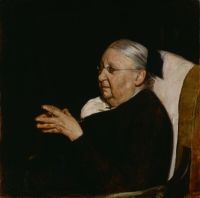 Gertrude Jekyll,
Colour in the flower garden
“ Then it turns to the left and is trained in garlands along a moulded oak beam that forms the base of a timbered wall with plastered panels.But this is only one way of using this lovely climbing plant. Placed at the foot of any ragged tree—old worn-out Apple or branching Thorn—or a rough brake of Bramble and other wild bushes, it will soon fill or cover it with its graceful growth and bounteous bloom. It will rush up a tall Holly or clothe an old hedgerow where thorns have run up and become thin and gappy, or cover any unsightly sheds or any kind of outbuilding. ”
 Eleanor Stackhouse Atkinson,
The How and Why Library — Section IV
(1915)
“ They start to be leaves or branches but get nipped, in some way, so they turn into thorns. They are very useful to roses. They help the slender canes catch on supports, and they frighten away some enemies. Little boys and girls would be sure to pull too many sweet roses if it wasn't for the scratchy thorns. Can you think of any other plants that have thorns? Thistles? No thistles have spines and prickles. A true thorn has wood and bark. Blackberry and raspberry briars have thorns. So have crabapple and hawthorn trees. Those plants, too, have five-petaled, rose-like, fragrant blossoms. ”
 Julia McNair Wright,
Nature readers
(1891)
“ But at the tip of each projection of the green, saucer-shaped leaf grows a deadly thorn. The least touch of one of these thorns fills a man or beast with a terrible pain. Beasts act as if seized with hydrophobia; human beings stung by this tree are partly paralyzed, and suffer agony for days, or even weeks. ”
George D. Fuller, Forest Trees of Illinois: How to Know Them
“ In North America, no less than 150 species have been distinguished, but their proper identification is a task for the expert. There are about a dozen haws that reach tree size in Illinois, attaining a height of 20 to 30 feet and a stem diameter of 8 to 12 inches. Of these, perhaps the best known is the cock-spur thorn with its many strong straight spines and shining leaves. Its bark is pale gray and scaly. Its winter buds are small, globose and lustrous brown. ”
John Platts, The Book of Curiosities
“ The leaves of this tree resemble those of the laurel, but are larger, wider, and more curved; they come forth in a perpetual succession, so that the tree always remains green. Near to it grows a thorn, which fastens on many of its branches, and interweaves with them; and at a small distance from the garse are some beech-trees, bresoes, and thorns. On the north side of the trunk are two large tanks or cisterns, of rough stone, or rather one cistern divided, each half being twenty feet square, and sixteen spans in depth. One of these contains water for the drinking of the inhabitants ”
Richard Lepsius, Discoveries in Egypt, Ethiopia and the peninsula of Sinai… (1853)
“ Besides this there is scarcely one thornless tree or bush in ten, by which every attempt to penetrate the thick underwood is dangerous, indeed impossible. Several of the plants—the sittera tree for instance—have the thorns placed in pairs, and in such a manner that one thorn is turned forward, the other back. If any one come too near these boughs, it is certain that his clothes will carry away some inevitable traces, imperfectly to be remedied amidst these wilds. ”
W. H. Hudson,
Dead Man's Plack and an Old Thorn
“ The seed is carried and scattered everywhere by the birds, but no sooner does it germinate and send up a shoot than it is eaten down to the roots; for there is no scent that attracts a sheep more, no flavour it has greater taste for, than that of any forest seedling springing up amidst the minute herbaceous plants which carpet the downs. The thorn, like other organisms, has its own unconscious intelligence and cunning, by means of which it endeavours to save itself and fulfil its life. ”
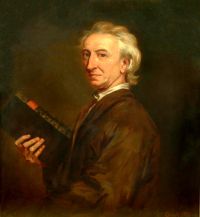 John Evelyn,
Sylva; Or, A Discourse of Forest Trees…
“ The Root of an old thorn is excellent both for boxes and combs, and is curiously and naturally wrought: I have read, that they made ribs to some small boats or vessels with the white-thorn, and it is certain, that if they would plant them single, and in standards, where they might be safe, they would rise into large body’d trees in time, and be of excellent use for the turner, not inferior to box, and accounted among the fortunate trees, and therefore us’d in fasces nuptiarum, since the jolly shepherds carryed the white-thorn at the rapine of the Sabines ”
William Allingham, Sixteen Poems
“ By the craggy hill-side, Through the mosses bare, They have planted thorn-trees For pleasure here and there. Is any man so daring As dig them up in spite, He shall find their sharpest thorns In his bed at night. ”
Gertrude Jekyll,
Wood and Garden: Notes and thoughts…
“ The Thorns stand some singly, some in close companionship, impenetrable masses of short-twigged prickly growth, with here and there a wild Rose shooting straight up through the crowded branches. One thinks how lovely it will be in early June, when the pink Rose-wreaths are tossing out of the foamy sea of white Thorn blossom. The Hollies are towering masses of health and vigour. Some of the groups of Thorn and Holly are intermingled; all show beautiful arrangements of form and colour, such as are never seen in planted places. ”
George H. Ellwanger, The story of my house (1890)
“ Attractive as it is when robed in the bloom and leafage of summer, the thorn develops a new beauty in its gnarled and naked branches and the hoariness of its gray antiquity. Loveliest, too, are the birch and hemlock in midwinter; whilst the swamp, ablaze with the scarlet fruit of the Prinos and smooth winterberry, presents its most 92vivid life above the snow. From it, likewise, I catch the gleam of the golden willow, with purple rufous lights that smolder amid the twigs and branchlets of the shrubs which seek its cool and solitude. ”
Helen Fitzgerald Sanders, Trails Through Western Woods
“ Each pine needle twinkles with a gem giving forth rainbow-hued rays beneath the first steel-cold beams of the sun. The thorn-apple, whose wine-red branches are furred with a white beard, is etherealized into delicate pastel shades of lavender and mauve by a film of hoar frost. Ragged streamers of fantastic mist-shapes rise and float heavily through the moist air, obscuring, then revealing stretches of stream-laced woods and finally rolling away in lessening vapour307 into the lingering dusk of ravines. There is a mighty scene-shifting of Nature in progress. ”
Angus D. Webster, Hardy Ornamental Flowering Trees and Shrubs
“ This is a spiny, rambling shrub, that may often be seen clambering over some cottage porch, or used as a fence or wall plant in many parts of England. It often grows nearly 20 feet long, and is then a plant of great beauty, with linear-spathulate leaves of the freshest green, and pretty little pink or reddish flowers. For quickly covering steep, dry banks and mounds where few other plants could exist this European Box Thorn is invaluable. Either species will grow in very poor, dry soil, and is readily propagated by means of cuttings. ”
Related terms
Authors who wrote about “thorn tree”
Julia Ellen RogersA. C. ApgarAnnie Oakes HuntingtonHenry Nicholson EllacombeC. E. Smiththe Elder Pliny Henry Ward BeecherE. W. PhillipsW. H. HudsonHenry H. Gibson
 Henry David Thoreau
 Richard JefferiesJ. G. Wood
 Charles Darwin
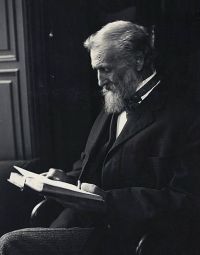 John Muir
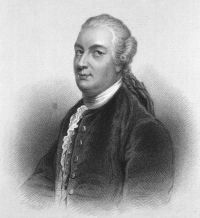 James BruceAngus D. WebsterGertrude JekyllBaron Edward Hugessen Knatchbull-Hugessen BrabourneDavid Livingstone
Henry Ward BeecherE. W. PhillipsW. H. HudsonHenry H. GibsonHenry David ThoreauRichard JefferiesJ. G. WoodCharles DarwinJohn MuirJames BruceAngus D. WebsterGertrude JekyllBaron Edward Hugessen Knatchbull-Hugessen BrabourneDavid Livingstone