Train collision

Definition and stakes

A signalman,  A voice from the signal-box — A voice from the signal-box… (1874)

“ The engine-driver will feel the shock of this collision, and it will put him in fear of again moving his engine until the guard has traversed the whole length of the train to tell him what he wants to be done. The same thing may occur when the engine is backing with the waggons to the rest of the train left on the main line. Thus, as I have remarked, the rolling stock incurs serious injury. By the time the train is ready to start on its journey a passenger train may be due, in which case the goods will have again to shunt to allow it to pass. ”
Source: Wikisource

Railway Adventures and Anecdotes…

“ So he reversed the engine and set the air-brakes, and then put on full steam, started the locomotive ahead, broke the coupling attached to the train, and dashed on to receive the shock of the collision. The passengers escaped all injury, while the brave engineer was so badly hurt that he died in a few hours. ”
Source: Gutenberg

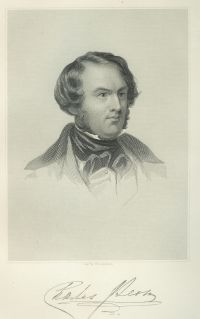
Charles Francis Adams,  Notes on Railroad Accidents

“ The interlocking apparatus, however, makes it impossible that one track should be open except when the other is closed. An accident, therefore, can happen only through the wilful carelessness of the engineer in charge of a train;—and in the face of wilful carelessness laws are of no more avail than signals. If a man in control of a locomotive wishes to bring on a collision he can always do it. ”
Source: Gutenberg

Get perspective with Kwize: daily news enlightened by great literature