Type (category)

Definition and stakes

Project Gutenberg,  The Gutenberg Webster's Unabridged Dictionary…

“ A figure or representation of something to come; a token; a sign; a symbol; — correlative to antitype.
A type is no longer a type when the thing typified comes to be actually exhibited.
South.
4. That which possesses or exemplifies characteristic qualities; the representative. Specifically: (a) (Biol.) A general form or structure common to a number of individuals; hence, the ideal representation of a species, genus, or other group, combining the essential characteristics; an animal or plant possessing or exemplifying the essential characteristics of a species, genus, or other group.
”
Source: Gutenberg

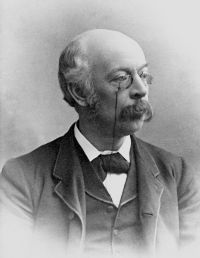
Portrait of John Stuart Mill John Stuart Mill,  A System of Logic, Ratiocinative and Inductive (1881)

“ In order to recognize this identity, or, in other words, this exact similarity of quality, the assumption of a type-species is indispensable. We must consider as the type of the class, that among the Kinds included in it, which exhibits the properties constitutive of the class, in the highest degree; conceiving the other varieties as instances of degeneracy, as it were, from that type; deviations from it by inferior intensity of the characteristic property or properties. For every phenomenon is best studied (cæteris paribus) where it exists in the greatest intensity. ”
Source: Wikisource

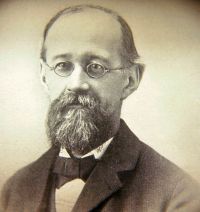
Portrait of William Stanley Jevons William Stanley Jevons,  The principles of science

“ The type itself is an individual, not a class, and no other object can be exactly like the type. But as soon as we abstract the individual peculiarities of the type and thus specify a finite number of qualities in which other objects may resemble the type, we immediately constitute a class. If some objects resemble the type in some points, and others in other points, then each definite collection of points of resemblance constitutes intensively a separate class. ”
Source: Gutenberg

Get perspective with Kwize: daily news enlightened by great literature